

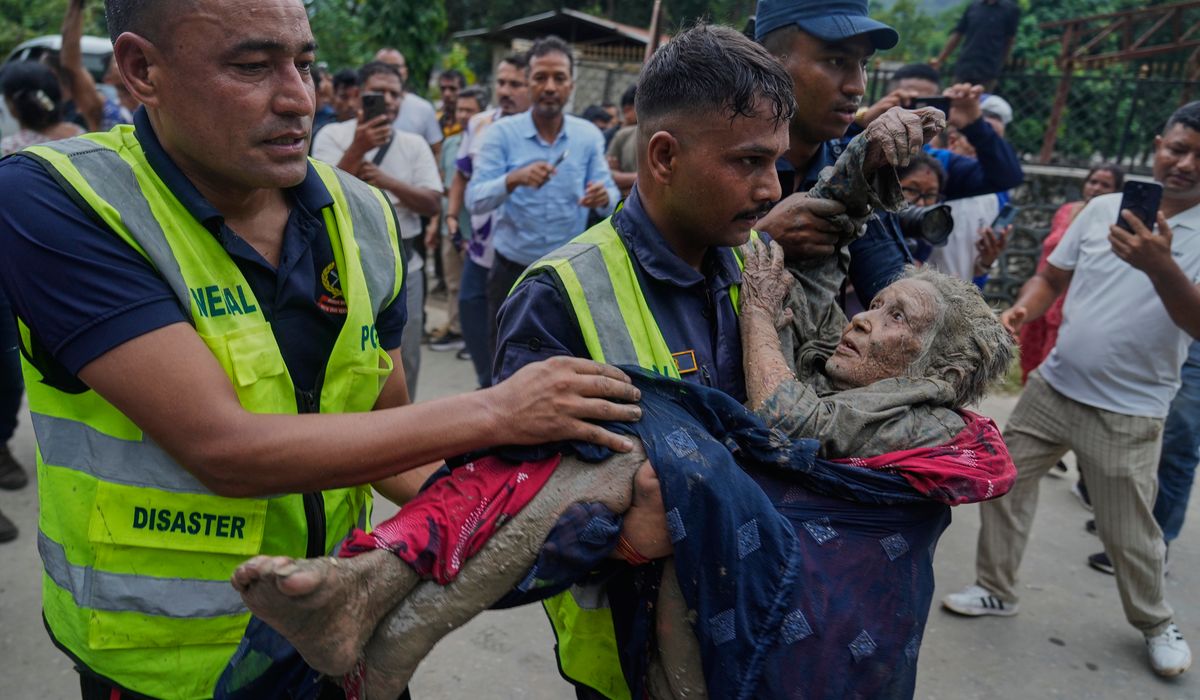
A sudden glacial collapse triggered devastating mudslides in the Himalayan region, killing and leaving hundreds missing across Tibet and Nepal.
Rescue teams in both countries scrambled immediately after the disaster, working in treacherous conditions to reach isolated communities. Authorities reported extensive damage to roads and settlements, complicating response efforts and slowing the arrival of aid. Families are waiting anxiously for news as operations continue into a difficult recovery phase.
China’s Xinhua News Agency said Thursday that mudslides in Tibet caused by a glacial collapse have left three people dead and 558 missing, figures that underline how rapidly a single event can overwhelm local capacity. Officials there described scenes of churned earth and shattered infrastructure as teams tried to trace the paths of the slides. The scale of missing persons reflects both the speed of the collapse and the remoteness of affected villages.
Across the border, police in Nepal reported at least 162 were killed, a grim tally that local authorities are still updating as search efforts expand. Emergency responders faced blocked roads and swollen rivers that hampered access to cut-off communities. Hospitals and temporary shelters are coping with a sudden influx of injured and displaced people.
Weather forecasts suggested heavy precipitation in the days before the collapse, a factor that can accelerate glacial melt and trigger slope failures in mountainous zones. Experts warn that intense rain on unstable ice and soil increases the risk of sudden mass movements. That combination of rain and warming temperatures often turns steep valleys into runoff funnels during storm events.
Communication lines went down in several districts, delaying situation reports and leaving families uncertain about loved ones’ fates. Local governments set up crisis centers to coordinate information and manage logistics for relief convoys. International NGOs and nearby provinces mobilized supplies, though reaching some hamlets remained a major challenge.
Officials emphasized the immediate need for search and medical teams, along with basic supplies like food, clean water and shelter materials. In mountain disasters, timely access to the injured and missing is essential to reduce further loss of life. Community volunteers have been pivotal, guiding rescuers to last-known locations and sharing scarce resources.
Infrastructure damage has been severe in places where slides ran through populated areas, with bridges, roads and electrical lines reported down. Restoring transportation routes is a top priority so heavy equipment and medical teams can move in. Engineers are assessing slope stability before clearing operations proceed to avoid triggering secondary slides.
Some communities faced long waits for helicopters and heavy machinery, resources that are often limited in rugged, high-altitude regions. Helicopter missions are weather-dependent and carry risk when visibility is poor or winds are strong. Ground crews continue to dig through debris where it is safe to do so, looking for survivors and recovering the missing.
Local leaders called for coordinated support from national governments to speed up relief and ensure consistent reporting of the situation. Accurate counts and transparent updates help families and aid agencies prioritize where help is most urgent. Coordination also reduces duplication of effort and gets supplies to smaller settlements that might otherwise be overlooked.
Recovery will take time in a landscape altered by the slides, as communities rebuild homes and repair infrastructure damaged by moving earth and water. Reestablishing basic services like electricity and clean water will be critical to preventing secondary health crises. Long-term planning must also consider how to better protect vulnerable areas from future events.
Climate scientists note that warmer temperatures can make mountain glaciers more unstable, though attributing any single collapse to climate change requires careful study. Still, residents and planners face a growing need to factor shifting risk patterns into land use and emergency planning. Early-warning systems and safer construction practices can reduce impacts where hazards are known.
For now, the immediate focus remains on search, rescue and relief for those affected by the slides across Tibet and Nepal. Authorities and volunteers press on under difficult conditions to find the missing and support survivors. The coming days will determine how quickly communities begin to recover from this sudden and destructive event.

