

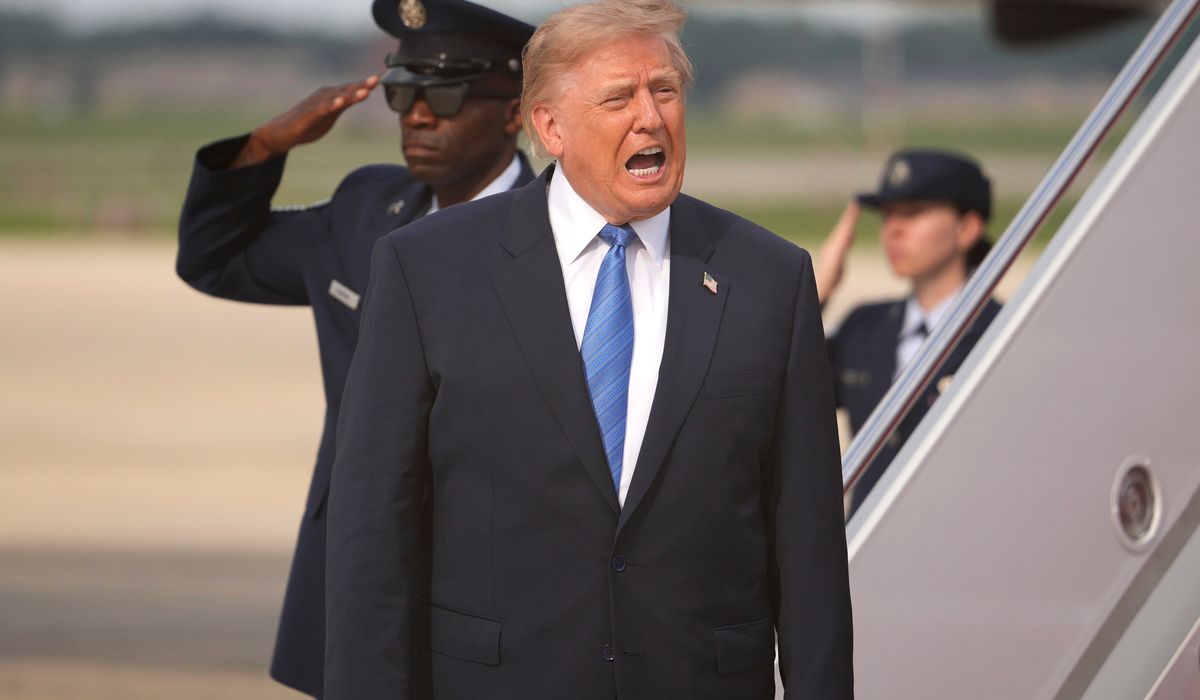
President Trump pushed back on concerns about Chinese intelligence activities, arguing that the United States engages in similar operations and urging a levelheaded look at global espionage and cyber activity.
President Trump recently shrugged off alarm over China’s large-scale intelligence collection, espionage and cyberattacks, saying the U.S. does similar things and suggesting the coverage is overblown. He made the comment during a terse exchange with reporters, framing the issue as part of routine great power competition rather than a unique threat. That posture reflects a desire to rebalance public panic with pragmatic national interest concerns.
From a Republican perspective, the right response to foreign espionage is firm deterrence paired with realism, not constant denunciation. Washington should protect Americans and critical infrastructure while recognizing that intelligence work is a staple of statecraft across the globe. Emphasizing American strength and technological superiority matters more than theatrical outrage that lacks policy follow-through.
Critics worry that downplaying China could leave gaps in defenses, and those concerns deserve attention. Lawmakers must fund hardened cyber defenses, tighten counterintelligence at vulnerable points like universities and corporate partnerships, and push tech firms to lock down supply chains. At the same time, endless crisis framing without specific, actionable fixes wastes political capital and dilutes public support.
Trump’s contention that the U.S. conducts parallel operations is rooted in a long history of intelligence competition between major powers. Agencies on all sides collect signals, recruit sources and infiltrate networks to protect national interests. Admitting that reality does not excuse Chinese aggression, but it does demand sober policy that separates blame from the practical steps needed to raise the cost of bad behavior.
We need policies that reflect both deterrence and consequence. That means targeted sanctions for malicious actors, coordinated international standards for cyber behavior, and swift punitive measures when rules of the road are violated. It also means investing in domestic resilience so critical services and private sector systems are less vulnerable to intrusion and disruption.
American leaders should avoid hollow finger pointing and focus instead on concrete tools that preserve liberty and security. This includes expanding counterintelligence outreach to the private sector, modernizing cyber doctrine for offense and defense, and ensuring that trade and technology policy do not leave vulnerabilities for adversaries to exploit. Clear strategy beats perpetual alarm.
Media coverage tends to amplify the scariest headlines, and that shapes public perception in ways that can be counterproductive. A responsible press would pair exposure of threats with reporting on solutions and accountability, rather than simply escalating fear. Voters deserve a debate that balances healthy vigilance with practical steps to strengthen our position.
Ultimately, defending the nation requires both toughness and clarity. A Republican approach accepts the reality of global espionage, demands robust protection, and pushes for policies that make the United States safer and stronger without surrendering to constant panic. That steady, security-first mindset should guide lawmakers and the public alike.

