

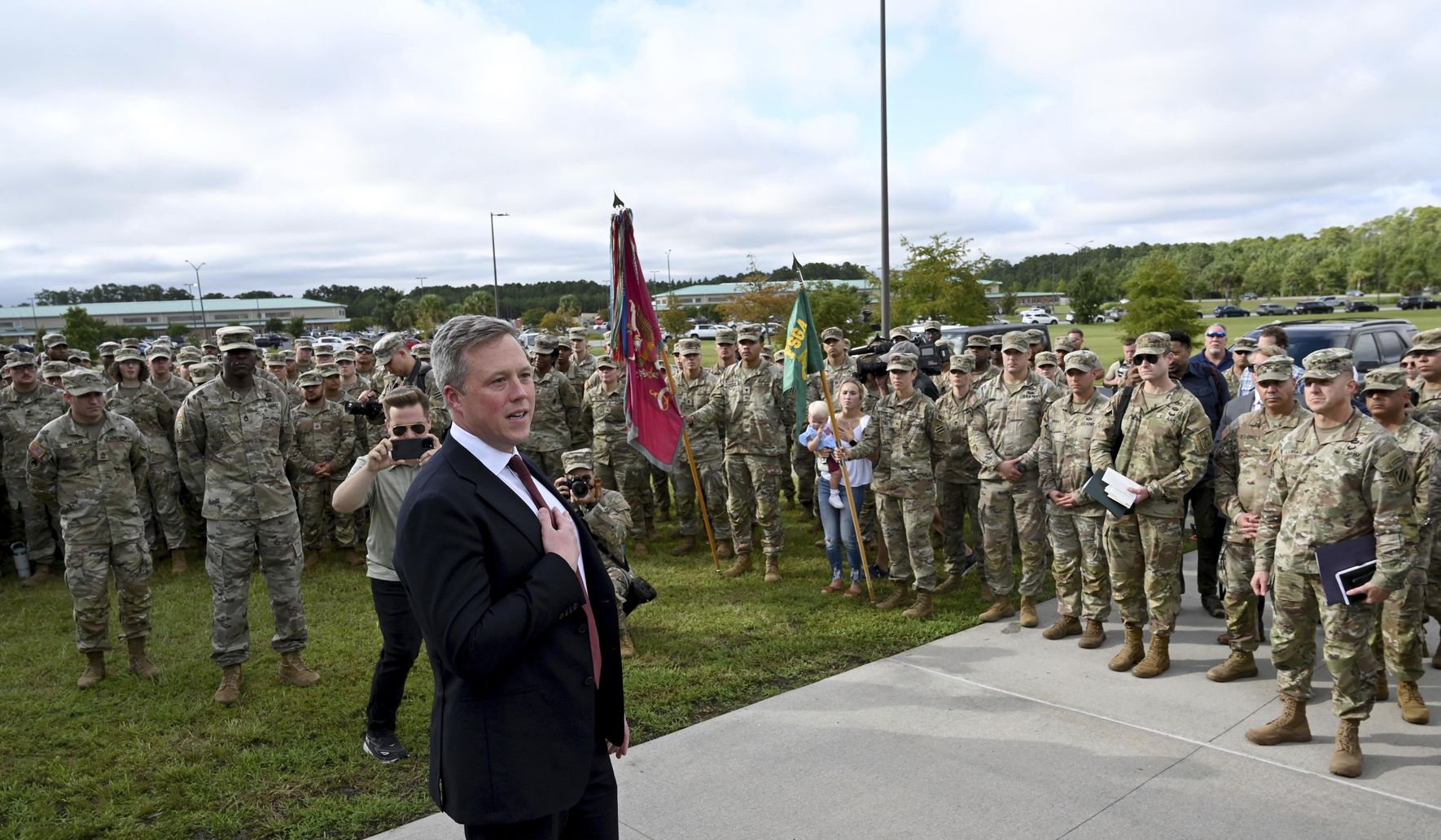
The U.S. Army’s civilian leadership is suddenly in flux after Secretary of the Army Dan Driscoll departed, leaving the service without a top civilian leader or a congressionally confirmed senior officer and raising questions about oversight, readiness, and timely Senate action.
The U.S. military’s largest branch is left without a top civilian leader or a congressionally confirmed senior officer after the sudden departure of Secretary of the Army Dan Driscoll. That abrupt change creates a leadership gap at a moment when clear lines of authority and Congress-approved officials matter to both troops and taxpayers. Republicans are focused on the need for accountable, confirmed leaders who can answer to Congress and execute a clear defense posture.
When a service sits without its confirmed top civilian, two obvious problems jump out: accountability and authority. A civilian secretary provides the policy direction and fiscal oversight elected representatives expect, and acting officials can only do so much without Senate confirmation. From a Republican perspective, the solution is straightforward: prompt, serious vetting and confirmation of a qualified nominee so civilian control is restored.
Readiness and morale are practical concerns that follow from leadership uncertainty. Commanders in the field need clear, predictable support for training, equipment procurement, and force posture decisions. Delays in confirmed leadership can slow contracting, complicate promotions, and leave career officers wondering whether long-term plans will stick, which is bad for the force and bad for taxpayers.
Budget stewardship and oversight are also at risk when the top civilian is missing. Congress depends on the service secretary to explain budget choices and justify spending programs before appropriations committees. Republicans stress that unelected acting officials should not supplant the Senate’s advice-and-consent role or be used to avoid accountability on spending that should face careful scrutiny.
There is also a national security angle. The Army supports contingency operations, deterrence in Europe and the Pacific, and homeland response missions. Those responsibilities require stable civilian leadership to coordinate with the Department of Defense, Congress, and allied partners. A long stretch without a confirmed leader makes coherent strategy and interagency partnerships harder to sustain.
The confirmation process itself should be examined without abandoning due diligence. Republicans often argue that confirmations must balance vetting and speed so national security is not left hanging. That means the Senate needs to prioritize qualified defense nominees over partisan fights, while committees need to do their oversight work efficiently to get nominees into place.
Meanwhile, the Pentagon must ensure continuity through proper delegations of authority and transparent reporting on who is making key decisions. Acting roles are a safety valve, not a substitute for long-term leadership. From a Republican viewpoint, preserving the integrity of civilian oversight means both swift nominations and a refusal to let acting appointees become permanent fixes by default.

