

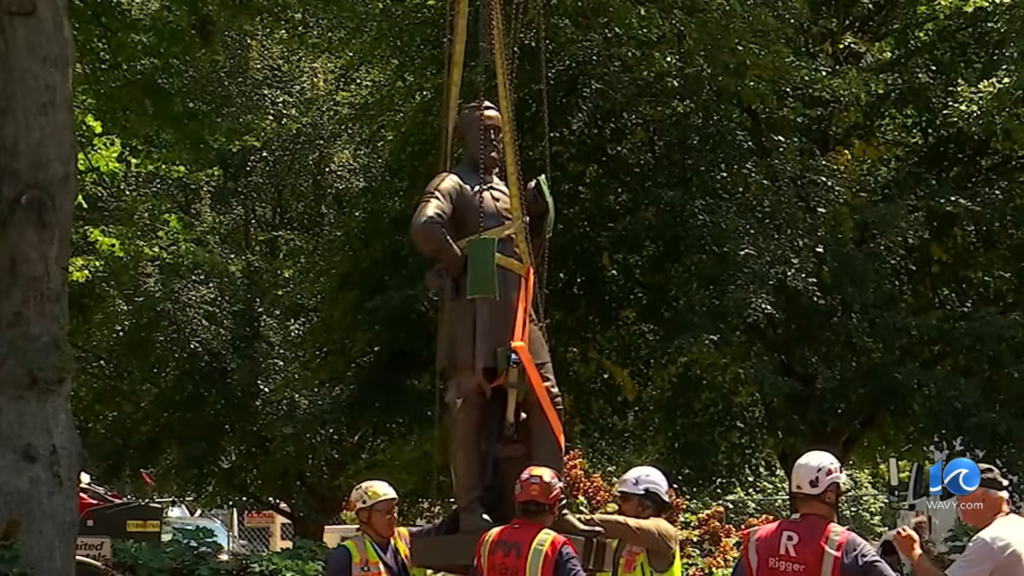
The public fight over statues is less about history and more about who gets to set cultural rules and wield influence in our communities.
The removal of public monuments has turned into a test of influence, where political organizers and cultural institutions push to reshape public spaces. That shift is not neutral. It favors those who hold institutional power over local voices.
“The removal of the statues has never been about providing an ‘accurate’ view of history. It’s all about power.” Those two lines capture why conservatives push back: this is not a debate over facts. It is a struggle over who decides which stories are visible in shared spaces.
Look at how decisions are made. Often a handful of activists and allied officials move quickly, using protests, petitions, or emergency votes to erase symbols without broad community input. That bypass of ordinary democratic channels breeds resentment and polarizes neighborhoods.
There is also a double standard in how controversies are handled. Monuments tied to favored causes or figures get protection, funding, or historical reinterpretation from institutions. Less connected monuments face the wrecking ball without the same debate or preservation effort.
Legal and procedural concerns matter too. Property rights, historic preservation laws, and municipal charters provide frameworks that should guide changes in public space. When actors ignore process, they undermine rule of law and create long term instability for public planning and heritage conservation.
Beyond rules, the symbolic stakes are high. Statues and plaques are shorthand for local history, but they are also tools for civic education and collective memory. Removing them without replacing context or adding balanced interpretation leaves gaps that partisan narratives quickly fill.
Conservative responses tend to focus on restoring process, protecting local decision making, and promoting restoration or relocation rather than outright destruction. That approach argues for preserving artifacts while adding interpretation that shows complexity and nuance. It respects both history and the rights of current citizens to shape public spaces through established procedures.
There are practical alternatives that avoid cultural warfare. Commissioning panels with diverse membership, installing plaques that explain context, or moving contested items to museums are options that keep history accessible. Those solutions reduce the incentive for unilateral action and encourage deliberation.
Power dynamics shape who gets heard and who loses. Institutions with money and media reach can drive narratives, but community leaders and elected officials still hold the authority to steer outcomes if they insist on transparency. The key is enforcing consistent standards so decisions are seen as fair and durable.
When processes are clear and accessible, disputes over monuments become manageable civic conversations instead of combustible political fights. That means insisting on public hearings, legal clarity, and historical input that reflects multiple perspectives. It also means rejecting opportunistic moves that treat public memory as a tool for short term advantage.
Preserving public space as a place for shared history requires restraint from actors who would use removal as a shortcut to cultural dominance. A community that values democratic procedure and honest history is better positioned to resolve differences without tearing itself apart. The debate should be about who gets a real say, not who gets to win by steamrolling opponents.

