

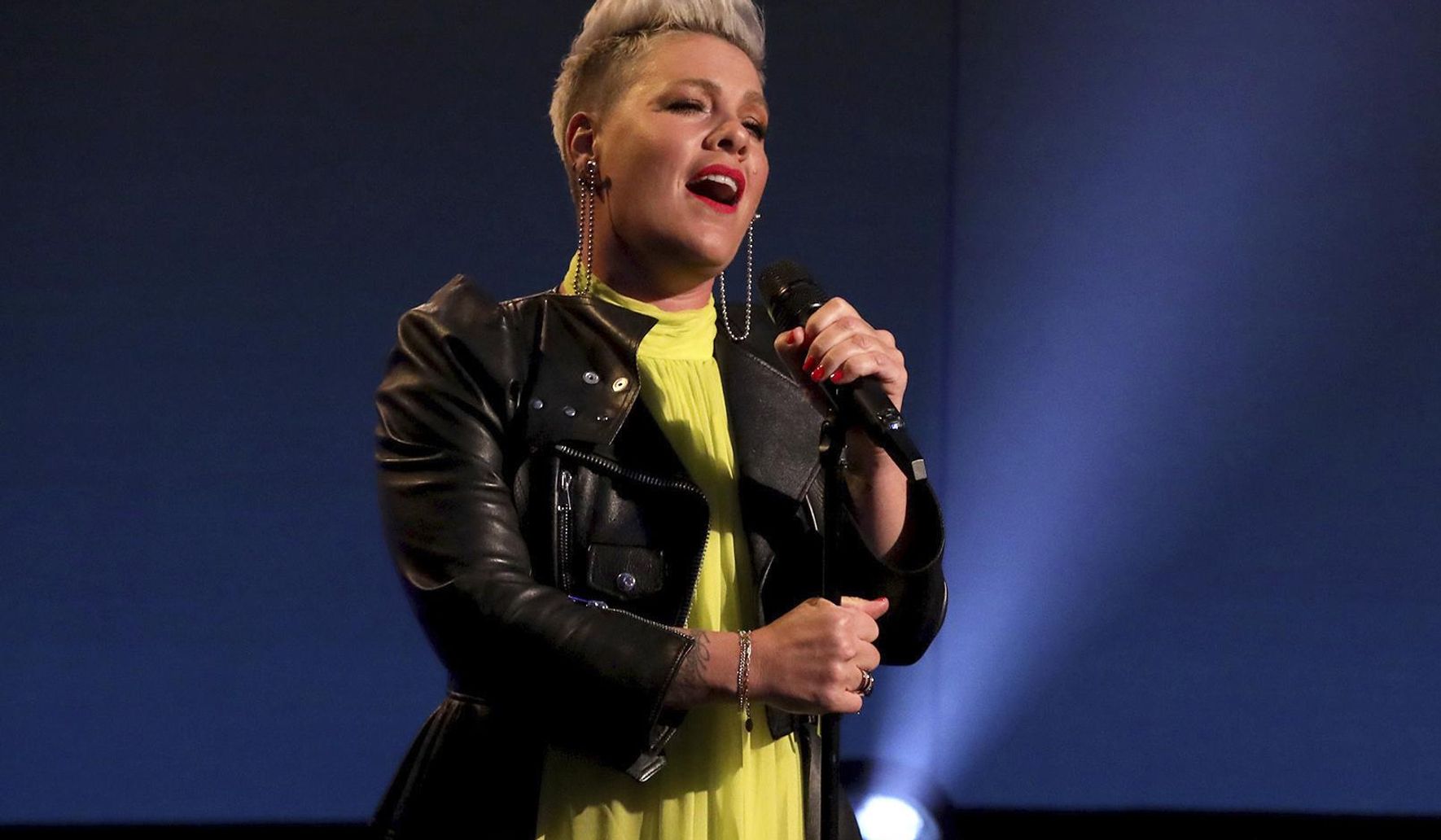
Pop star P!NK reposted an Instagram Story from an advocacy group after rapper Macklemore made pro-Palestinian remarks during Ed Sheeran’s MetLife Stadium concerts, touching off a fresh round of debate about celebrities using their platforms for political causes.
Macklemore’s on-stage comments during Ed Sheeran’s MetLife Stadium shows drew attention beyond the music, and P!NK’s repost amplified that attention. A simple social media action converted a moment in a stadium into a national conversation, proving how quickly entertainment and politics collide. The episode shows how a few seconds on stage or a single repost can drive headlines and stir fans on both sides.
Fans reacted fast, with praise from some and pushback from others, and social feeds filled with arguments about intent, context, and consequences. When public figures weigh in on geopolitical issues, reactions are rarely limited to applause or boos; they become cultural flashpoints. In this case, the combination of a big-name tour and outspoken artists guaranteed a wide audience for the message, for better or worse.
From a Republican viewpoint, the pattern is familiar: celebrities stepping beyond entertainment into political advocacy without the same accountability as elected officials. People are free to speak, but speech from powerful platforms carries influence and consequences. That influence can shape perceptions and policy debates without the usual checks and balances voters expect from public leaders.
There’s also a practical side to consider. Stadium tours, sponsorships, and media partnerships involve contracts and brand relationships, and political flare-ups can complicate those arrangements. Promoters and venues want stable ticket sales and predictable operations, not headlines that risk alienating chunks of an audience. Artists who tangle with partisan or international controversies can find those business realities suddenly under scrutiny.
Social media makes every repost a public endorsement for millions of followers, and that shifts the stakes. An Instagram Story isn’t private chatter; it’s content broadcast into timelines and headlines. For high-profile artists like P!NK and Macklemore, each share sends a clear signal about values and priorities, and followers respond not just emotionally but with economic choices like ticket buys and streaming habits.
This episode also highlights how easily nuance gets lost. Stadium moments are short, social posts are shorter, and context rarely survives the echo chamber. Nuanced discussion about complicated international issues rarely fits into a line or two onstage or a 15-second clip, and yet those are the formats that now often set the agenda. When nuance vanishes, polarized reactions fill the space.
A recurring question is what role entertainers should play in public life. Some argue artists have a duty to speak up; others say they should stick to their craft. From the Republican angle, there’s skepticism about celebrities acting as de facto opinion leaders on complex foreign-policy matters without the expertise or accountability that comes with elected office. The preference is for elected representatives to lead on these topics, with public input coming through normal political channels.
At the same time, the backlash cycle is predictable: outrage spikes, commentary multiplies, and then attention moves on—unless sponsors or venue partners take action. Those downstream effects can be the real consequences, not the immediate online noise. Careers and tours can absorb a hit or adapt, but the reputational cost is real and sometimes enduring.
The immediate story here is straightforward: Macklemore made pro-Palestinian remarks at a major Ed Sheeran show, P!NK reposted an advocacy Story, and the result was a burst of debate. The larger pattern is less tidy: celebrities wield influence, social platforms amplify single moments, and audiences sort themselves by values and loyalty. As those dynamics repeat, the cultural friction between entertainment and politics keeps getting more intense, and there’s no sign of it letting up.

