

The House voted Tuesday to table an impeachment resolution against President Donald Trump, ending an effort forced onto the floor by Rep. Al Green, D-Texas, that exposed deep divisions within the Democratic caucus.
The tabling motion passed 232 to 147, a procedural move that disposes of the resolution without forcing members to vote directly on impeachment itself. Eighteen House Democrats crossed over to join Republicans in voting to table the measure, while 46 Democrats voted “present” rather than take a firm position. Nearly 150 Democrats voted to press ahead with an impeachment vote.
Green’s resolution centered on the killing of two U.S. citizens by federal immigration officials earlier this year. It was his second attempt at forcing an impeachment vote; a similar effort in June 2025 was tabled after 128 Democrats joined Republicans to kill it.
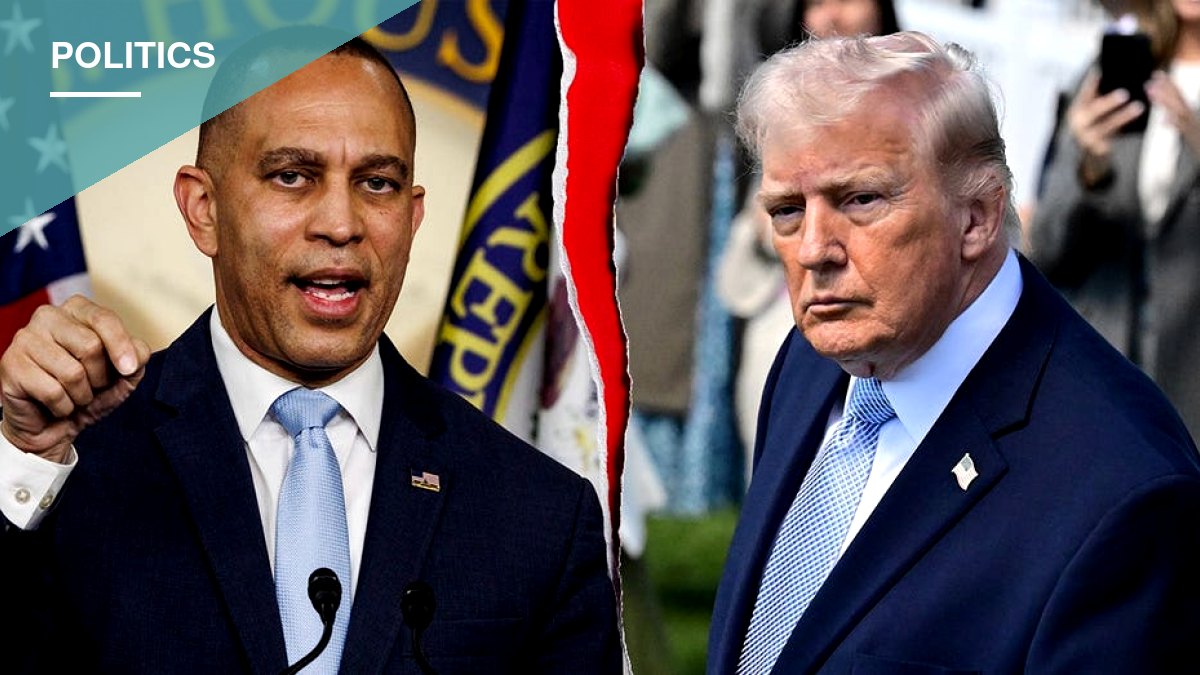
House Minority Leader Hakeem Jeffries, D-N.Y., and his top deputies chose to vote “present” on Tuesday’s motion, a stance that avoided taking sides while making it easier for Republicans to dispose of the resolution.
In a statement, Jeffries argued that impeachment “traditionally requires a comprehensive investigative process, the collection and review of thousands of documents, an exacting scrutiny of the facts, the examination of dozens of key witnesses, congressional hearings, sustained public organizing and the marshaling of the forces of democracy to build a broad national consensus.”
“None of that serious work has been done, with the Republican majority focused solely on rubber-stamping Donald Trump’s extreme agenda,” senior House Democratic leaders said. “Accordingly, we will again vote ‘present’ on the motion to table the impeachment resolution as we continue our fight to make life more affordable for everyday Americans, while committing to holding the crooks accountable using every tool available to us beginning on day one.”
Green pushed back hard on that reasoning in comments to reporters Monday, accusing colleagues of stalling on a matter he considers clear-cut.
“They will acknowledge that what the president is doing is impeachable, but they would have us wait. Well, the Constitution doesn’t have a wait clause in it,” Green said. “I believe that there are some Republicans and Democrats who are considering voting to protect the president. If they’re not considering protecting him, that will be the effect of what they will do when they vote to either table or they vote to send this to a committee for further investigation.”
The vote reflects a broader strategic calculation among House Democrats, who are trying to retake the majority in the November midterms and have largely avoided emphasizing impeachment as they court moderate and independent voters focused on the cost of living rather than what some see as political retribution.
Tuesday’s vote may also mark Green’s last such stand in Congress. He was among several Democratic incumbents who lost their primary races this cycle amid a broader push by left-wing voters against establishment figures in the party.

