

The New York City Council on Thursday abandoned a plan that would have automatically enrolled residents in city benefit programs, replacing it with a far narrower measure after members raised alarms about immigrant privacy and federal overreach.
The original bill, Intro. 248, would have directed the city to mine tax records, social services rolls and other government data to identify New Yorkers eligible for city-administered benefits and enroll them without an application. Critics warned the approach could have swept undocumented immigrants into government databases and driven costs up by billions of dollars.
Instead, the council unanimously passed a revised version that simply directs the Department of Social Services to study whether automatic enrollment is even feasible, given the privacy concerns, and to report findings within 18 months of the law taking effect.
Council Speaker Julie Menin said the retreat was driven in part by new federal immigration policy.
“There are often so many logistical challenges to getting some of these bills passed,” Menin said. “We want to make sure that we did everything to protect people’s private information.”
At issue is the federal government’s “public charge” review, which can factor an immigrant’s use of public benefits into decisions on green card and visa applications. The Trump administration expanded that policy on Sept. 18, allowing immigration officials to weigh benefit usage more heavily, though the review does not automatically disqualify an applicant.
“One thing we’re particularly concerned about was public charge, and that was a concern shared with the [Mamdani] administration,” Menin said.
The Mamdani administration, alongside state Attorney General Letitia James, has sued the Trump administration over the expanded public charge rule, arguing it could frighten immigrants away from health care, food aid and other benefits they are legally entitled to receive.
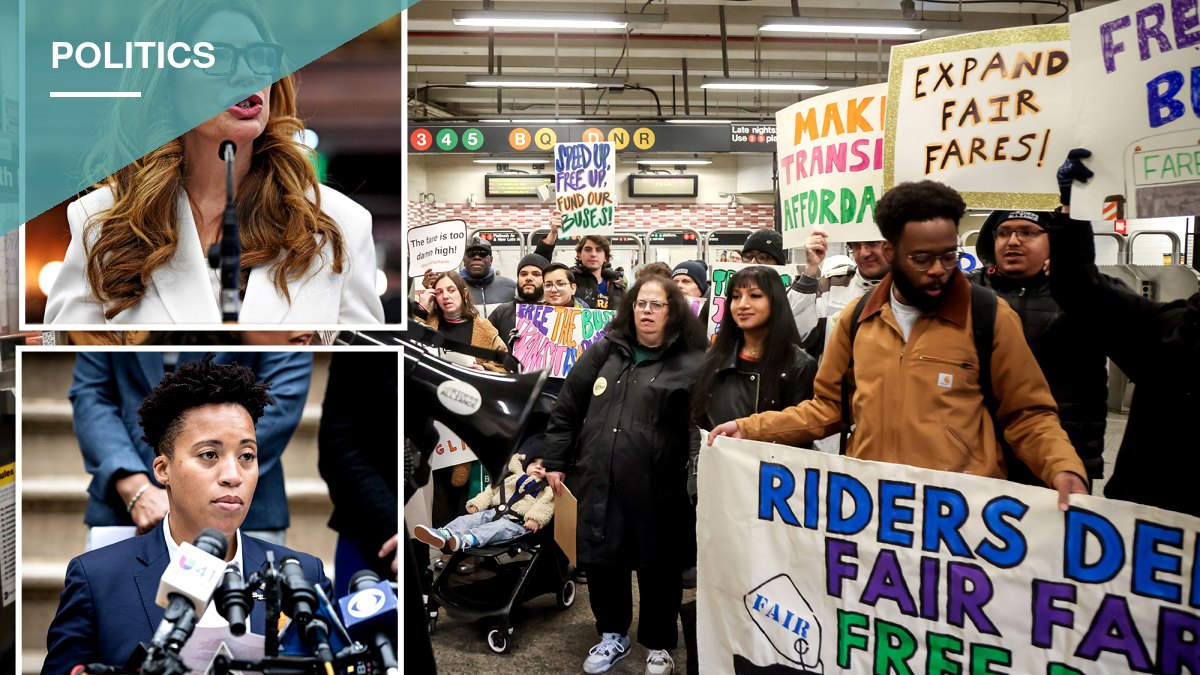
Rather than a sweeping data-sharing mandate, the revised bill zeroes in on one program: Fair Fares, the city’s half-price transit discount for low-income residents. It directs the Department of Social Services to build a streamlined sign-up process through ACCESS HRA, job centers and the SNAP program, using information New Yorkers already submitted for food stamps or cash assistance to determine Fair Fares eligibility. The agency would also be required to notify eligible SNAP and cash assistance recipients every six months if they have not signed up for Fair Fares.
Councilmember Crystal Hudson, the bill’s sponsor, originally pitched the legislation as a way to lift participation in Fair Fares, which has struggled to reach eligible residents. According to the New York City Independent Budget Office, only about 40% of the roughly 960,000 New Yorkers who qualify for the program are actually enrolled.
The scaled-back bill now heads to Mayor Zohran Mamdani for his signature. Mamdani, who campaigned on making city buses free entirely, has pushed a broader transit-affordability agenda that the MTA has resisted, citing a price tag exceeding $1 billion.
Separately, the council secured a Fair Fares expansion in the fiscal 2027 budget deal, adding $54 million on top of $120.6 million already allocated for the program. That deal raises the income eligibility cap from 150% to 200% of the federal poverty level, extending the 50% fare discount to an estimated 340,000 additional New Yorkers.

