

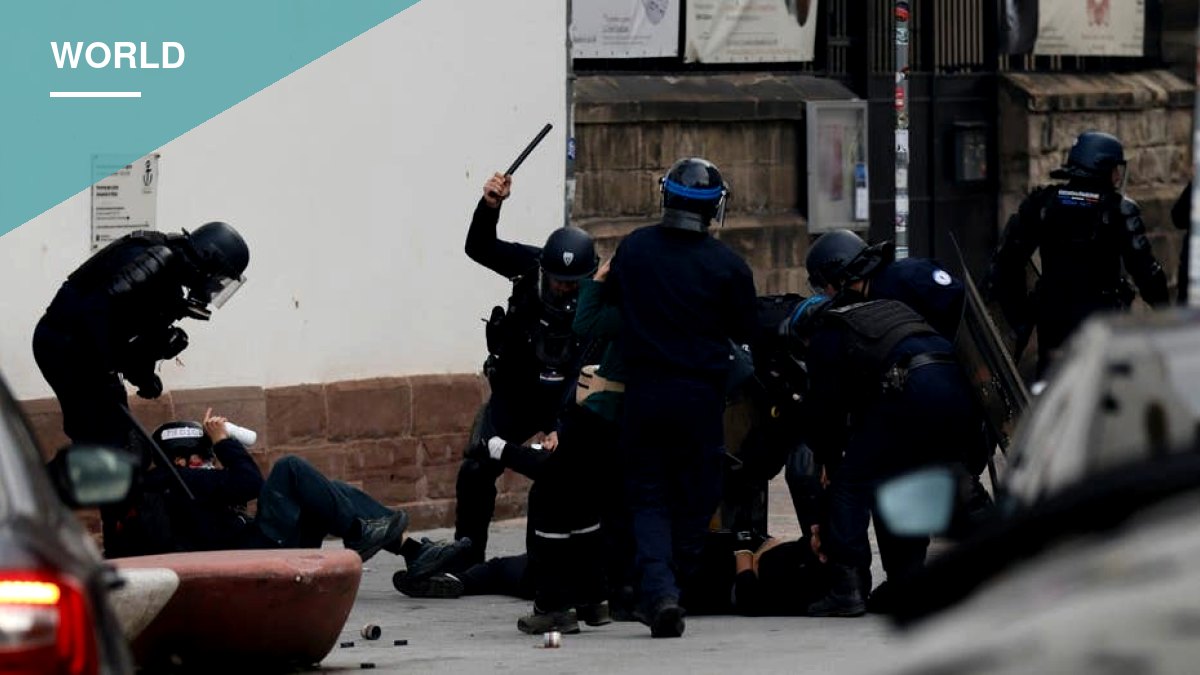
Nearly 1,000 people were arrested across France on Saturday as nationwide protests resumed, French Interior Minister Laurent Nuñez told reporters. He did not specify where the arrests took place.
Ahead of the marches, police officers preemptively searched protesters and detained individuals suspected of carrying potential weapons, including fireworks and ball bearings, according to Reuters.
In Paris, where police estimated 110,000 people marched, officers carried out more than 3,000 checks and arrested 65 people, the BBC reported. Union organizers put the Paris turnout far higher, at 250,000, while the French Interior Ministry said roughly 410,000 people took part in demonstrations nationwide. Union organizers estimated the national figure at 800,000.
The Paris Police Department defended the heavy screening in a social media post: “Violent individuals have no place in the marches. The objective is clear: to prevent troublemakers from joining the procession, and to ensure the safety of the demonstrators.”
Central Paris took on the look of a city bracing for trouble, with shopkeepers boarding up storefronts, museums shutting their doors, and more than 20 metro stations suspending service for the day.
Unrest Spreads Beyond the Capital
Police fired tear gas to break up unruly crowds in several other cities, including Clermont-Ferrand, Grenoble, Lille and Nice, Reuters reported. In Nice, officers also deployed a water cannon against a group of demonstrators who refused to disperse. Clashes between police and hooded youths were reported in Marseille and Lyon.
Authorities deployed roughly 70,000 police officers nationwide in an effort to contain agitators and avoid a repeat of earlier unrest, when cars were torched and the city hall building in Limoges was set on fire. More than 2,700 people were arrested the previous weekend after protests spiraled into riots and looting.
How the Movement Started
The demonstrations began weeks ago, led by high school and university students angry over teacher shortages and poor school conditions, including overcrowded classrooms and deteriorating buildings. The movement broadened considerably once major labor unions joined in, expanding the protests into a wider rejection of the government’s austerity policies and grievances over wages, pensions and the cost of living.

