
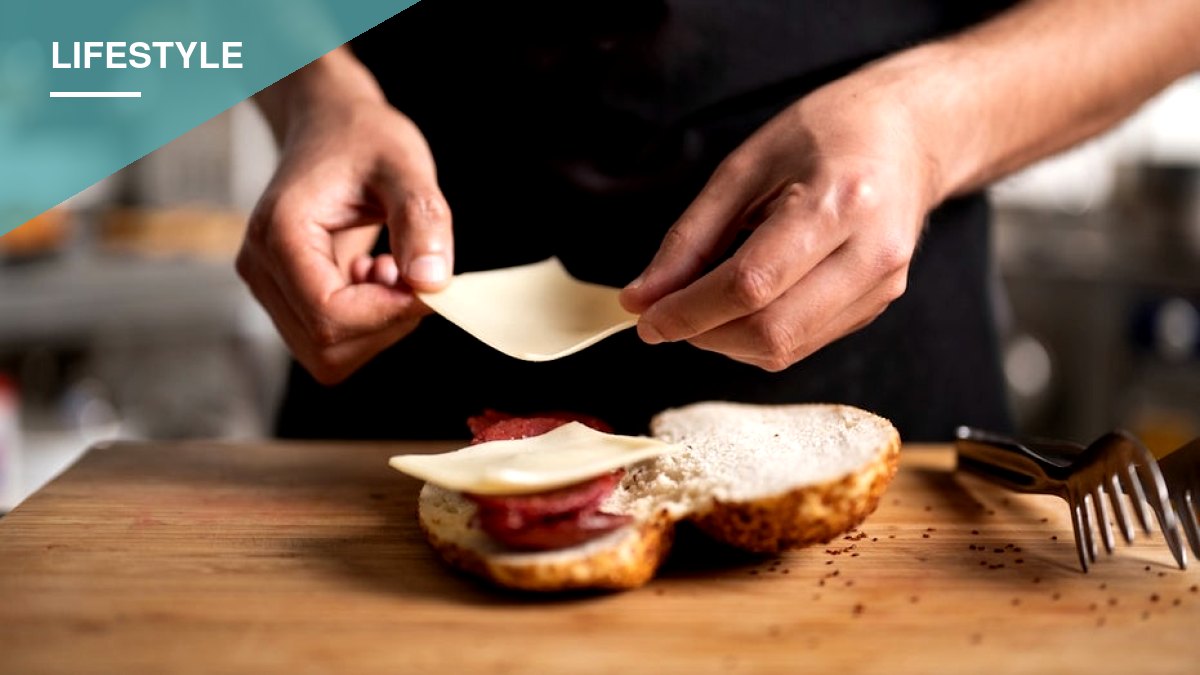
National Sandwich Day gives home cooks a reason to rethink the midday meal, and Gilli Rozynek, owner of Brown Bag Sandwich Co. in New York City, has some practical advice for doing it better without leaving the kitchen.
Rozynek says the most common error people make is piling ingredients on top of each other without considering how each bite will actually taste. “One of the biggest mistakes people make is stacking a bunch of delicious ingredients together without thinking about how they’ll actually eat them,” she says. “You might get the meat in one bite, the lettuce in the next and the sauce at the end. That’s why we love chopping our sandwich ingredients.”
Chopping the fillings together, she explains, spreads every ingredient and condiment evenly through the sandwich instead of leaving them clustered in separate layers.
Balance is everything
Beyond technique, Rozynek says a great sandwich comes down to balancing four qualities: richness, acidity, texture and freshness. “If you have something rich like cheese, mayo or fatty meat, you probably want something acidic to cut through it, like a pickle, cherry peppers, mustard or a vinaigrette,” she says.
The bread matters just as much as what’s inside it. “Look for something that can stand up to the fillings without being so tough that everything gets pushed out when you take a bite,” Rozynek says.
Tools worth having
Rozynek pointed to a few kitchen tools she relies on in her own shop. A serrated knife, she says, is essential for slicing bread and delicate ingredients like tomatoes without crushing them: “You want to slice through a crusty hero or roll without crushing the bread. It’s especially helpful when cutting a fully assembled sandwich in half.”
One of her favorite tools is a simple pizza cutter. “We use it to chop ingredients together inside a bowl,” she says. “The rounded blade works with the shape of the bowl, making it easy to mix and chop ingredients without needing a large cutting surface.”
For spreading mayo, mustard, pesto or stickier toppings like peanut butter or goat cheese, a wide rounded spreading knife can also double as a tool for halving a sandwich or trimming crusts.
Toasting the bread is another step Rozynek says shouldn’t be skipped, particularly for hot sandwiches. A two-slice toaster with adjustable shade settings, a breakfast sandwich maker with a larger cooking surface, or a cast-iron skillet for a crisp grilled cheese are all options for home cooks looking to upgrade that step.
Other tools worth considering include a crustless sandwich cutter and sealer, handy for freezer-ready peanut butter and jelly sandwiches, sturdy lunch containers with locking lids to keep sandwiches from getting smushed in transit, and even a bread machine for anyone wanting fresh homemade loaves without the hands-on kneading.
None of it requires a professional kitchen. Rozynek’s advice, at its core, is simple: think about the bite before you build it, pick bread that can hold its own, and don’t be afraid to chop things up.