

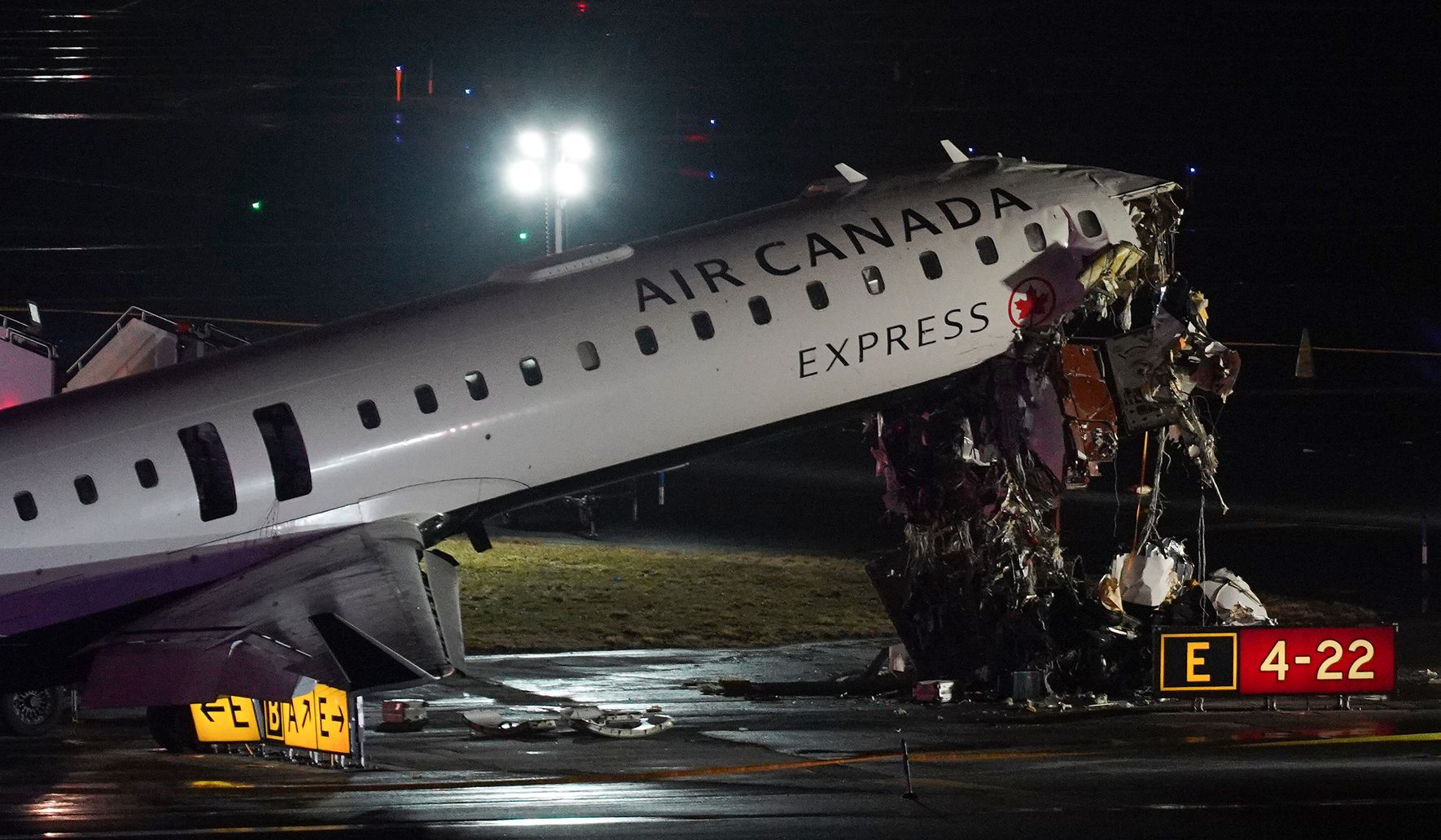
Two people were killed and several others badly hurt when an Air Canada regional jet struck a fire truck on a runway while landing at New York’s LaGuardia Airport late Sunday night, officials said.
The collision happened during a landing at LaGuardia late on Sunday, when an Air Canada regional jet struck a fire truck that was on the runway. Two people died and several others suffered serious injuries, according to official counts released after the scene was secured. Emergency teams converged quickly, treating the wounded and moving victims to nearby hospitals.
Airport operations were immediately disrupted as the runway was closed and incoming and outgoing flights were diverted or delayed. Ground crews and airport management worked to clear debris and assess damage to both the aircraft and airport infrastructure. Travelers faced long waits and rerouted itineraries while authorities coordinated a response.
First responders described a chaotic scene at the intersection of high speed and limited visibility that often comes with late-night operations at busy airports. Firefighters and paramedics prioritized life-saving measures; trauma teams at local hospitals stood ready to accept critical patients. The human toll has dominated local reaction, with families and passengers seeking information and support.
Federal and local agencies opened an investigation to determine how a fire truck came to be on an active runway during a landing. Investigators typically examine communications, radar tracks, air traffic control recordings, and maintenance logs to reconstruct events. Both the airline and airport officials pledged cooperation as investigators work to establish the sequence that led to the collision.
Airport safety protocols and runway incursion prevention are now central to the inquiry, as officials look for any procedural breakdowns. Authorities will review whether dispatch, signaling, or communication failures occurred and whether personnel followed established procedures. The ultimate goal is to learn what happened and to recommend changes that reduce the chance of a repeat.
Passengers and crew members from the aircraft were interviewed to capture their accounts of the landing and the moments after impact. Witness statements often help corroborate technical data and provide context about timing, visibility, and any unusual sounds or movements. Those firsthand reports will feed into a broader reconstruction of the incident.
Airlines and airport operators face immediate operational challenges following such events, including managing stranded passengers, rebooking flights, and addressing aircraft repairs. Insurance and regulatory reviews typically begin quickly, and affected carriers will need to work with authorities on documentation and timelines. Public communication becomes a priority to keep travelers informed and to prevent speculation.
The local community felt the ripple effects of the accident, with roadways and nearby facilities seeing increased activity as emergency services coordinated. LaGuardia’s role as a major New York hub means incidents like this create broader travel disruptions across the region. Officials urged calm and patience as recovery and investigative work proceeded.
Safety experts note that runway incursions are rare but can have severe consequences when they intersect with landing or departing aircraft. The ongoing investigation will look for lessons learned and potential policy changes to strengthen runway safety. In the coming days, authorities are expected to release more detailed findings as evidence is analyzed and officials finalize preliminary reports.

