

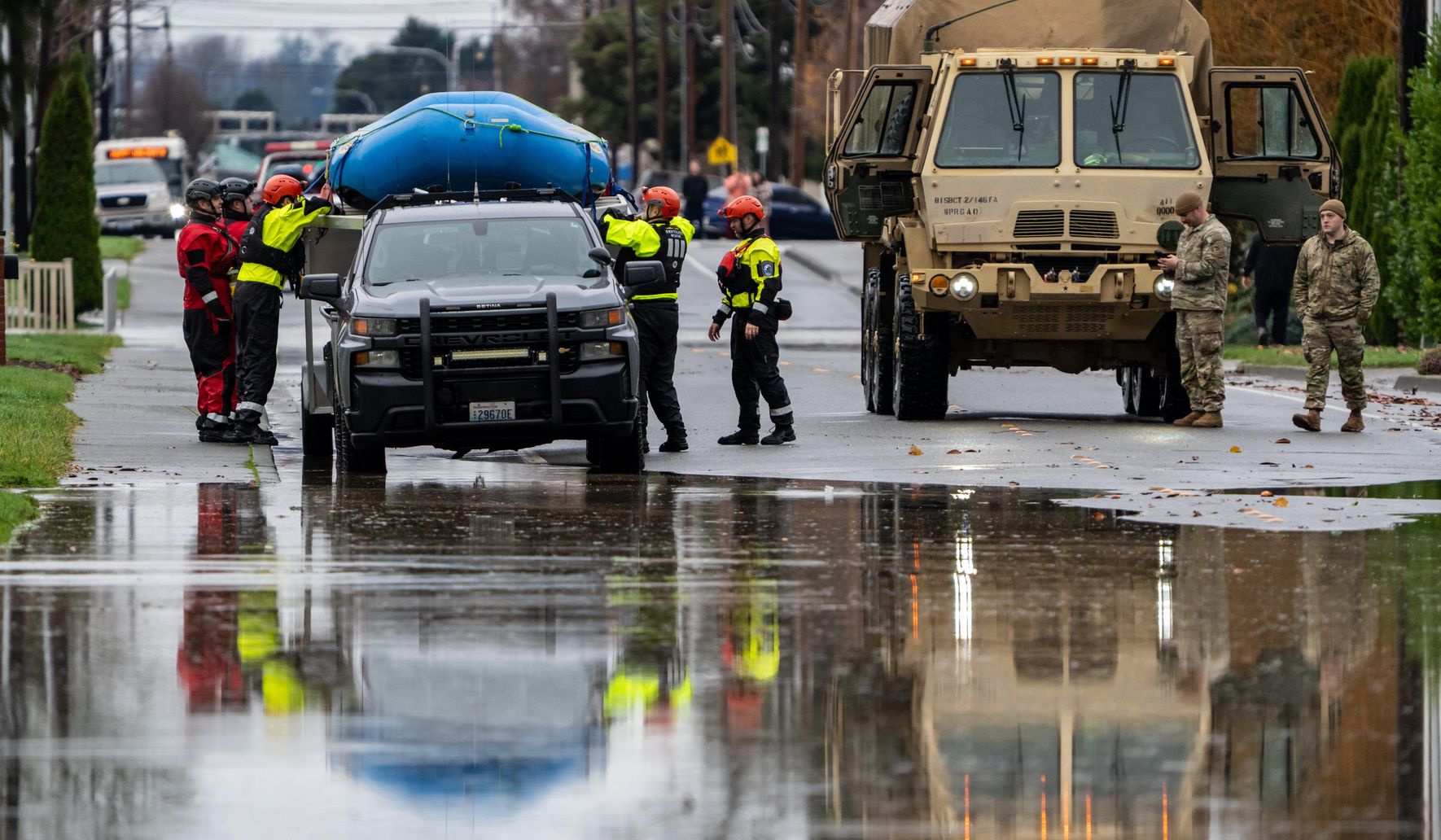
A powerful blast of arctic air is moving south from Canada into parts of the northern United States while the Pacific Northwest faces the threat of heavy floodwaters and the possibility of mudslides and levee failures.
A cold front pushing down from Canada is bringing a sharp temperature drop to wide swaths of the northern U.S., creating bitter conditions for communities still adjusting to late-season weather. Wind chills are expected to make temperatures feel even colder than the mercury reads, and the sudden change raises concerns for vulnerable people, livestock, and infrastructure. Forecasters are watching the transition zone closely as colder air undercuts moister, milder layers to the south.
At the same time, parts of the Pacific Northwest are dealing with the aftermath of intense precipitation that saturated soils and swelled rivers. That saturation raises the risk of mudslides on steep slopes and undermines levees that had been holding back floodwaters in low-lying areas. Emergency managers have warned that where soils are already waterlogged, even modest additional rain can trigger failures in hillsides and flood-control structures.
When arctic air collides with lingering mild air masses, the result can be sharp boundary-layer dynamics that produce strong winds, heavy snow, or freezing rain depending on local elevations and temperatures. Mountainous areas can see quick changes in precipitation type, while valleys may experience freezing drizzle or slick icy surfaces. These transitions complicate travel, utility maintenance, and ongoing recovery efforts in flood-impacted regions.
Levee systems that performed under past flood conditions may be vulnerable now because of prolonged saturation and higher-than-normal river stages, which exert extra pressure on their foundations. A levee breach or overtopping can send floodwaters into neighborhoods and agricultural lands with little warning, spreading debris and causing long-term damage to roads and utilities. Officials continue to inspect critical infrastructure, but rapid shifts in weather can outpace repair windows and contingency measures.
Mudslides present a parallel hazard, especially where steep, deforested, or recently burned slopes are present; those areas lose soil cohesion after heavy rain and can give way suddenly. When water rushes down a hillside, it carries trees, rocks, and other debris that can block drainage channels and multiply downstream flooding risks. Residents in vulnerable corridors are often advised to watch for signs like new cracks in the ground, unusual pooling near foundations, or sudden changes in drainage patterns.
Transportation is likely to feel the strain as crews push to keep roads passable in freezing conditions while also responding to flood repairs and landslide clearances. Icy bridges and snow-covered passes slow emergency response times and complicate supply routes for communities that depend on a single artery. Airports and rail lines can face delays or cancellations when precipitation types shift quickly or when accumulated flood damage reduces safe operating capacity.
Power and communications networks are fragile when both cold and wet extremes appear in sequence, with frozen precipitation bringing down tree limbs while saturated soils make trees more likely to fall. Restoring service after concurrent freeze and flood events requires coordinated crews, specialized equipment, and safe access to damaged areas. Utilities may prioritize critical facilities first, leaving some neighborhoods longer without heat or power during the worst hours of the blast.
Public safety messaging during these episodes typically focuses on situational awareness, avoiding travel during peak impacts, and heeding local evacuation orders when levees or slopes show signs of failure. Officials often emphasize staying off flooded roads, avoiding contact with floodwaters, and moving to higher ground if a levee breach is anticipated. Clear, timely updates are essential because conditions can deteriorate fast as weather systems evolve.
Looking ahead, the interplay of cold air pushing south and lingering flood concerns in the Northwest underscores how a single storm system can produce multiple hazards across a broad region. Communities that face both freeze-related threats and flood vulnerabilities must balance competing priorities for response and recovery. Preparedness, rapid assessment of infrastructure, and coordinated communication remain critical as meteorological forecasts refine the timing and severity of the impacts.

