

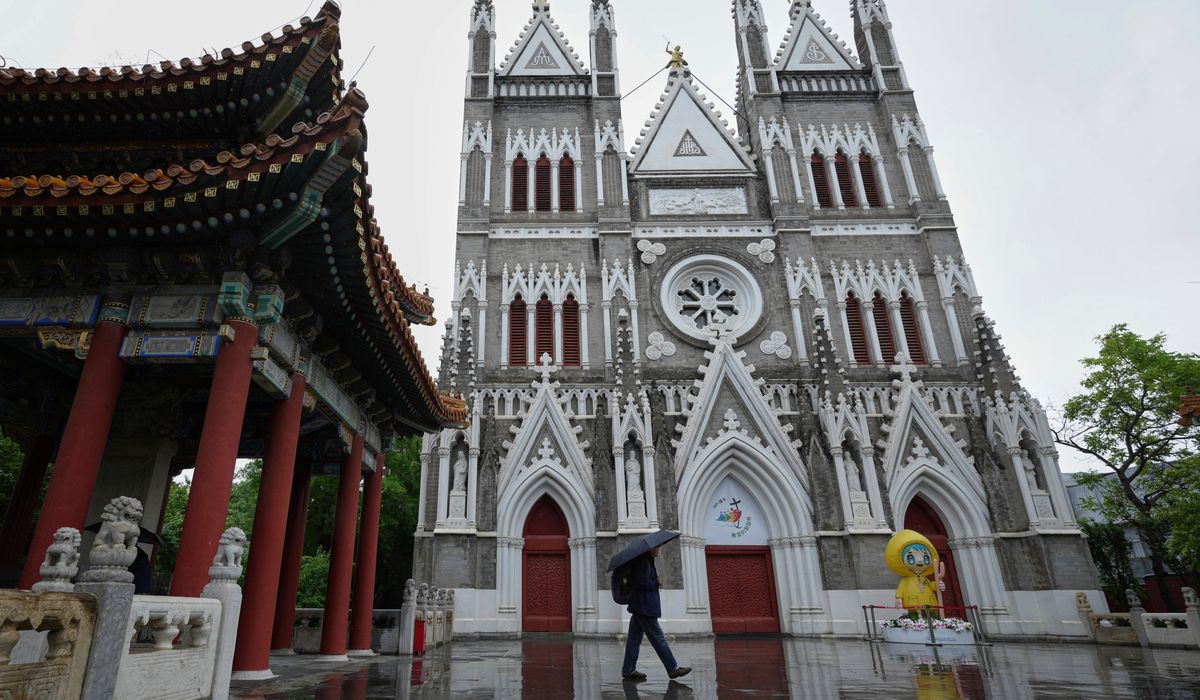
Chinese authorities are stepping up pressure on underground Catholic communities, pushing them toward the state-controlled official church while tightening surveillance and travel restrictions across the country.
The government’s campaign targets believers who operate outside official channels and pressures them to enter the state-controlled official church. Officials are using a mix of bureaucratic coercion, increased watchfulness, and limits on movement to change how communities worship. This is happening alongside broader restrictions that affect travel and personal freedoms for many citizens.
Local party cadres and security organs have intensified outreach and oversight of unregistered congregations, often treating religious life as a matter of social control. That outreach includes requiring registration, restricting public gatherings, and monitoring leaders closely. For Catholics who have long resisted state oversight, these moves feel like a push to erase independent practice.
The pressure to join the official church is not purely administrative; it comes with consequences for refusal. Parishioners who decline to comply can face obstacles in everyday life, from trouble with local permits to tighter scrutiny of family movements. The message is clear: alignment with the state-approved institution buys safety, resistance brings disruption.
Surveillance now reaches into the rhythms of religious life through technology and paperwork. Authorities can track attendees, document sermons, and keep tabs on clergy travel plans, making it harder for underground communities to operate in privacy. This kind of monitoring chills worship and raises questions about basic freedoms most democracies take for granted.
Travel restrictions compound the problem, curbing the ability of believers to visit shrines, meet with outside clergy, or attend services that fall outside state approval. When movement is constrained, so is the exchange of ideas and pastoral care that sustain religious identity. For communities used to discreet networks and occasional pilgrimages, those links are under strain.
From a Republican viewpoint, this trend is worrying because it shows how an authoritarian state treats religious liberty as subordinate to regime control. Protecting faith communities from coercion is a basic American principle, and seeing other governments undermine that right demands attention. There is a clear difference between legitimate regulation and heavy-handed state intervention that reshapes spiritual life.
International observers and faith groups point out the human cost: families divided over compliance, clergy forced into difficult choices, and smaller congregations squeezed out of public life. Those consequences ripple through local societies, weakening civic institutions and eroding trust. When religion becomes a matter of state policy instead of conscience, communities lose an essential source of resilience.
For underground Catholics, the options are stark and painful: accept state oversight and change longstanding practices, try to continue quietly under intensified monitoring, or face possible penalties that affect daily life. None of those choices are easy, and each one reshapes the future of faith in those communities. The outcome will matter for religious freedom and for how ordinary people experience governance in their own neighborhoods.
Observers say the situation is part of a larger pattern where national security and social stability arguments are used to justify tighter control over civil society. That narrative frames independent religious life as a potential risk, not a protected right. The result is a landscape where private belief is harder to keep private and public worship is negotiated on the terms set by the state.
Ultimately, the push toward the state-controlled official church and the expanded surveillance and travel limits are about power and conformity. For believers who treasure autonomy of conscience, the changes represent a direct challenge. How communities respond and how outside actors react will shape religious life and personal freedoms in the months and years to come.

