
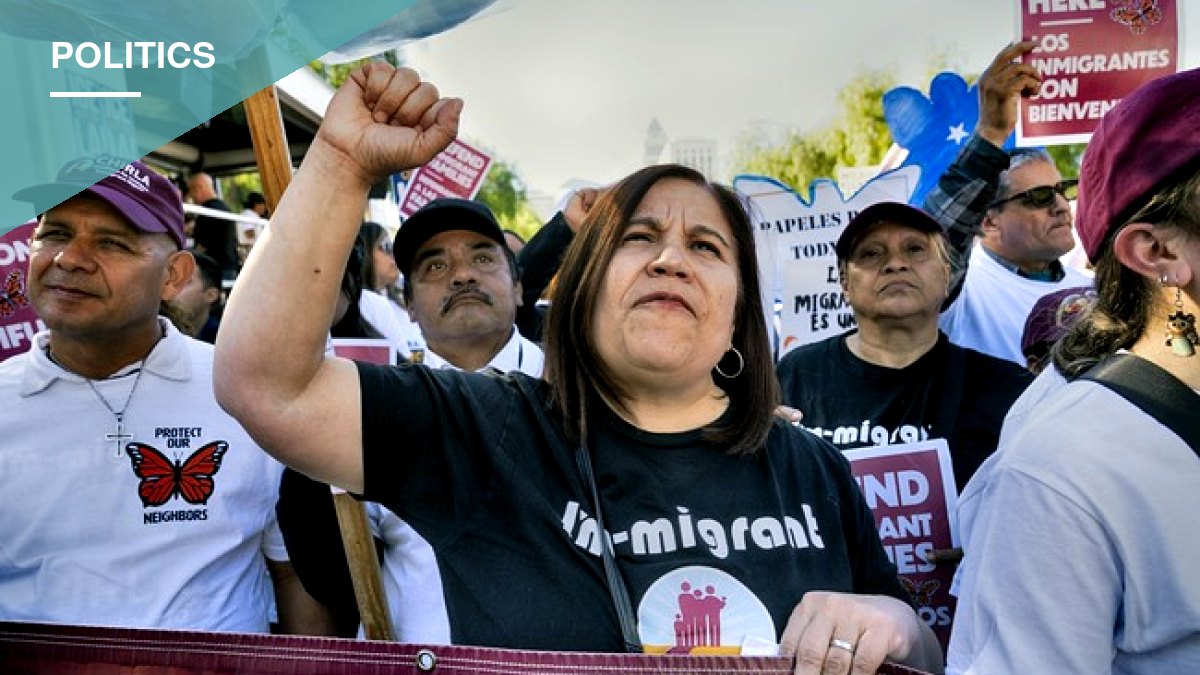
A federal judge’s order to turn over a Department of Justice list of suspected noncitizen voters has set off a dispute over who gets to see the data behind competing claims about California’s voter rolls.
On Friday, U.S. District Judge James Boasberg ordered the DOJ to hand over its list of 20,930 names it had flagged as likely noncitizens on California’s voter rolls to the Coalition for Humane Immigrant Rights of Los Angeles, known as CHIRLA, in a case filed in September in the D.C. District Court. The order is separate from a different DOJ lawsuit against the State of California and Los Angeles County, which sought to have election officials segregate ballots from people on the list until their citizenship could be confirmed.
Boasberg’s order was intended to let CHIRLA compare the DOJ list against its own membership roster to establish legal standing in the case. Data scientists from the UCLA Voting Rights Project, which is serving as counsel for CHIRLA, then compared the DOJ list to what has been described as “CHIRLA members and clients naturalized citizen list.”
The UCLA Voting Rights Project’s Senior Strategy Advisor and Voting Rights Counsel is Xavier Becerra, the former U.S. Health and Human Services Secretary who is now a Democratic candidate for California governor. Becerra has signed the filings in the case.
What the Analysis Found
The Associated Press reported that the UCLA analysis found 8,880 of the names on the DOJ list — 42% of the total — do not correspond to anyone in California’s current voter file. The analysis also found at least 22 names on the list matching people the researchers say are U.S. citizens, with the researchers stating they are “certain that there at least 22 entries on the CHIRLA citizen list that fully match to the DHS ineligible list.”
The current voter file used in that analysis is not one the DOJ has had access to. A federal judge ruled in January, in a separate case known as USA v. Weber, that California was not required to turn its voter file over to the DOJ. The UCLA Voting Rights Project has a contract with the California Secretary of State’s office to analyze voting trends using the state’s voter file.
According to sworn declarations the DOJ filed in its case against the State of California, its original list was built from a version of California’s voter roll obtained by the Department of Homeland Security that was current as of August 2025. If the newer analysis is accurate, it would suggest state and local officials removed some names from the rolls in the months since — while leaving roughly 60% of the original list still registered to vote.
A Records Dispute Follows
The DOJ’s lawsuits had not sought to discard ballots or remove anyone from the voter rolls outright; they sought additional verification of citizenship status for people on the list.
A new dispute has now emerged over data access. CHIRLA submitted its citizen members-and-clients list to Judge Boasberg ex parte, for his review alone, without sharing it with the DOJ. The Department of Homeland Security filed a motion Sunday seeking both the full current voter file used in the UCLA analysis and CHIRLA’s underlying citizen list, arguing that if that data was used to support CHIRLA’s case for standing and relief, the defendants are entitled to examine it as well.