

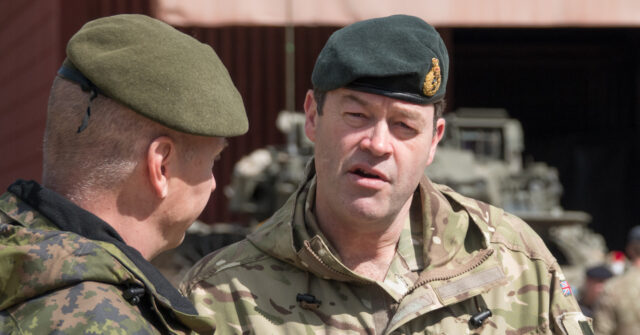
The former leader of the British Army, Gen Sir Patrick Sanders, has issued a stark warning about the potential for conflict with Russia within the next five years. He emphasized the urgent need for Westminster to enhance the country’s defense capabilities in response to this threat. Gen Sanders argued that the current geopolitical situation is more perilous than the Cold War era.
In a conversation with The Telegraph, Gen Sanders explained that an attack on any NATO ally by Russia could invoke Article 5, obligating Britain to respond. He highlighted the presence of British forces in Estonia, which would be directly involved if Russia were to strike there. Gen Sanders remarked, “British troops would be involved from day one.”
Gen Sanders painted a scenario where Russia, ceasing its activities in Ukraine, could soon pose a direct threat to a NATO member. He warned that this could happen as early as 2030, making it crucial for Britain to act. The British Army’s current size is a concern, having dwindled to the smallest since the Napoleonic era.
The British Army now numbers around 73,000 active-duty troops, a stark contrast to Russia’s 1.3 million soldiers. Gen Sanders expressed the urgency for expansion, stating, “At the moment, the British Army is too small to survive more than the first few months of an intensive engagement.” He noted the importance of bolstering the reserves, which currently number 30,000.
Despite the pressing need, Gen Sanders criticized the government for its reluctance to invest in the military. He pointed out the lack of resilience infrastructure in Britain, contrasting it with Finland’s preparedness. Finland, he noted, has bomb shelters for 4.5 million people, an example of comprehensive national defense.
Gen Sanders emphasized that the government and society need to prepare for potential attacks. He urged for significant action within the next five years to strengthen Britain’s resilience. Without such measures, he questioned what more signals are needed to spur action.
Countries like Estonia, Poland, and the Nordic nations were praised by Gen Sanders for their proactive defense strategies. These nations actively prepare their citizens for potential attacks, offering training and instructions. They encourage the establishment of personal defensive bunkers and civil defense roles.
The proactive approach of these nations serves as a model that Britain could follow. Gen Sanders stressed the importance of learning from these countries to protect key infrastructure. The emphasis on readiness and civil defense is a critical component of their strategy.
In summary, Gen Sanders’s message was clear: Britain must take decisive steps to bolster its defense capabilities. The potential threat from Russia is real, and preparation is essential. The time to act, he insisted, is now, before it is too late.
The need for a strong defense is not just about military strength but also about societal resilience. Gen Sanders’s comments underscore the importance of a well-prepared society. The warning is a call to action for both government and citizens alike.
As the geopolitical landscape evolves, Britain’s defense strategy must adapt accordingly. The potential for conflict with Russia is a stark reminder of the global threats that exist. Gen Sanders’s insights provide a conservative perspective on the urgent need for preparedness.
The focus on enhancing defense capabilities aligns with conservative values of national security. Gen Sanders’s warnings resonate with those who prioritize a strong national defense. The call to action is clear: strengthen defenses now to safeguard the future.
The importance of investing in the military cannot be overstated. Gen Sanders’s remarks highlight the critical need for a robust defense infrastructure. The lessons from other nations offer valuable insights into effective defense strategies.
In conclusion, the message from Gen Sanders is one of urgency and preparedness. The potential threat from Russia requires immediate attention and action. Strengthening Britain’s defense capabilities is imperative for national security.

