

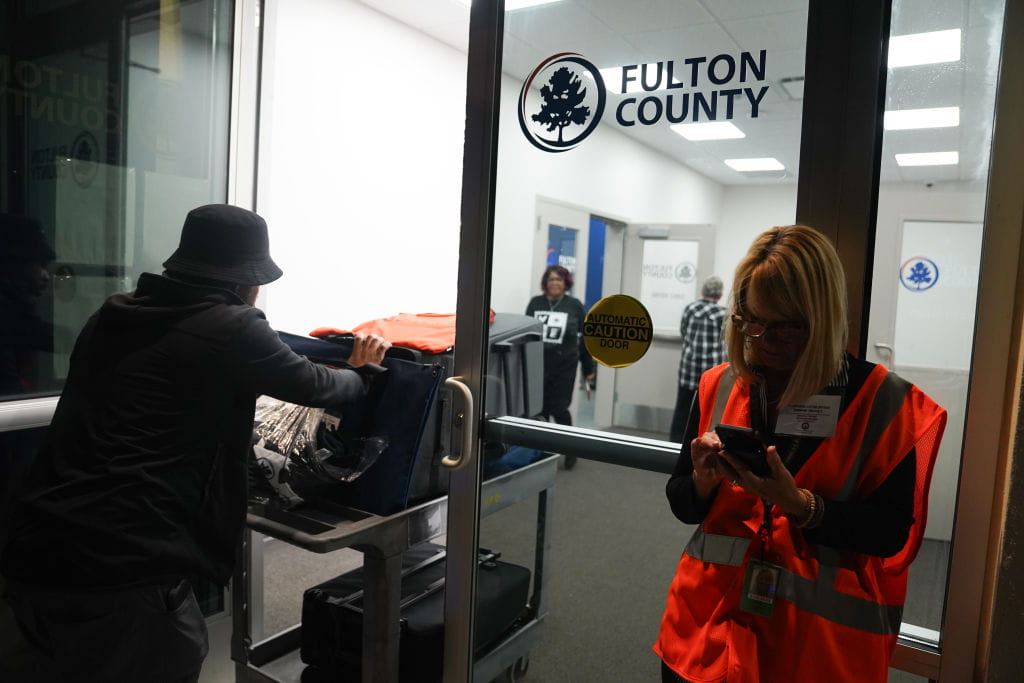
Federal agents executed a search warrant at the Fulton County election warehouse and removed a large volume of 2020 presidential election materials, prompting a heated debate about oversight, evidence handling, and public trust.
Federal Bureau of Investigation agents executed a warrant at the Fulton County election warehouse and removed 700 boxes tied to the 2020 presidential election, a move that immediately raised questions across the political spectrum. The warrant itself was made public when Greg Bluestein, chief political reporter for The Atlanta Journal-Constitution, posted a copy on his X page. Reported items taken included “Physical ballots, tabulator tapes, ballot images, and voter rolls […].” The sheer scale of the seizure made it impossible to ignore.
From a Republican viewpoint, the scene looks like another federal escalation into state and local election administration that demands clear boundaries and strict legal justification. Many on the right view mass seizures of election records as a direct threat to local control and to the processes that counties use to carry out elections. At the same time, a search warrant does imply judicial approval, which raises a clash between the need for thorough investigation and the need to preserve local autonomy and voter confidence. This tension drives much of the political response.
Legal experts note that a properly issued search warrant requires probable cause and must list the items to be seized, and that can provide a lawful basis for the FBI’s actions. Yet critics point out that removing original records can complicate chain-of-custody issues and makes it harder for local officials to demonstrate the integrity of their processes. Republicans emphasize that any handling of ballots or related materials should be as transparent and narrowly tailored as possible to prevent the appearance of impropriety. The optics matter as much as the law when public trust is fragile.
Questions about what happens to the seized materials are central. Warrant language and law enforcement practice often allow for copying or forensic imaging rather than taking originals permanently, but the public rarely gets full visibility into those procedures. Conservative commentators and elected officials have repeatedly asked for assurances that originals will be returned promptly and that any forensic work will be documented and audited by independent observers. Without that clarity, skepticism about federal motives only deepens.
There are broader institutional implications as well, touching on how election administration and criminal investigation intersect. Republicans worry that using criminal investigatory tools to gather vast quantities of election data could chill routine county practices and push local officials into defensive postures. That chilling effect might reduce the willingness of counties to experiment with improvements or to cooperate with state and federal partners for fear of heavy-handed enforcement. The balance between accountability and intrusion is a live policy fight.
Media coverage has highlighted the warrant and the items listed, and the story has spread rapidly across platforms, fueling partisan narratives on all sides. Greg Bluestein’s posting of the warrant on X made the document accessible and intensified scrutiny, but it did not settle the central disputes over motive or method. Republicans are particularly sensitive to any perception that investigations are selective, politically timed, or aimed at reversing outcomes rather than enforcing clear, nonpartisan standards. That sensitivity shapes both public reaction and requests for further information.
At the same time, legal processes will determine what evidence is admissible and how courts treat any challenges to the seizure. Investigations that involve election materials can be complex and slow, involving forensic work, subpoenas, and potential judicial review. For those who distrust the initial action, the court docket becomes a critical venue where transparency, procedural fairness, and legal rigor can be tested under oath. Attention will focus on how swiftly and openly the next steps are handled.
The stakes go beyond a single warehouse or a single set of boxes; they feed into a larger national discussion about how to secure elections while protecting the rights and responsibilities of states and counties. Republicans insist that any federal involvement be narrowly confined, fully documented, and free of political coloring so voters can be confident their ballots and records are respected. As developments unfold, attention will remain fixed on the chain of custody, the scope of the warrant, and how officials explain each decision to the public.

