

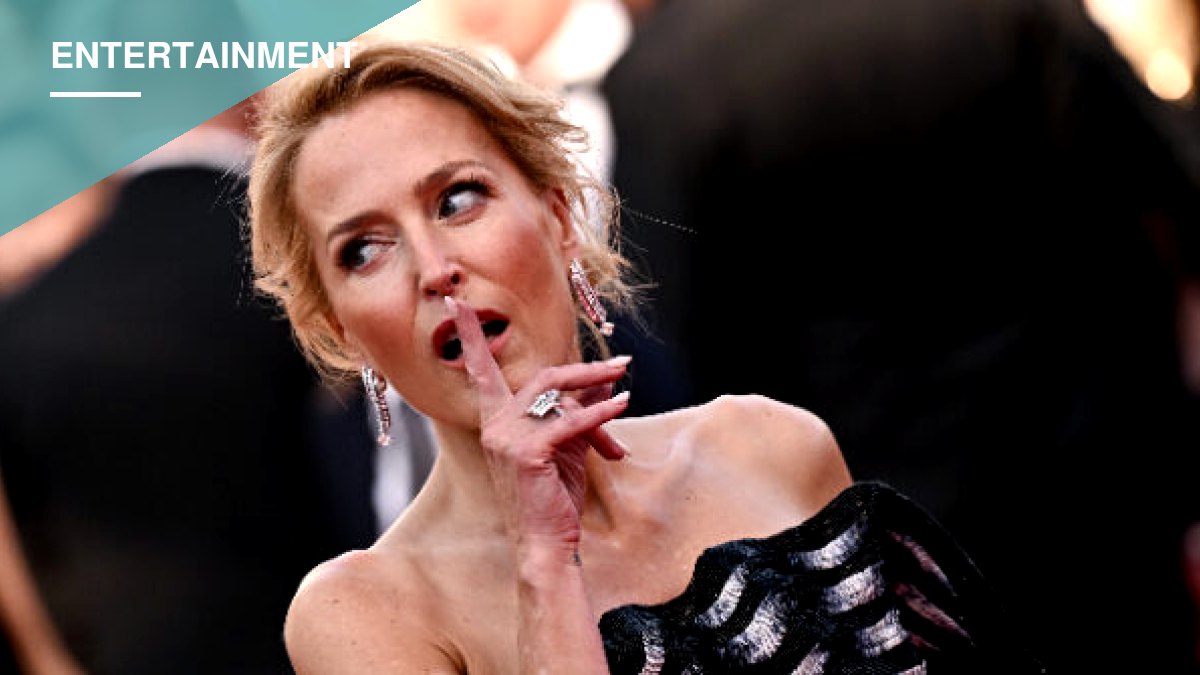
Actress Gillian Anderson, best known for playing Agent Dana Scully on “The X-Files,” has said she now identifies as pansexual, meaning she is attracted to people regardless of gender.
Anderson made the comments in an interview with The Australian, where she reflected on relationships she had with women earlier in her life.
“In my younger years, I was in relationships with women,” she said, adding that her understanding of her own sexuality shifted after hearing about other women’s experiences.
“I’m not a big flirter. I don’t put it out there very much. I do hear of a lot of women around our age who are rediscovering their sensuality and their desire for sex,” she said. “It certainly sounds like they’re in the dating field. That they’re having a lot of fun, a lot of opportunities, but also being approached on these apps by much younger men.”
Anderson shares a daughter with her ex-husband Clyde Klotz and two sons with her former partner Mark Griffiths. In an earlier interview with the Sunday Times, she described dating a girl when she was younger and said she lacked the vocabulary at the time to define her sexuality.
“It felt secretive and illicit and wrong and we had to hide,” she said. “Later on, I had a boyfriend who found out and broke up with me.”
She continued: “Even later on when I had other relationships [with women] I’m not sure I ever thought of them as being potentially forever. The person I consider my life partner happens to be male, but I think I would feel the same way if it were a woman. I’d feel, ‘This is my life partner.'”
Anderson first spoke publicly about past relationships with women in a 2012 interview with Out magazine. “I was in a relationship with a girl for a long time when I was in high school. Then I was in a relationship with a punk rock drug addict,” she said. “And then I was in a relationship with somebody who was way, way older than me. Everything that that kind of anarchistic attitude brings — the inappropriate behavior it leads to — was how I chose to be in the world at that time, which was, you know, not what people did.”

