

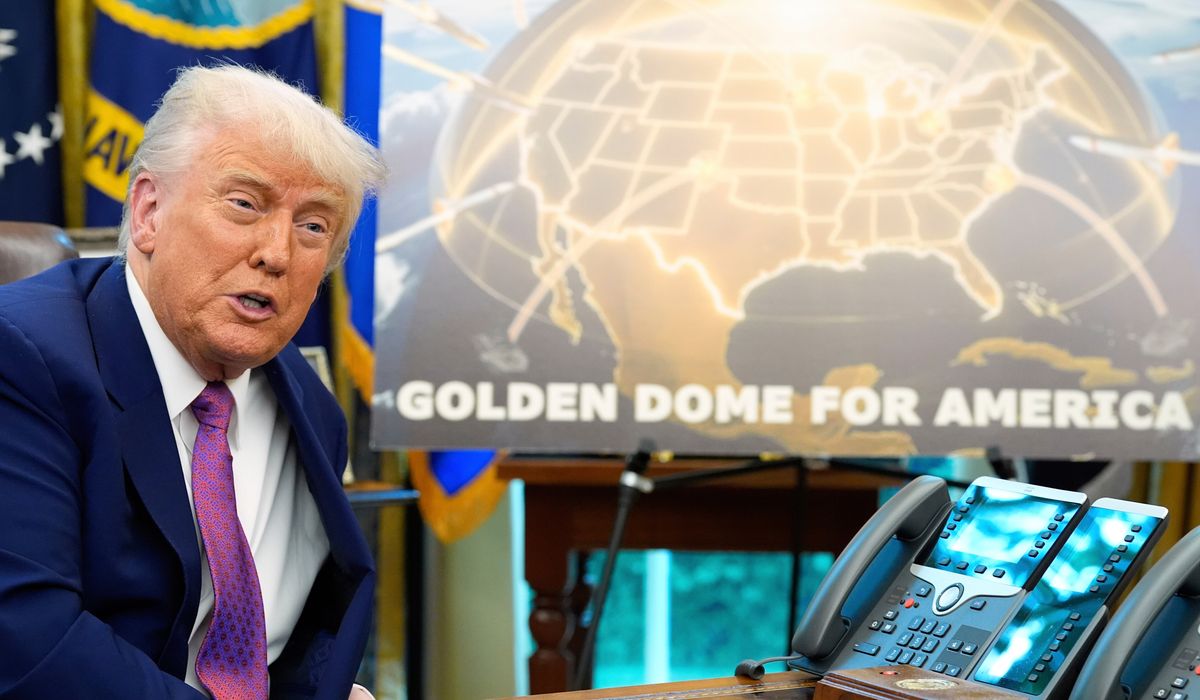
Brief summary: a senior official tied to President Trump’s “Golden Dome for America” effort says the U.S. military has already run two secretive tests tied to the project’s multibillion-dollar program, and that admission raises questions about oversight, costs, and strategic purpose while supporters emphasize innovation and deterrence.
“The head of President Trump’s ambitious “Golden Dome for America” project said Tuesday that the U.S. military has already carried out two secretive tests of the multibillion-dollar miss” is the direct statement at the center of this story, and it landed with little public detail beyond the claim. That line, delivered by a project official, forced a rapid round of reactions from lawmakers, commentators, and military watchers who want clarity about what was tested and why. What matters now is how the administration, Congress, and the Pentagon explain the national interest behind such high-cost initiatives.
Republicans who back strong defenses see the announcement as proof the project is moving from pledge to capability, and they note that technological edge often requires bold, sometimes classified steps. Supporters argue that strategic surprise and rapid testing are essential to deter rivals and to protect American interests without broadcasting every move. At the same time, the secrecy invites predictable scrutiny about spending and mission clarity, which is why leaders in both parties are asking for briefings even as supporters press for momentum.
Critics raise sharp questions about oversight given the “multibillion-dollar” tag attached to the effort, arguing that taxpayers deserve transparency and budgetary discipline. Those concerns are not unreasonable; when sums grow large and details stay hidden, the default public reaction is to demand stricter accounting and congressional review. That debate plays directly into how the project will be structured, what parts remain classified, and which elements will face public audit and contracting scrutiny.
From a policy angle, the key issues are simple: effectiveness, cost, and strategic fit. Does the program deliver a capability that materially strengthens deterrence or battlefield options, and can it do so without draining other priorities? Republican defenders say you cannot win geopolitical competitions by shrinking from innovation or by letting red tape choke cutting-edge projects. But they also concede that sound procurement practices and clear objectives must accompany any rapid push to field new systems.
The military’s role here is central, since “carried out two secretive tests” implies operational involvement rather than a purely private or political initiative. That distinction matters because military testing triggers specific acquisition and oversight rules, even when elements are classified. Lawmakers will want to know which branches were involved, whether tests used existing assets, and how results will feed future investments, and those answers will decide whether critics are placated or further alarmed.
There is also a communications fight underway. Supporters want the public to see decisive action and capability gains, while skeptics want safety checks and fiscal restraint. The White House and project leaders face the task of framing the tests as prudent and strategic rather than reckless or pennywise and pound-foolish. How they tell that story will shape whether this becomes a signature success or a cautionary tale about secrecy and spending.
Historically, large defense projects that blended secrecy with strong oversight and clear milestones delivered results and kept costs manageable; projects that skipped those controls often ended in cost overruns and wasted effort. Republicans who favor a robust defense posture insist that oversight does not mean obstruction and that accountability can coexist with the kinds of classified steps needed to protect national security. The coming hearings and briefings will reveal whether this project strikes that balance.

