

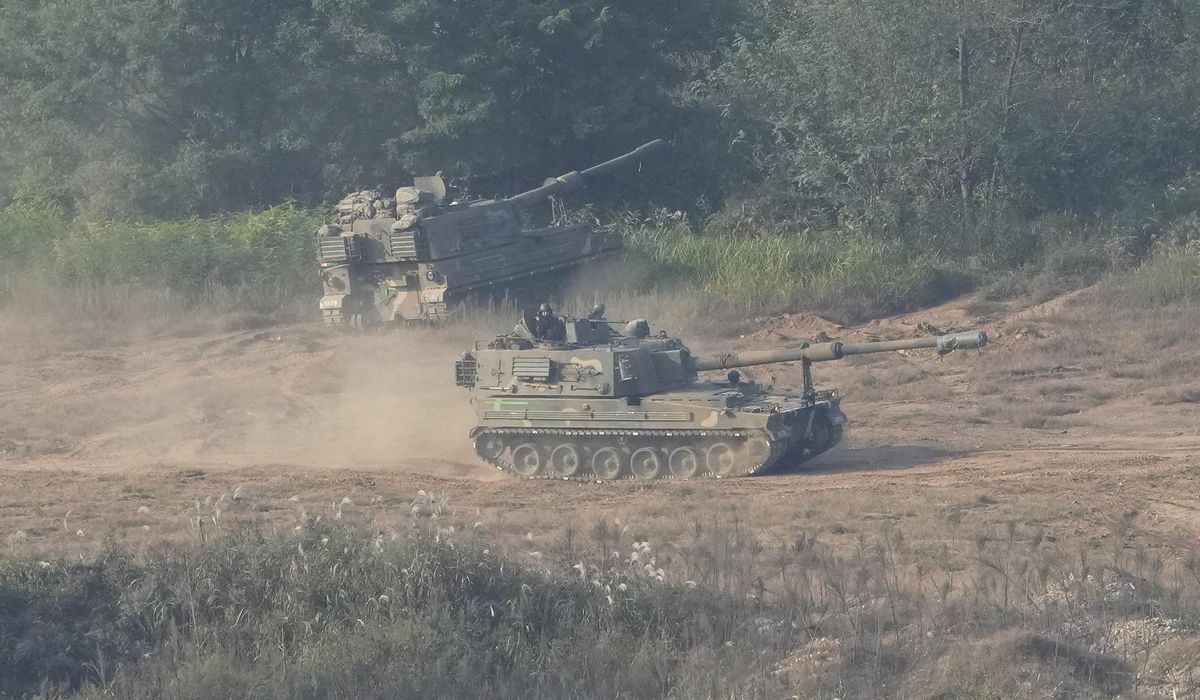
Hanwha Defense USA announced Tuesday that it won a major Army contract to build mobile howitzer prototypes for the Mobile Tactical Cannon program, placing the company at the center of the service’s effort to modernize mobile artillery capabilities.
Hanwha Defense USA confirmed the award in a company statement, identifying the work as prototype development for mobile howitzers under the Mobile Tactical Cannon program. The announcement makes Hanwha a key participant in the Army’s next phase of artillery modernization. The news attracted attention across defense industry observers and military planners.
The Mobile Tactical Cannon program seeks to explore new approaches to delivering heavy fires with greater mobility and flexibility. Prototypes are a first step that allow the Army to test concepts before committing to production. Hanwha’s role will focus on the design and build of those prototype systems.
Developing prototypes usually involves close coordination between the contractor and Army testing teams. Prototypes let soldiers evaluate ergonomics, mobility, and maintainability under realistic conditions. That feedback drives refinement of systems and requirements before a larger program of record is defined.
Mobile howitzers combine tractor-like mobility with artillery firepower, aiming to move quickly, shoot, and relocate to avoid counterfire. The Mobile Tactical Cannon program emphasizes that kind of tactical agility in evolving battlefield scenarios. Hanwha’s work on prototypes is intended to address those operational demands.
Industry observers expect prototype work to cover chassis integration, automated loading systems, and survivability features, even though specific technical details were not part of the announcement. Prototypes are an opportunity to test different engineering solutions without locking the Army into a single configuration. That flexibility is valuable early in a program’s lifecycle.
For Hanwha Defense USA, the contract positions the company as a contributor to U.S. Army modernization priorities and may build relationships across defense procurement and testing communities. Working on prototypes can lead to further production opportunities if the Army selects a winning design. The contract also places technical and schedule expectations on the company during the prototype phase.
The Army will use data from prototype testing to refine requirements and inform potential follow-on competitions or production decisions. That process typically includes live-fire testing, mobility trials, and sustainment assessments. Performance against those measures determines whether a prototype concept advances.
Prototype programs also test logistics and maintenance concepts, not just the weapon system itself. How a new mobile howitzer is supported in the field affects readiness and lifecycle cost. Practical maintenance and supply solutions are often the deciding factors in whether a system succeeds operationally.
The Mobile Tactical Cannon program reflects the Army’s broader push to modernize ground fires and adapt to changing operational challenges. Prototypes help the service balance innovation with practical constraints like cost and fieldability. Those trade-offs will be part of the evaluation as testing progresses.
As Hanwha moves into prototype development, the company will need to manage engineering, supply chain, and testing milestones. Transparent progress reporting and responsiveness to Army feedback are vital during prototype phases. The pace and outcomes of that work will shape future steps for the program.
The announcement marks a visible step in the Army’s path toward evaluating new mobile artillery concepts, with Hanwha Defense USA playing a central role in prototype efforts. The coming months of testing and assessment will reveal how well prototype configurations meet operational needs. The program’s evolution will depend on those real-world results.

