

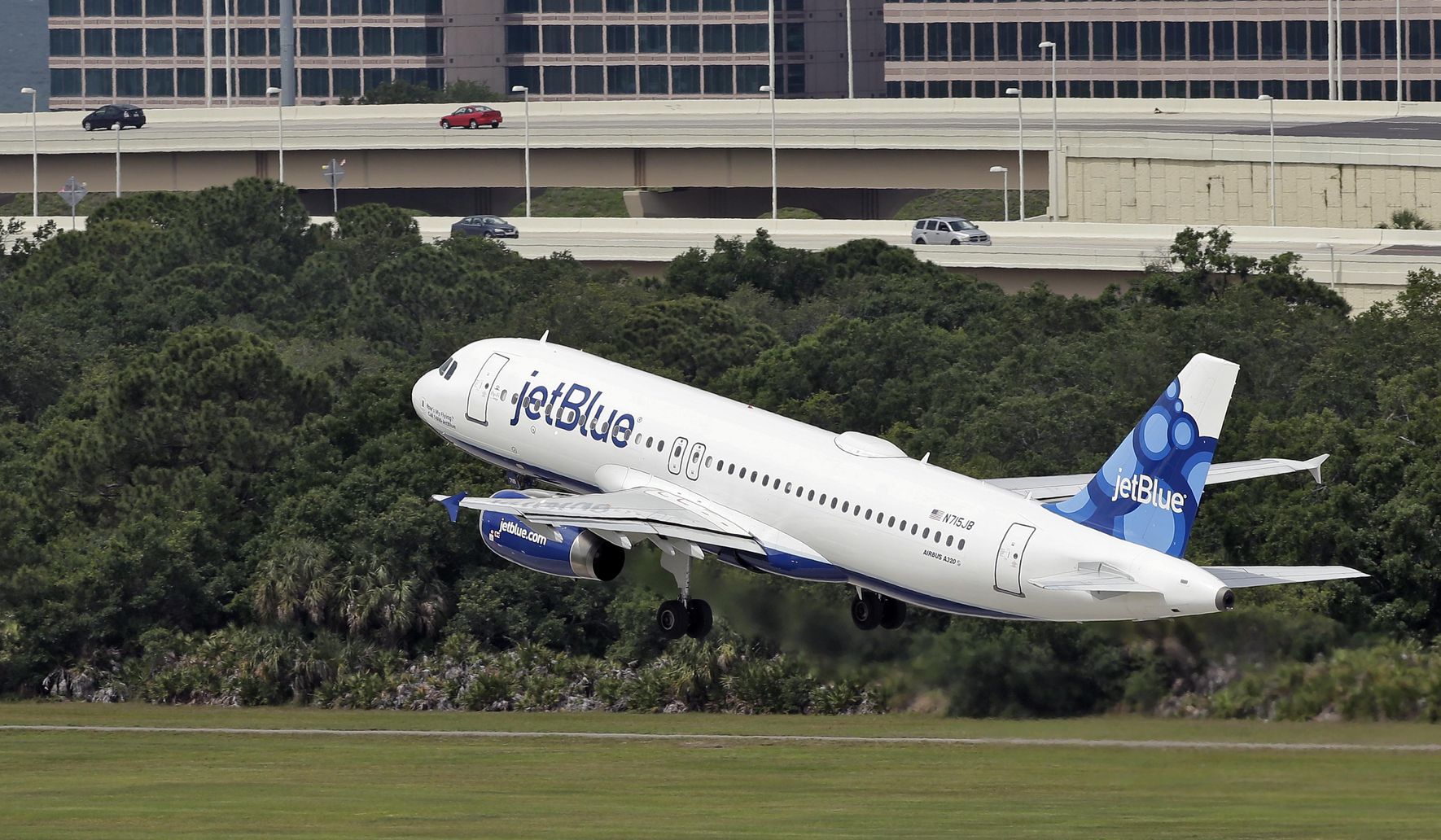
JetBlue passengers were taken to a hospital after a sudden altitude drop on a flight from Mexico forced an emergency landing in Florida on Thursday, according to officials.
The plane experienced an abrupt loss of altitude midflight, prompting the crew to declare an emergency and divert to Florida. Passengers were disembarked and some were taken to nearby medical facilities for evaluation and treatment. Officials indicated the situation was handled as an urgent medical and safety response.
Cabin crews train for sudden altitude changes and medical incidents, and they follow strict protocols to secure the cabin and calm passengers. Working quickly, attendants check for signs of injury, secure loose items, and coordinate with the cockpit to assess whether a diversion is necessary. That coordination helped get the aircraft on the ground where emergency personnel could take over.
Once the aircraft was on the tarmac, local emergency responders moved through the cabin to evaluate passengers and crew. Those who needed further care were transported to hospitals by ambulance, while others were treated on-site or released. Airport medical teams typically prioritize anyone with head, neck, chest, or breathing issues, and they determine who needs urgent transport.
Airlines typically open investigations after unexpected altitude changes to determine cause and to review crew actions and aircraft systems. Investigators may look at flight data, maintenance records, and any reports from the pilots or cabin crew. Regulatory agencies and the carrier itself usually coordinate to ensure a thorough review without speculating publicly about causes during initial stages.
For passengers, the immediate concern is health and getting information about onward travel. Airlines frequently offer rebooking, refunds, or hotel accommodations when flights are disrupted by emergencies. Passengers should retain boarding passes and receipts, and communicate directly with airline staff at the airport for official instructions and next steps.
Medical follow-up can be important even when injuries seem minor after turbulence or altitude shifts. Symptoms such as dizziness, chest pain, persistent headaches, or shortness of breath deserve prompt evaluation because stress and rapid cabin pressure changes can exacerbate underlying issues. Hospital staff will focus on stabilizing patients and ruling out serious conditions linked to rapid altitude changes.
Air travel safety relies on layers: aircraft design, maintenance, crew training, and emergency response procedures all play a role. Sudden altitude changes are relatively rare, and modern aircraft are built to withstand a range of atmospheric stresses. Still, rapid incidents serve as a reminder of why robust emergency planning and immediate medical triage at the airport matter.
Authorities will release more details as officials and the airline complete their assessments, and passengers involved often receive follow-up communication about health and travel arrangements. Meanwhile, airport teams and the carrier continue to process affected travelers and restore normal operations. The focus right now remains on care for those transported to hospitals and on a careful review of what happened.

