

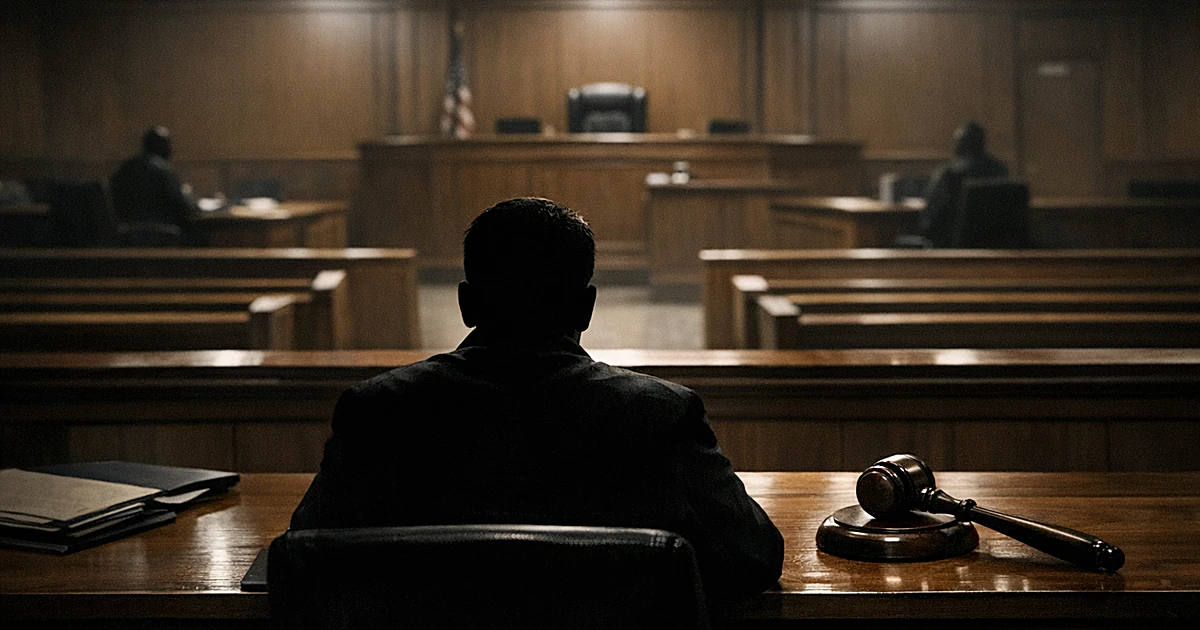
A Utah judge has bound Tyler Robinson over on seven charges, including aggravated murder with the death penalty still possible, in the fatal shooting of conservative activist Charlie Kirk at a campus rally nearly a year ago.
Judge Tony Graf ordered the case bound over for trial at the 4th District Court in Provo on September 1 after finding probable cause on every count. Robinson, through defense attorney Staci Visser, pleaded not guilty right after the ruling and waived a formal reading of the charges at arraignment. The decision keeps the capital sentencing enhancement alive while the case moves toward a jury.
Charlie Kirk, 31, the founder of Turning Point USA, was shot and killed on September 10, 2025, while speaking to a crowd estimated at more than 3,000 at an outdoor rally on the Utah Valley University campus. Prosecutors say Robinson fired the fatal shot from an elevated position overlooking the audience, and the judge found the preliminary evidence sufficient to move the most serious charges forward. That finding does not decide guilt, only that the state cleared the low bar needed at this stage.
“Viewed in the light most favorable to the prosecution, this evidence is sufficient at this stage to support a reasonable belief that the defendant is the individual who shot and killed Charlie Kirk.”
Graf emphasized the distinction between the preliminary-hearing standard and the higher trial standard, noting the state still must prove any aggravating circumstances beyond a reasonable doubt. He confirmed count one, the aggravated murder charge, is bound over for trial, meaning Robinson faces the possibility of execution if a jury convicts and the aggravator is proven. That aggravator, prosecutors say, is a victim-targeting allegation tied to motive.
The indictment lists seven counts across several degrees: two first-degree felonies including aggravated murder and felony discharge of a firearm causing serious bodily injury; two second-degree felony obstruction counts; two third-degree witness-tampering counts; and one misdemeanor for committing a violent offense in the presence of a child. Each charge carries its own weight, but the capital enhancement centers on the alleged victim-targeting.
Prosecutors laid out a narrative at the preliminary hearing that paints Robinson as deliberate in his actions. They said he drove from southern Utah to Orem, fired the shot that struck Kirk in the neck during the event, and later confessed to several people before surrendering to law enforcement. The prosecution also introduced evidence about practice shooting sessions and alleged text and handwritten notes that point at motive.
Prosecutors described the marksmanship evidence as mixed, saying Robinson “seldom hit the bullseye and sometimes missed the target completely” during practice with the suspected weapon. The state argued that this poor accuracy made the outdoor venue and its packed crowd especially dangerous, a factor prosecutors say supports the case for the death penalty. Alleged messages attributed to Robinson include a handwritten note to a partner that read: “I had the opportunity to take out Charlie Kirk, and I took it,” and a text stating: “I had enough of his hatred. Some hate can’t be negotiated out.”
Utah County prosecutor Ryan McBride framed motive in ideological terms, telling the court it was “not difficult to understand the motive here” because the defendant’s views were said to be “repugnant to the positions that Charlie Kirk famously took.” The family of the victim has watched the proceedings closely, with Kirk’s widow present in the courtroom when the judge handed down the bind-over ruling.
“Today’s decision, which comes nearly a year since Charlie was taken from us, marks an important step in our family’s pursuit of justice for him.”
The family statement noted the ongoing impact on Kirk’s children, saying they “will grow up without their father.” Jeff Neiman, who represents the family, pressed the court to move quickly and criticized perceived delay tactics by the defense. Neiman described Kirk as a leader who built a large community rooted in faith and freedom and said the attack was the opposite of what Kirk represented.
“Charlie devoted his life to building a community of over a million young people rooted in faith and freedom. He had hard conversations others were too afraid to have.”
Neiman also argued for constitutional limits on delay in criminal cases, telling the court “The United States Constitution guarantees criminal defendants many rights. The right to delay is not among them.” He asked the judge to set a trial date at the defendant’s next appearance, scheduled for October 23, and urged the court to proceed with urgency while respecting fairness.
The defense pushed other procedural matters before the ruling, seeking to ban cameras in the courtroom over concerns tied to an “online marketplace gambling” reference that was not detailed in reporting of the hearing. Graf denied the motion but said camera access would be governed by courtroom decorum rules. The defense entered not-guilty pleas on Robinson’s behalf and maintained arguments aimed at narrowing the focus of the case.
One of the most closely watched criminal cases in recent memory now edges toward a jury, driven by the high profile of the victim and the violent scene at a political rally. Robinson’s next court date is October 23, where the judge may set a trial timetable and the pretrial fight over evidence, alleged confessions, and motive will intensify. For now, the judicial process continues its careful work at the threshold between accusation and a full trial.

