

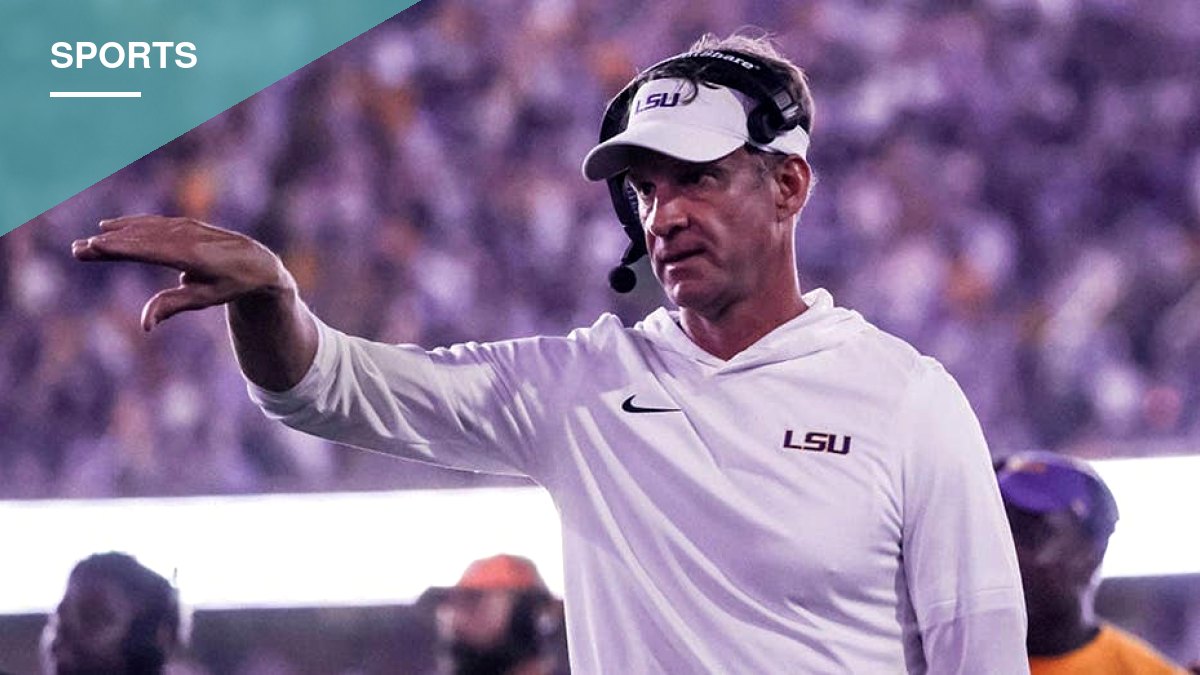
LSU has finalized its football roster for the season without adding former Ole Miss players Dae’Quan Wright and Zxavian Harris, closing out nearly three weeks of court proceedings in Louisiana without either player joining the team.
Head coach Lane Kiffin completed the 105-player roster Tuesday night by adding Gabriel Reliford and Aidan Anding. Neither Wright nor Harris made the cut, despite a judge granting the players an injunction last week after a 12-hour hearing in Baton Rouge that included testimony from SEC Commissioner Greg Sankey.
The roster decision does not resolve the broader legal dispute. A hearing is scheduled for Wednesday in federal court in Birmingham, where the SEC is asking a judge for a temporary restraining order that would let the conference enforce its rules on athletes returning to college sports after turning pro. The SEC says the order would also give it cover to penalize LSU over its handling of the matter.
“Today, the Southeastern Conference, headquartered in Birmingham, Alabama, filed a request for a temporary restraining order in the United States District Court for the Northern District of Alabama to protect the right of the Conference and its member institutions to govern themselves,” the SEC said in a statement.
“The SEC and its member universities have the right to establish, through agreed-upon governance procedures, the rules under which they voluntarily compete and to expect those rules to be followed,” the conference said. “A commitment to those rules, and to the core principles of the Southeastern Conference, is an essential element of SEC membership.”
Sankey’s testimony and the SEC’s countersuit
The Baton Rouge hearing took an unexpected turn when word spread inside the courtroom, just minutes into Sankey’s testimony, that the SEC had filed its own lawsuit against LSU, Kiffin, athletic director Verge Ausberry and other members of the LSU athletic department.
Attorney Tony Clayton asked Sankey directly: “Did you authorize the SEC to sue LSU and coach Lane Kiffin?” Sankey pointed to the authority of the presidents and chancellors he represents in explaining the conference’s decision.
“We established our First Amendment right for freedom of association, so that our conference can make decisions and our members can make decisions about membership,” Sankey said.
Wright and Harris have since amended their complaints in district court to add the SEC as a defendant.
Kiffin defends the call
Speaking early Sunday morning after LSU’s 51-10 win over Clemson, Kiffin addressed the decision publicly for the first time, acknowledging weeks of criticism.
“I’m just glad we played the way we did. Because I get it, even if we won close and ugly, the whole story would have been, ‘Man, I screwed the team up by doing this,'” Kiffin said. “I’ve been criticized heavily the last two weeks and I get that. I understand that. But my job is not to please you and worry about what you’re going to write. My job is what I believe is right, and I believe we were fighting for what was right for those kids.”
Kiffin declined to detail his full reasoning but pointed to his history with Wright, who played for him at Ole Miss. “I’m not going to get into all the reasons, but that’s what I believe. Maybe people don’t like that, but they don’t understand that. Maybe if they knew my relationship with Dae’Quan [Wright] they would,” Kiffin said.
Kiffin has previously noted that when he left Ole Miss for LSU, it was Wright who stood up before the team and told his teammates he wanted Kiffin to lead them through their College Football Playoff run.
SEC accuses LSU of losing control of Kiffin
In its Tuesday court filing, the SEC leveled sharp accusations at LSU’s leadership, arguing that neither the university president nor the athletic director have been able to rein in Kiffin.
The filing states there was “great concern that Defendants [President Wade] Rousse and [Athletic Director Verge] Ausberry have no meaningful control over Defendant Kiffin or the football program at LSU,” adding that “the consensus at the September 4 meeting was and continues to be that LSU’s demonstrated lack of institutional control at the University level—including complete lack of control over Defendant Kiffin’s actions.”
With both players now sidelined from returning to college football and a federal hearing looming Wednesday in Birmingham, the dispute between LSU and its conference over athlete eligibility and institutional authority is far from settled.

