

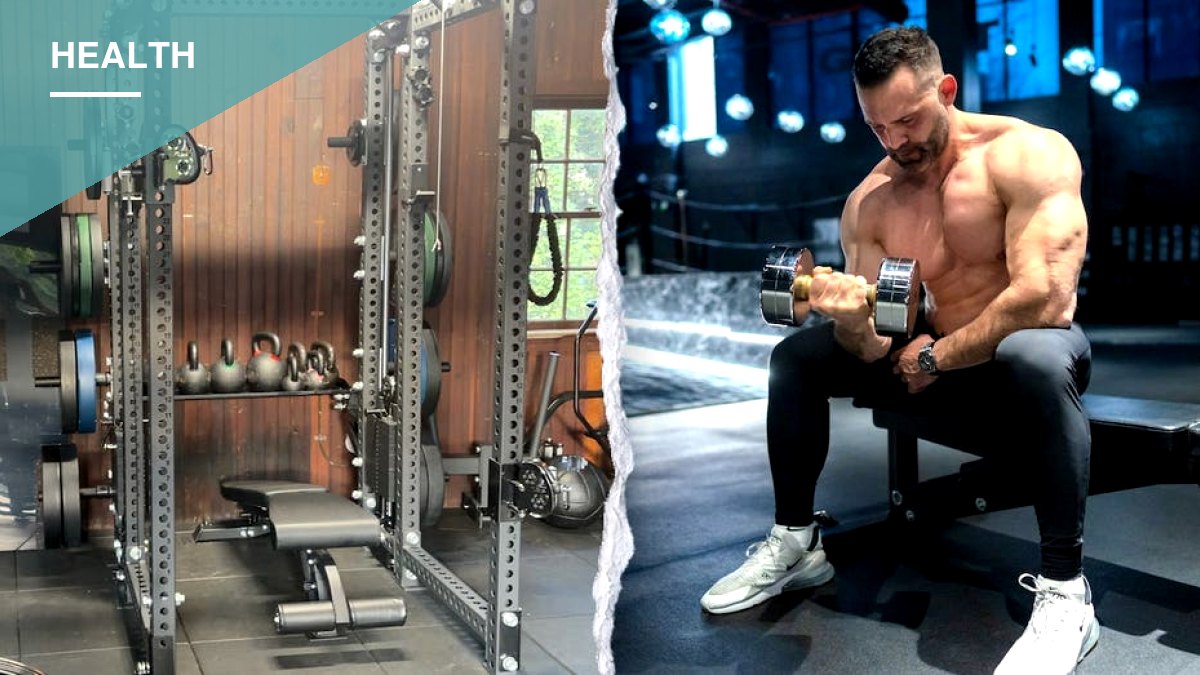
Americans are pouring more money into health and wellness than they were a year ago, and home gyms are a big part of that spending. A YouGov poll conducted in September 2026 found that 31% of Americans are spending more on health and wellness than a year ago, with 20% expecting to spend even more in the coming year. A separate 2026 survey from Garage Gym Experiment, an online community for home fitness enthusiasts, found that 44% of respondents expected to sink at least $1,000 into their home gyms this year.
But New York-based fitness coach Jacob Zemer says the biggest waste of money isn’t necessarily a specific machine — it’s any piece of equipment that eats up space and proves too much of a hassle to set up or use regularly.
“A lot of people think building a home gym requires an elaborate setup, and it doesn’t,” Zemer told Fox News Digital.
Three Pieces of Equipment Cover Every Muscle Group
For people starting from scratch, Zemer recommends building slowly rather than buying everything at once. “You can accomplish everything for every muscle group with just three items,” he said.
The first and cheapest buy should be exercise bands. “You can do everything you need to with just those pieces of equipment — and you can travel with them, bring them on a plane and to a hotel, which makes them very versatile,” Zemer said.
Dumbbells are the second piece, but Zemer says shoppers should think about floor space before buying, particularly if the workout area doubles as something else in the home. “With adjustable dumbbells, you can have a very small floor print — however, they are a little bit more costly, and some of them are slightly fragile, so just be mindful of that,” he said.
Beginners shouldn’t fixate on heavier weights as the only sign of progress, according to Zemer. “Pushing yourself doesn’t mean adding 20 pounds — it could mean doing one more rep,” he said. “You need to progressively get stronger, because your body will adapt to the stimulus you’re using.”
The third recommended item is a bench. “You can get quite an affordable bench online,” Zemer said. “I would look for one that both declines and inclines, maybe even perhaps sits completely upright. That will give you a lot of versatility.”
What to Skip
Before buying anything else, Zemer suggests asking how much space a piece of equipment takes up, how many different exercises it actually supports, and whether it will be simple enough to use day in and day out. Bulky, hard-to-move gear that demands a lot of setup tends to just sit unused.
“The most important thing is that it’s quick and easy to set up, easy to grab and therefore more likely to be used,” he said. “The more setup it requires, the less likely you will to be use it.”
Zemer learned this firsthand after buying lever arms — attachments that connect to a power rack and move up and down for exercises like presses, rows and squats. The equipment was so cumbersome to move that he eventually sold it secondhand, at a loss.
“The secondhand market of gym equipment is brutal, so if you buy something, and you don’t use it, the resale value is next to none.”
His advice going forward: prioritize equipment that does several jobs rather than devices built for a single muscle group. “I always look for equipment that can do multiple things,” he said.
As for cardio machines, Zemer says they’re not essential for everyone, especially people who are already mobile and can raise their heart rate through walking, running, or faster-paced strength training. For those who still want a dedicated cardio machine, he recommends something versatile that’s easier on the knees and back, such as a stationary bike or a ski erg, which mimics the motion of cross-country skiing.

