

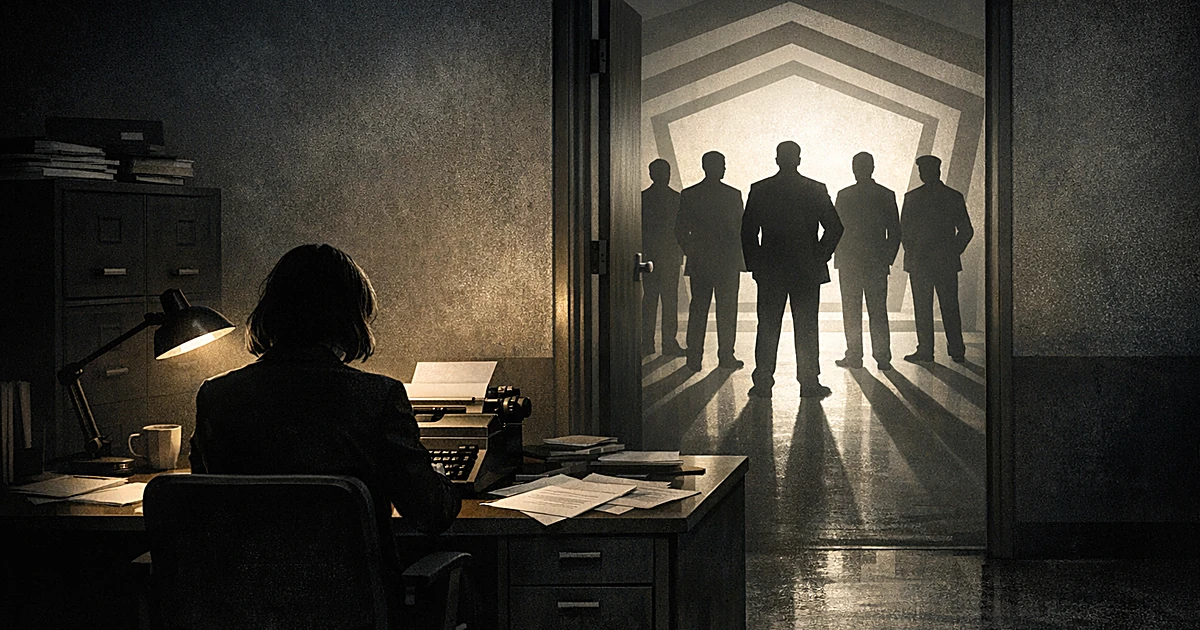
A congressionally created watchdog for Stars and Stripes was removed by the Pentagon without explanation, raising questions about editorial independence, statutory protection, and whether leadership is trying to sidestep Congress.
The Pentagon fired Jacqueline Smith, the congressionally mandated ombudsman for Stars and Stripes, just six days after a group of lawmakers sent Defense Secretary Pete Hegseth a letter expressing “great alarm” about political interference at the military newspaper. Smith said Defense officials gave no reason for her removal and told her the action “is not grievable.” Her dismissal is set to take effect April 28, more than a year and a half before her three-year term was scheduled to expire at the end of 2026.
Smith disclosed her firing in an op-ed published in Stars and Stripes itself, writing bluntly:
“Apparently the Pentagon also doesn’t want you to hear from me anymore about threats to the editorial independence of Stars and Stripes. They fired me.”
The chain of events is sharp and fast. On January 15, the Pentagon announced plans to modernize the paper and refocus its content away from what officials described as morale-sapping distractions. Then a March 9 directive from Deputy Secretary of Defense Steve Feinberg banned the use of “news stories, features, syndicated columns, comic strips and editorial cartoons from commercial news media” in the newspaper, cutting out a long-standing source of outside journalism.
Smith did what the job requires: she spoke up. She criticized the March directive in columns and interviews and raised concerns with free press groups and with Congress. She also wrote plainly about changes to the paper’s content, pointing out a specific target of the effort:
“Pete Hegseth doesn’t want you to see cartoons in this newspaper anymore.”
She says she warned lawmakers and fulfilled her reporting obligations. “As required, I have told the House and Senate Armed Services committees in recent months of my great and growing concern about attempted control of the newspaper by the Pentagon,” she wrote, showing she followed the statute’s channels intended to protect readers and service members.
Smith says there was no prior communication, no inquiry, and no warning before the firing. She wrote about expecting at least a conversation before being dismissed, and described the suddenness plainly:
“I knew there would be perils for speaking out against Pentagon attempts to control the news, but I expected some communication or questions or warning first. Nothing.”
Her candid assessment of motive is direct. She suggested the removal was designed to cripple the watchdog without formally abolishing the statutory role that Congress created in 1991 after prior efforts to suppress unfavorable reporting. She warned this looks like an attempt to evade legislative guardrails by replacing the person, not the position.
“No one should be surprised that they’re kicking out the one person charged by Congress with protecting Stars and Stripes’ editorial independence.”
She went further, laying out how this tactic could work in practice. If the Pentagon fires the sitting ombudsman and declares the move “not grievable,” it can neuter oversight while leaving the law technically intact. That leaves Congress with a choice: accept the hollowing out of a congressionally created watchdog or push back to restore the role’s teeth.
“I think that Hegseth and company are trying to get around Congress by not eliminating the position, just getting rid of the outspoken present ombudsman.”
Advocates for press freedom criticized the firing, saying Smith did exactly what the statute required. One voice put the removal in stark terms: “Even as the nation is at war, Pentagon leadership is silencing independent voices that uphold credible reporting, part of a broader pattern of restricting press access to evade scrutiny.” That accusation frames the dismissal as part of a wider problem at the department.
Reports also surfaced that job applicants at Stars and Stripes were asked how they would advance the president’s executive orders and policy priorities. Smith responded to that report with a pointed defense of journalistic independence:
“Asking prospective employees how they would support the administration’s policies is antithetical to Stripes’ journalistic and federally mandated mission.”
If hiring screens for political alignment are accurate, they would further erode the firewall between the Pentagon and the newsroom that Congress intended. Stars and Stripes gets half its funding from the Pentagon, and the watchdog role exists because buyers of the paper’s funding should not directly control its content.
The broader reshuffle inside Pentagon leadership has included personnel moves across offices, but removing a congressionally created watchdog’s occupant without explanation raises a distinct constitutional and oversight question. Lawmakers in the Armed Services committees were already briefed on Smith’s concerns. Her dismissal tests whether Congress will defend the statutory independence it wrote into law thirty-five years ago.
Modernizing a military newspaper may be reasonable. But modernization should not be a cover for political control. Banning syndicated content, removing the watchdog without cause, and reportedly screening hires for loyalty are not reforms. They look like efforts to bring an independent voice to heel, and that matters to service members and taxpayers alike.


1 Comment
Israel OWNS the Pentagon.
The synagogue of Satan Juden blame and accuse others of what they themselves are guilty of. It’s their modus operandi. Pure EVIL!
At this point we all know the evil agenda of the synagogue of Satan globalists is to eradicate the chosen White race off the planet. The Zionist demons are on a mission to annihilate us medically thru evil Big Pharma killing billions and making billion$ while doing it. They are funding & inundating White Countries with illegal immigrants. Their goal is to usher in their Jew World Order and to destroy Christianity. Israel is PRO mass immigration except they refuse all immigrants in Israel. Hint..hint!
“Anti Semitism is “Self Defense” against LOXISM!