

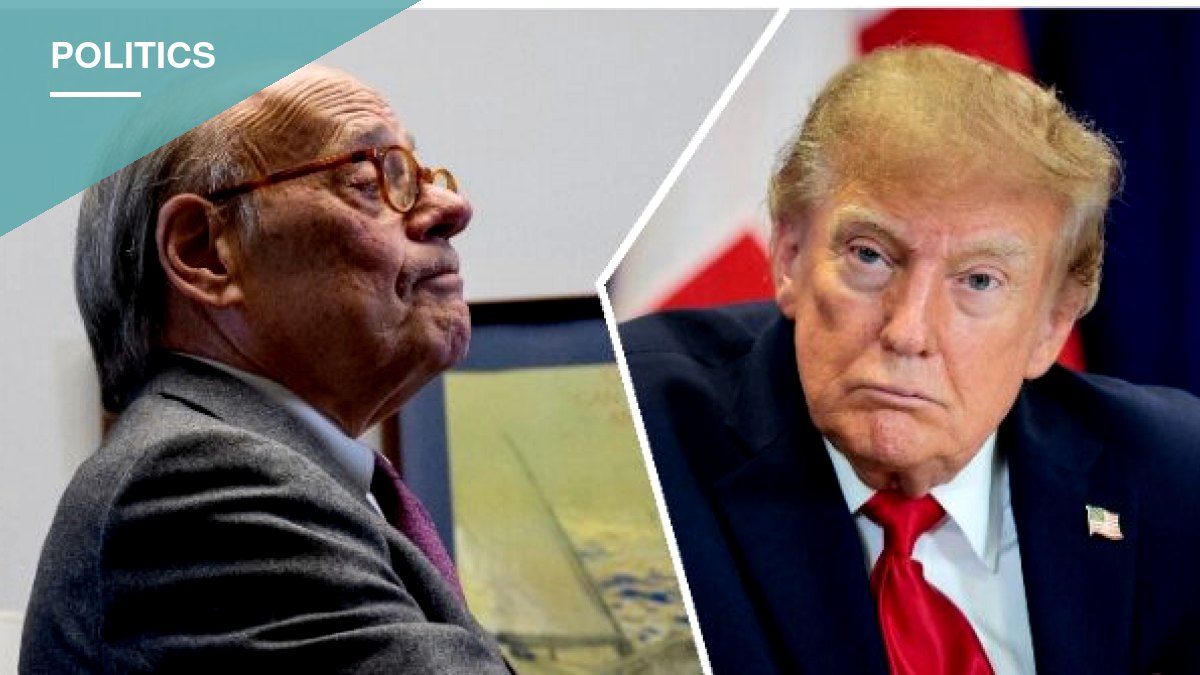
Rep. Steve Cohen (D-TN) introduced a 26-article impeachment resolution against President Donald Trump on Thursday, an extensive document he says is meant to serve as a template for a future Democratic-controlled House rather than a measure with any chance of passing the current Republican majority.
Cohen, who sits on the House Judiciary Committee, is not running for re-election after redistricting made another term unlikely. He said the resolution reflects his own constitutional obligations regardless of the outcome.
“Trump is clearly the most impeachable President our country has ever endured,” Cohen wrote in a statement. “His continued presence in office is a danger to our democracy. That the sycophantic Republican majority in Congress is derelict in its duty does not mean that I must abandon my responsibilities.”
“I took an independent oath to support and defend the Constitution,” he continued. “That commitment compels me to introduce this resolution today. When historians write about this period, and our constituents ask who stood up to President Trump’s lawlessness, this resolution is the answer.”
The resolution touches nearly every major flashpoint of Trump’s second term, spanning foreign policy, immigration enforcement, federal spending, the judiciary, the press, and personal finances. Among the 26 articles are allegations covering:
- Waging war on Iran without congressional approval
- Extrajudicial killings in international waters off Venezuela
- Deploying military forces against U.S. cities
- The birthright citizenship executive order
- Disregard of courts on the Alien Enemies Act and the case of Kilmar Abrego Garcia
- Conditions at CECOT detention facilities
- Defying court orders on immigration enforcement
- Canceling federal grants to punish states based on voting patterns
- Imposing loyalty tests on federal employees
- Withholding appropriated funds and dismantling congressionally established programs
- Obstructing the appointment of U.S. attorneys
- Abolishing the Department of Education
- Mass termination of inspectors general without statutory notice
- Unilaterally imposing tariffs under emergency powers
- Political prosecutions of James Comey, Letitia James, and Adam Schiff
- Use of the pardon power
- Barring reporters from White House coverage
- Pressuring CBS and ABC over editorial content
- Executive orders retaliating against law firms
- Withholding federal funds from universities
- Demolition of the White House East Wing without congressional approval
- Renaming public institutions and other self-aggrandizing acts
- Emoluments violations tied to personal profit from the presidency
The resolution arrives just over a week after the House voted 232-147 on September 15 to table a separate impeachment push from Rep. Al Green (D-TX). Cohen’s measure is expected to meet the same fate under the current Republican majority.
Cohen was explicit that the document is aimed at January 2027, when a new Congress convenes, rather than at forcing action now.
“I sincerely believe that the 120th Congress will better live up to its duties as co-equal branch of government and a check on the executive,” Cohen said. “I hope this resolution paves the way to accountability. We cannot tolerate this kind of lawlessness and corruption.”
Should Democrats retake the House majority in the November midterms, Cohen’s resolution provides a ready-made framework that could shape oversight priorities and impeachment strategy from the opening days of the new session, rather than requiring Democrats to draft such a strategy from scratch.

