

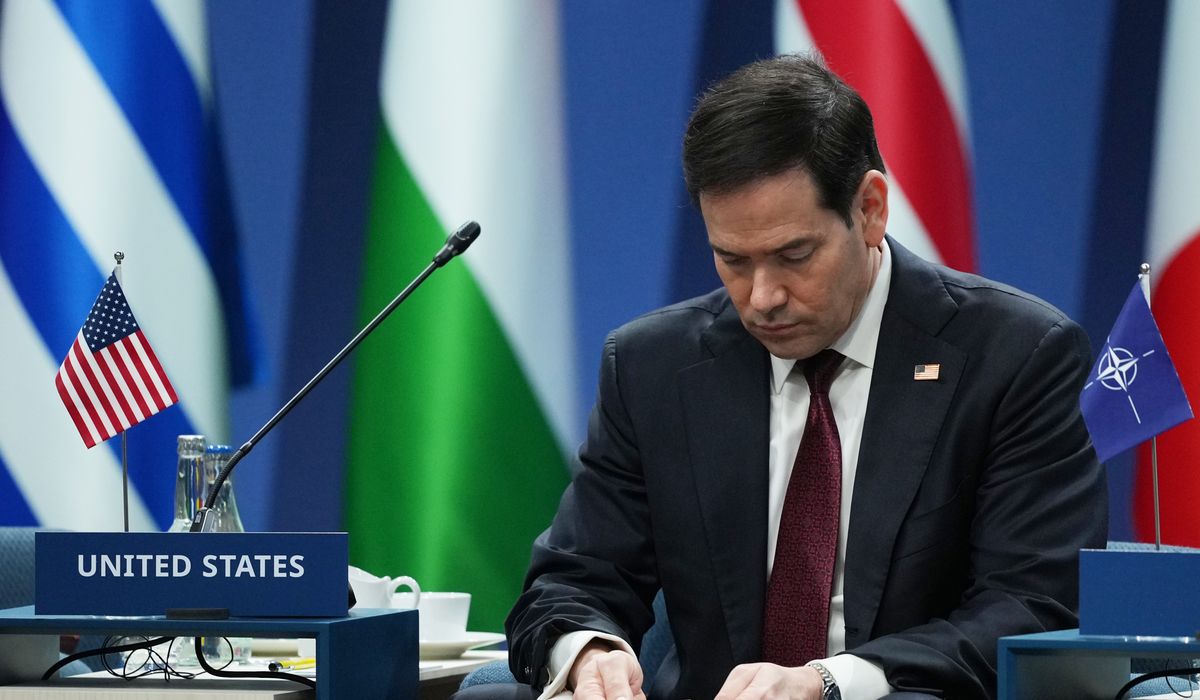
U.S. Secretary of State Marco Rubio said Friday there was “slight progress” during talks with Iran amid uncertainty as to whether a deal will be reached or war will resume. The remark landed inside a tense moment where skepticism is high and the consequences are serious, both at home and across the region.
Talks with Iran have a long history of missed deadlines and shifting promises, so a cautious response is the smart response. From a Republican viewpoint, optimism should be measured and built on clear, verifiable steps. Lawmakers and citizens want to see durable safeguards, not vague assurances.
When senior officials say there is “slight progress,” we should hear that as an opening, not a conclusion. Concrete evidence matters: inspections, timelines, and enforceable penalties must be spelled out. Otherwise those words will feel like déjà vu to anyone who has watched previous agreements unravel.
Any negotiation that risks American lives or regional stability demands tough bargaining and an ironclad verification regime. Republicans argue the United States must use leverage, including sanctions relief that is conditional and reversible. Without hard triggers, Tehran will treat any concession as a green light to expand influence.
Congress has a role that cannot be shrugged off during sensitive diplomacy. Elected representatives must review terms, demand briefings, and reserve the right to act if the bargain weakens U.S. security. That oversight protects both national interests and public confidence in foreign policy decisions.
Regional partners are watching closely because their security hangs in the balance. Allies like Israel and Gulf states make no secret of their concerns about emboldened Iranian behavior. A deal that leaves them exposed will only deepen divisions and undercut long-term stability.
Verification is not a technicality; it is the backbone of any credible agreement. Republicans favor snapback mechanisms and independent inspections that cannot be bottled up by political maneuvering. If inspectors are blocked or timelines extended without consequence, the whole arrangement collapses into words with no teeth.
Economic levers should be used with precision to get Tehran to change actions, not just rhetoric. Sanctions relief must be phased and contingent on verifiable steps toward denuclearization and the halt of proxy operations. Quick, blanket relief hands Tehran bargaining power without reciprocal behavior.
Diplomacy and deterrence should operate together, not in isolation. While negotiators sit across the table, military readiness and credible deterrence send a clear message about the costs of bad faith. That dual-track approach gives negotiators strength and preserves pressure if talks falter.
The American public deserves straight talk about risks and timelines. Vague promises only breed misinformation and erode trust in government decisions. Republicans insist on honest assessments and realistic benchmarks so voters know what is at stake.
Any future agreement must make it harder for Iran to cheat and easier for the world to catch them if they do. Robust monitoring, immediate penalties, and international cooperation are nonnegotiables from a conservative stance. Weak deals accomplish little and create future crises.
At the end of the day, negotiations are a tool, not an end in themselves, and must be judged by results on the ground. Lawmakers and diplomats who favor a tough, pragmatic approach are clear: diplomacy must protect Americans and allies first. The next steps will test whether words turn into lasting safety or just another temporary pause.

