

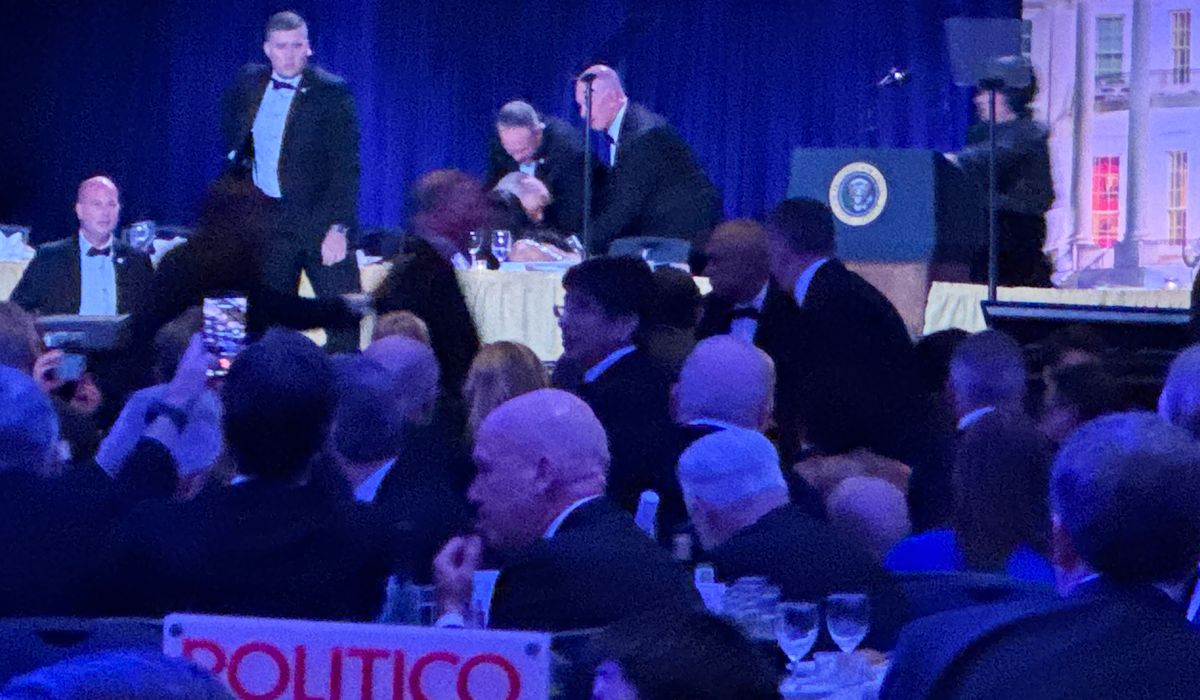
The night’s violence at a high-profile Washington event upended a long-standing press tradition, triggered a fast law enforcement response, and left organizers and attendees scrambling to understand what happened and why.
The scene at the event was chaotic and tense from the first reports, with guests evacuated and crews working to secure the area. Organizers said they cooperated with authorities, and local law enforcement moved quickly to establish a perimeter. People who were there describe confusion and a sudden scramble for safety as staff and officers issued instructions.
“Shots were fired Saturday night outside the main ballroom of the White House Correspondents’ Dinner just as the dinner got underway.” That single sentence has been repeated in early reports and captures the abrupt shift from celebration to crisis. Witnesses said the noise and rush of people created a terrifying blur, with some ducking under tables and others pushed toward exits.
Security officials have emphasized that their top priority was to protect attendees and contain any possible threat, and they worked to account for everyone as the situation unfolded. Investigators cordoned off areas for forensic teams and canvassed for video and eyewitness accounts. Agencies described an active, coordinated response involving multiple local and federal partners.
Several attendees reported that staff followed emergency protocols, guiding guests to safety and providing updates as information came in. Still, people at the event noted gaps in communication that left some attendees unsure about what to do next. In a city where security is normally tight, those gaps raise questions about contingency planning for large, high-profile gatherings.
Law enforcement described the incident as an evolving investigation and urged patience while they gathered facts. Detectives were reviewing footage from cameras around the venue and interviewing witnesses to build a timeline. Early public statements were cautious, reflecting a need to avoid speculation before evidence was collected and analyzed.
The White House Correspondents’ Dinner has long been a fixture in Washington, blending journalism, politics, and public spectacle, and an incident like this strikes at the heart of how the capital manages risk. For many Republicans and conservatives, the event’s security failures, perceived or real, are a reminder that public safety must come first. Voices across the political spectrum are watching how authorities handle aftermath and accountability.
Organizers face tough questions about access, screening, and the balance between an open press environment and necessary protections for high-profile attendees. Some security veterans argue that layers of simple precautions can dramatically reduce vulnerability at events of this size. Others say intelligence and planning should anticipate threats without turning professional gatherings into fortress-like affairs.
Local leaders called for clear, public information about what happened and how similar incidents will be prevented in the future. Officials also stressed support for those who were frightened or injured, offering counseling and resources where needed. The emotional impact on journalists, staff, and guests has been serious, and many described lingering anxiety even after authorities declared the scene secure.
As investigators piece together what led to shots being fired outside the ballroom, questions about motive and opportunity are central to the inquiry. Law enforcement will likely release updates as evidence develops, but initial public statements suggest a deliberate effort to avoid rushing to conclusions. The broader conversation already turning toward policy will focus on ensuring that major events in Washington remain safe without undermining the free flow of reporting and civic life.
Coverage of the incident is ongoing, and new details will emerge as officials complete interviews and forensic work. Those who attended will carry vivid memories of a night that changed tone in an instant, and the community that hosts this annual gathering will be forced to reckon with vulnerabilities. For a city and a press corps that prize both openness and order, the challenge is to rebuild confidence while learning lessons from what went wrong.

