

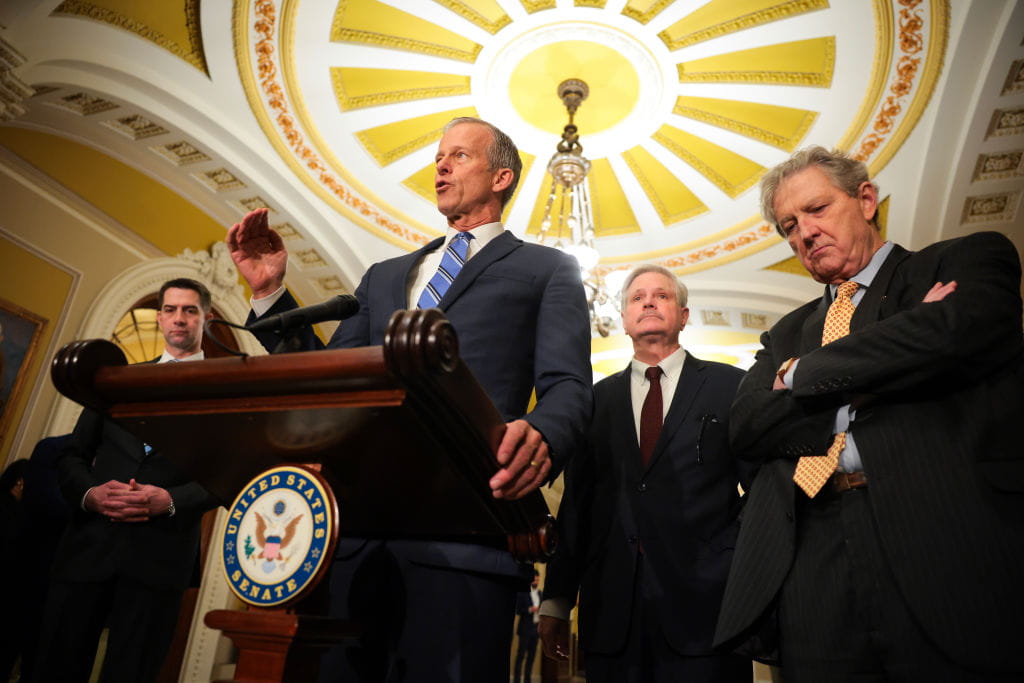
The SAVE America Act remains stalled in a Senate debate that promises to stretch on, as Republicans search for a path through procedural gridlock and political resistance.
The Senate has opened debate on the SAVE America Act, and it is clear this will not be a quick process. Days of open debate are expected, and that length gives both sides space to set the narrative and press their priorities. For Republicans, the fight is about staying united while forcing the federal government to confront crime and accountability issues.
Behind the chamber floor drama there is a practical problem: the Senate’s rules and the need for 60 votes to advance many measures turn politics into an endurance test. Republicans must choose whether to push amendments, trade votes, or press for public pressure to pry loose reluctant senators. Each tactic carries risks, and the GOP’s unity will be tested by senators with differing priorities and constituencies.
On messaging, Republicans can argue the bill addresses public safety and federal accountability while highlighting Democratic obstruction. That narrative aims to frame the debate as a choice between law and order versus excuses and delays. Conservatives should emphasize real-world consequences for communities that expect action from lawmakers.
Strategically, the party has a few levers: persistent floor amendments to shape the record, procedural votes to expose opponents, and public hearings to keep attention on core issues. Using those levers means accepting the slow pace of the Senate, but it also creates repeated moments to put pressure on wavering senators. Each procedural move is a chance to sharpen the contrast with Democrats and to force votes that matter politically.
Policy substance matters too. Republicans want to show the bill contains concrete reforms that improve public safety and strengthen enforcement of laws. That substance needs to be explained plainly so voters see the difference between legislative action and empty rhetoric. Presenting clear, narrowly drawn provisions helps prevent opponents from painting the bill as extreme or unfocused.
At the same time, the GOP must manage internal tensions over trade-offs and concessions. Some senators will resist language they view as politically risky, and caucus leaders must balance those concerns without appearing to abandon core principles. A disciplined approach to negotiation will be required to avoid splintering during the long debate.
Public outreach will play a role in shaping the outcome, with Republican senators and allies framing each procedural step as accountability in action. Town halls, targeted messaging, and media appearances are all tools to remind voters who pushed for the bill and why. The goal is to keep the spotlight on the legislation’s aims and on Democratic resistance, rather than letting the discussion drift into procedural minutiae.
Legal and administrative questions will surface too, and Republicans should be ready with concise explanations that rebut false or misleading claims. Clarity matters when complex language gets boiled down in headlines and social feeds. Conservatives who communicate the bill’s mechanics simply stand a better chance of winning the debate in public opinion.
Practically, the path forward may require splitting the issue into defensible parts or accepting narrowly tailored amendments that broaden support without undercutting core goals. That sort of political craftsmanship is painful but often necessary in the Senate. The party’s success will come from combining firm principles with flexible tactics that can win critical votes.
Ultimately, the SAVE America Act debate is a test of Republican resolve and strategy in a Senate that rewards endurance and discipline. Lawmakers who want results must be prepared for a slow grind of votes, speeches, and public persuasion. The outcome will hinge on whether the GOP can turn procedural fights into political leverage and maintain a united front long enough to shape the final measure.

