

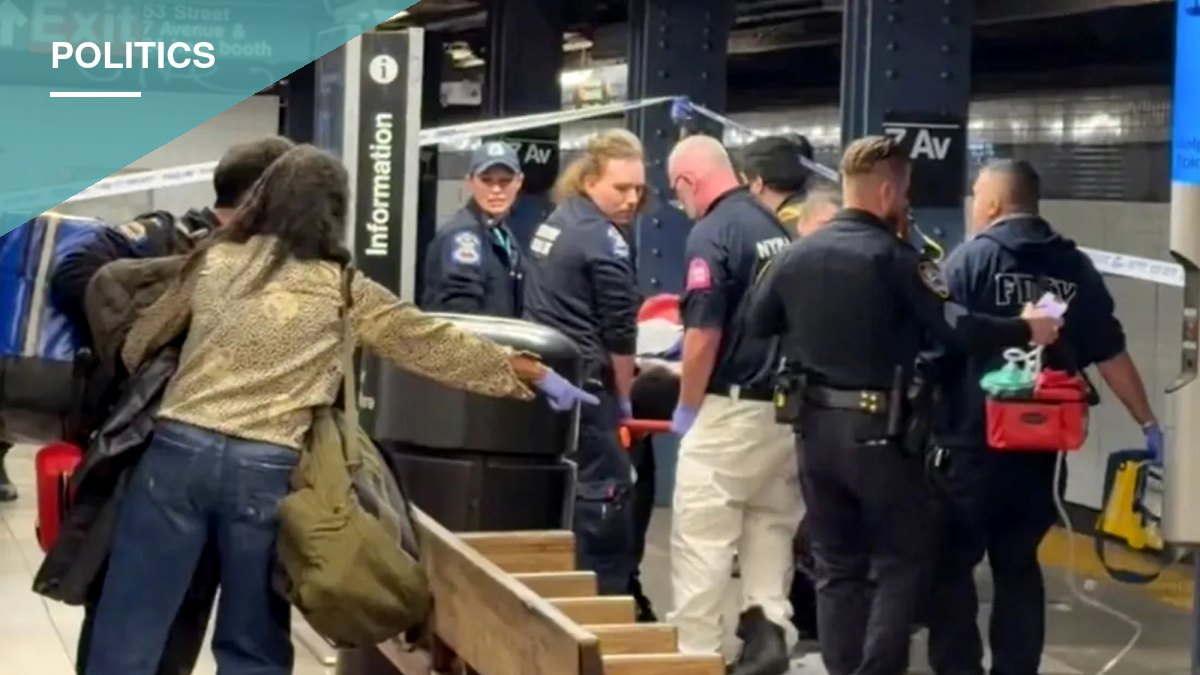
A midday killing at the 7th Avenue subway station at 53rd Street on Saturday has brought the number of transit homicides in New York City to seven since January — nearly double the toll recorded over the same period last year.
The victim, Darrel Rodriguez, was killed in a station that draws heavy tourist foot traffic. Mayor Zohran Mamdani did not publicly address the killing until Monday, when he said he was “heartbroken” and made general remarks about addressing gun violence, without announcing new policy steps.
The seven deaths this year continue a pattern that began in 2020. Since then, the subway system has averaged eight murders a year, compared with an average of roughly two per year from 1997 to 2019.
A Mixed Record on Crime
Police Commissioner Jessica Tisch has presided over an all-time low in the city’s overall murder rate this year, a signal that the broader NYPD crime-fighting strategy has had measurable success. Transit killings moving in the opposite direction suggest a problem the department has struggled to address through conventional policing alone.
Critics point to a string of criminal justice policy changes over the past decade — including decisions by city district attorneys to stop prosecuting fare-beating, the state’s Raise the Age law, the elimination of cash bail for many offenses, and the City Council’s How Many Stops Act — as factors that have made it harder for officers to intervene with repeat offenders before violence occurs.
Data cited show that arrests of repeat offenders for felony assault more than doubled between 2018 and 2026. One case frequently raised is that of Rhammell Burke, who is accused of murdering Ross Falzone at the 18th Street station in May. Burke had been arrested four times in the preceding four months, including once for a separate violent incident on the subway, and had been released from Bellevue Hospital just hours before the killing after being picked up for erratic behavior.
Political Pressure From Multiple Directions
Mamdani has faced criticism from his own political base for retaining Tisch as police commissioner. At the same time, he has backed away from an earlier plan to add 500 police officers to the force, a reversal that has drawn scrutiny from those who argue the city needs more, not less, of a police presence in the transit system.
With seven transit homicides recorded through October, advocates for stronger enforcement argue that without a shift toward prioritizing public safety over the reform agenda that has defined city and state policy in recent years, the subway system’s death toll is unlikely to decline.

