

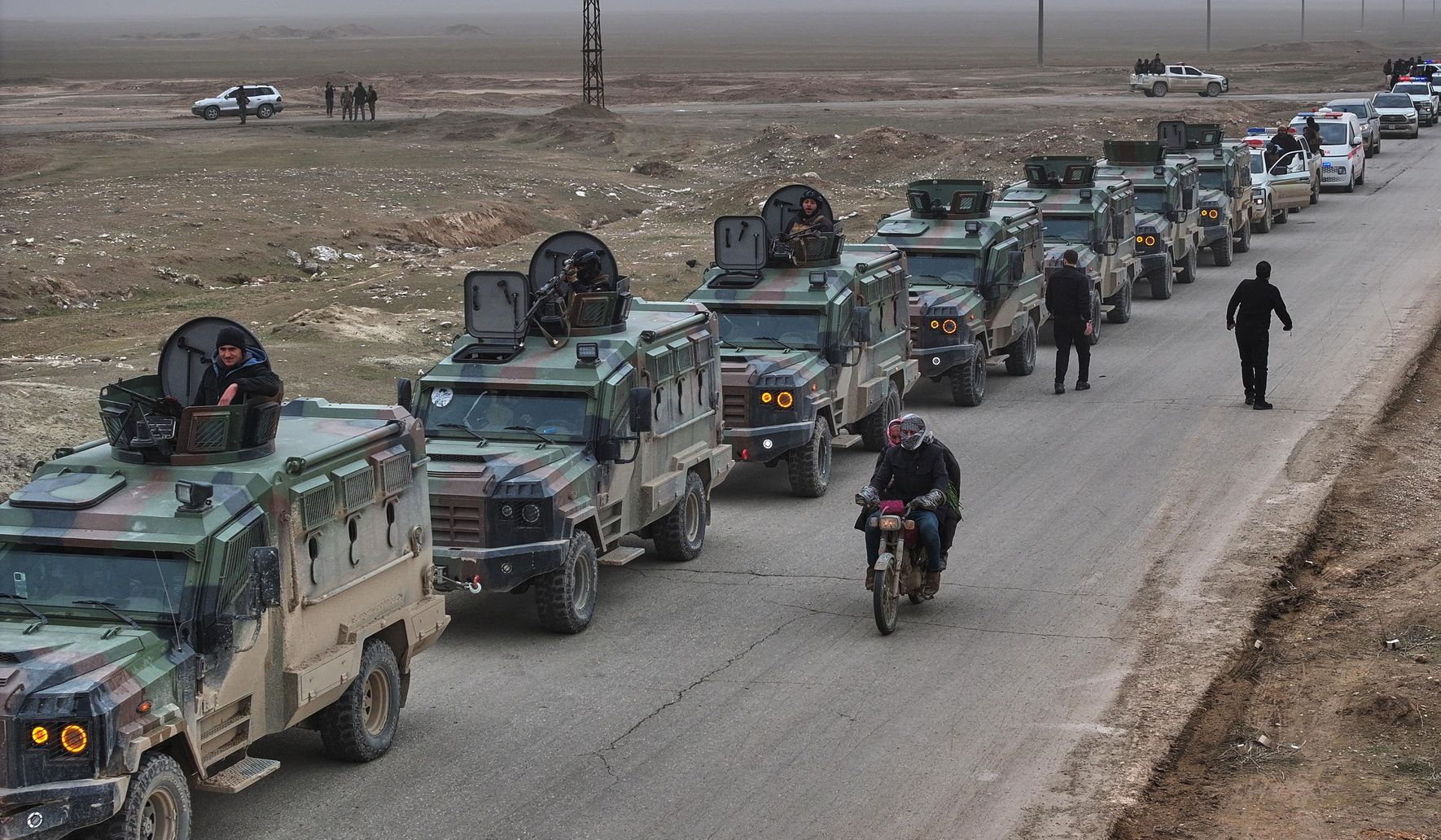
A small contingent of Syrian interior ministry security forces entered the city of al-Hassakeh on Monday as part of a deal between Damascus and the Kurdish-led Syrian Democratic Forces.
The movement of Damascus security personnel into al-Hassakeh this week marks a tactical shift in a long-frozen corner of Syria. Local officials and on-the-ground witnesses described a limited, deliberate deployment aimed at asserting state presence after years of contested authority. The agreement with the Kurdish-led Syrian Democratic Forces reflects a negotiation born of pressure, necessity, and shifting alliances across the region.
Al-Hassakeh sits in the northeast, a patchwork of control since 2011 where the SDF built much of its strength fighting ISIS while also managing local governance. For years the area operated with a degree of autonomy from Damascus, relying on a local security architecture that kept relative stability compared with some other parts of the country. That backdrop makes any appearance of Syrian government forces especially significant to residents and regional players alike.
The limited size of the contingent underscores caution on both sides: Damascus is signaling authority without provoking open clashes, and the SDF is balancing local priorities with the need to avoid direct confrontation. Residents reported checkpoints and patrols that felt purposeful but not overwhelming, a pattern consistent with an initial phase of reassertion rather than a full-scale takeover. Those on the ground are watching closely for how responsibilities like policing, detention, and public services will be managed going forward.
The move highlights the complicated dance among regional powers that has shaped Syria’s long conflict. Russia and Turkey have both carved roles in the country’s political and military landscape, and local agreements like this one often reflect broader bargaining among external backers. For American policymakers, the development is another reminder that U.S. influence is contested and that the fog of alliances in Syria can change quickly.
From a Republican perspective, this kind of ground-level shift should sharpen questions about the durability of gains made against ISIS and the safety of civilians who have relied on local partners. The SDF’s collaboration against Islamist militants won critical victories, but those gains remain fragile when larger state actors reassert control. Republicans generally insist that U.S. strategy must protect core American interests and back reliable partners so that terrorists do not regain a foothold amid chaos.
Humanitarian and security concerns are immediate. Civilians in al-Hassakeh face uncertainty about checkpoints, legal processes, and access to services, and they rightly fear reprisals or arbitrary detentions. Aid groups and local administrators will have to navigate new lines of authority to keep hospitals, schools, and markets functioning. Stability here depends on practical arrangements for governance as much as on headline diplomatic moves.
The SDF’s willingness to make a deal with Damascus signals a pragmatic streak born of exhaustion and pressure. After years of fighting and managing territory with limited resources, local leaders sometimes see accommodation as the least bad option to protect communities. That pragmatism does not erase political tensions, but it does explain why negotiated, incremental changes on the ground often come before any broader political settlement.
What happens next will be a test of whether limited deployments lead to durable cooperation or a new cycle of conflict. If the arrangement sustains everyday services and reduces violence, it could become a template for localized deals elsewhere. If missteps produce crackdowns or provoke external interference, the region could slip back toward instability that invites militant resurgence.
U.S. interests in northeastern Syria remain clear: prevent terrorist regrouping, protect civilians, and support partners who helped deliver security gains. Republicans typically argue that policy must be realistic about the limits of influence and prepared to defend core security objectives without open-ended commitments. The al-Hassakeh movement is a small event with outsized implications, a reminder that the future of Syria will be decided in neighborhoods and negotiating rooms, not just in capitals far away.

