

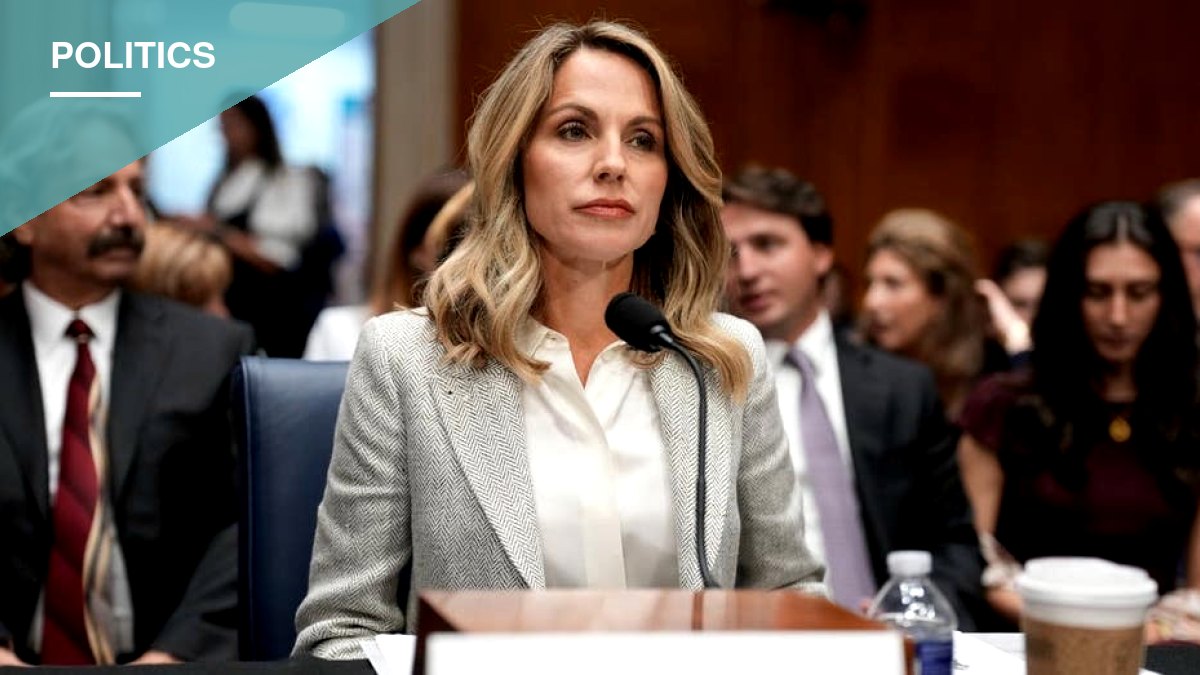
Dr. Nicole Saphier, President Donald Trump’s nominee for surgeon general, told senators Wednesday that childhood vaccines do not cause autism and defended the safety of the MMR vaccine, breaking with statements previously made by both the president and Health and Human Services Secretary Robert F. Kennedy Jr.
Saphier, a radiologist who serves as director of breast imaging at Memorial Sloan Kettering Cancer Center’s Monmouth, New Jersey location, appeared before the Senate Committee on Health, Education, Labor and Pensions. If confirmed, she would become the federal government’s top doctor and public health spokesperson at a moment when measles cases are rising nationwide.
“I believe the MMR vaccine is our greatest tool for combatting measles,” Saphier told the committee.
Committee Chairman Sen. Bill Cassidy asked her directly whether she agreed with comments Trump made last month suggesting the combined measles, mumps and rubella vaccine could be “quite lethal.” Saphier did not endorse that characterization.
“As a physician, I can tell you that I do not believe the MMR vaccine to be lethal,” she said.
On autism, Saphier also distanced herself from statements Kennedy has made in the past. “Well, humbly, I don’t know what causes autism, but I have not seen reputable evidence that would suggest that vaccines cause autism,” she said. “I do not believe childhood vaccines cause autism.”
Kennedy told Fox News host Jesse Watters in a 2023 interview, while running for president as a Democrat, “I do believe that autism does come from vaccines.” He later softened that position, telling senators during his own confirmation hearing that he would “do nothing as HHS secretary that makes it difficult or discourages people from taking vaccines.” Kennedy has separately said multiple times that people should get the MMR vaccine, telling Fox News Digital in March 2025 that the “two-dose MMR vaccine is our safest and most effective tool to prevent this highly contagious illness.” The CDC continues to recommend the MMR vaccine, though the Trump administration has said it eventually favors splitting the shot into three separate doses.
Cassidy also pressed Saphier on hepatitis B vaccination policy, asking whether children should receive the vaccine at birth. “Chairman Cassidy, you’re speaking to someone who tells people they have cancer every day. And the hepatitis B vaccine is one of the most tangible ways we have to prevent cancer,” Saphier said, adding that “universal birth dosing” is the most effective way to lower hepatitis B-related illness. She stopped short, however, of saying whether the Trump administration should reverse its December decision to stop universally recommending the birth-dose vaccine for babies whose mothers test negative for hepatitis B.
Asked about other priorities, Saphier said that as surgeon general she would push for early cancer screening, review data on the harms of flavored e-cigarettes, and examine the mental health effects of AI chatbots on children and adolescents.
A Rocky Path to the Nomination
Trump nominated Saphier, a former Fox News contributor, in April after his earlier pick, wellness influencer Dr. Casey Means, failed to gain enough Senate support. Before that, Trump had withdrawn the nomination of another former Fox News contributor, Dr. Janette Nesheiwat, in May 2025.
Saphier has authored several books on health policy, including “Make America Healthy Again: How Bad Behavior and Big Government Caused a Trillion-Dollar Crisis,” published in April 2020. Kennedy later adopted “Make America Healthy Again” as his presidential campaign slogan before folding it into the administration’s broader public health agenda.
Before her nomination, Saphier publicly criticized Kennedy. In a Wall Street Journal op-ed last year, she wrote she was “deeply concerned” about his approach after he described autism as an “epidemic” and pledged to identify its cause by September 2025. She specifically criticized Kennedy’s decision to hire David Geier, a vaccine critic, to analyze CDC autism data, calling his experience “limited” and noting his research has been “widely criticized within the scientific and medical communities.” A review of the Health and Human Services employment database shows Geier still works at the department as a “senior data analyst.”
“Families deserve more than passionate speeches and fringe science,” Saphier wrote. “If Mr. Kennedy truly wants to be a champion for families facing autism spectrum disorder, he should form partnerships with the nation’s most reputable researchers.”


1 Comment
Dump this woman. Japan’s autism rates were climbing until they backed off on vaccines. Autism is almost unheard of today.