

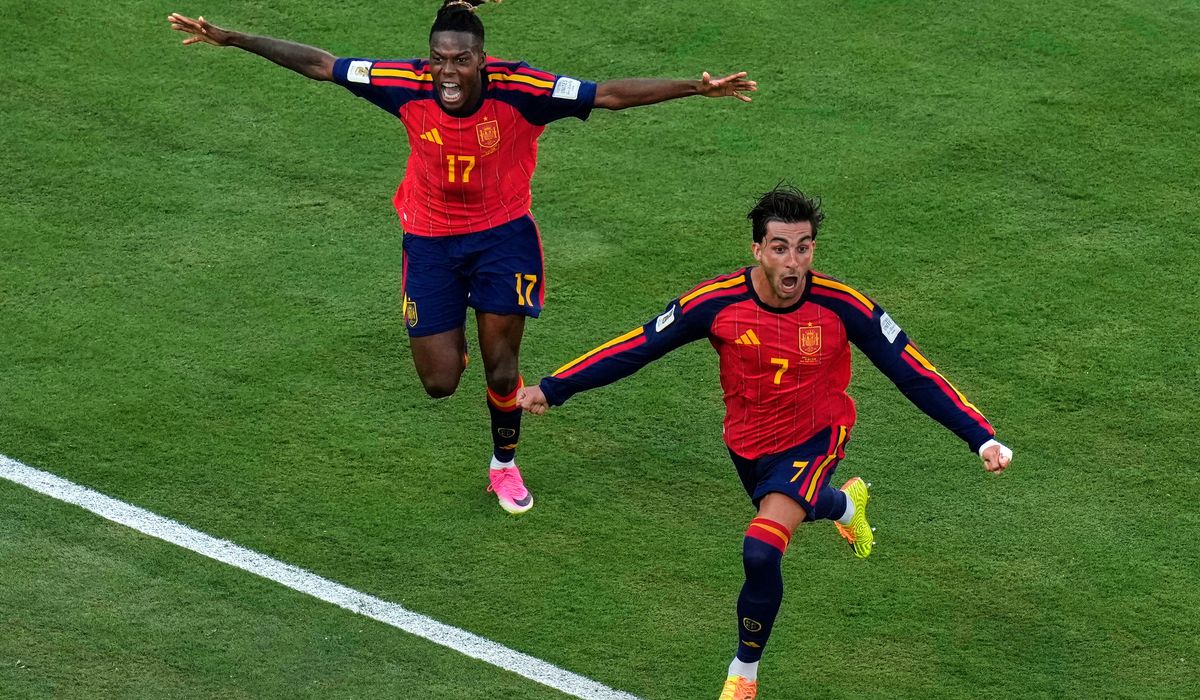
Ferran Torres’ first World Cup goal felt like the moment a player carries his whole career into a single, defining strike that lifted Spain back to the top of the soccer world.
That goal settled nerves across a team and a nation, and it landed with the kind of timing that turns a good tournament into a memorable one. For Torres, it was not just another finish; it was a milestone that underscored his growth as an international forward. Fans and pundits quickly framed the moment as a turning point for Spain’s campaign.
The goal’s importance came from more than the net bulging. It reinforced a pattern Spain has been rebuilding toward: combining patient possession with clinical moments in the final third. When a squad can control the ball and then cut loose through one sharp moment, it breeds confidence. Torres supplied that sharpness at the exact time Spain needed it most.
Torres’ trajectory has been watched closely since he broke through as a young talent, and this World Cup strike added a big check in the “career-defining” column. He has had to balance club expectations with national-team duties, and this kind of high-profile finish helps cement his status among Spain’s attacking options. Coaches value players who rise in big games, and Torres did exactly that.
The reaction in the stadium was immediate and electric, the kind of roar that compresses months of pressure into a single explosion of relief. Teammates clustered and the sideline emotion made clear this was not routine. Those moments build chemistry and trust, which are currency in knockout tournament runs where margins are thin.
On the tactical side, Torres’ goal highlighted how individual finishing can complement a structured system. Spain’s play often relies on quick combinations around the box, and an incisive run or precise touch can be all that’s needed to convert sustained pressure into a decisive score. When players like Torres deliver, it validates the game plan and forces opponents to adjust.
For younger players in the squad, seeing a forward step up under this spotlight sends a strong message about opportunity and expectation. It tells them the team will back those who produce in critical moments. That carries over into training ground attitudes and match-day mentality, where belief is as important as skill.
Beyond the locker room, the goal shifted public conversation about Spain’s prospects. Media narratives love a clear symbol, and a single strike that changes a game’s direction provides a neat storyline. Whether analysts are breaking down build-up play or applauding the execution, that one moment creates material for the next series of debates and predictions.
Officials and staff also notice when a player’s contribution alters momentum. A staff that sees players respond to pressure gains options for rotation and tactical tweaks in later matches. That flexibility can be decisive in a tournament where stamina and squad depth matter just as much as talent.
Fans will replay the highlight for weeks, and opposing teams will study it for weaknesses to exploit. That dual effect—celebration at home, scrutiny abroad—keeps the tournament dynamic. Players who deliver such moments know they become both heroes and case studies overnight.
For Ferran Torres himself, the strike is a tangible reminder that big chances still arrive in the right arenas if you stay ready. It can influence his confidence and the way coaches deploy him for the rest of the tournament. When a player scores a goal that people call “the goal of his life,” it changes how matches are approached by teammates, opponents, and the player himself.
Spain, buoyed by that defining finish, walks into its next fixtures with visible momentum. Momentum in tournaments is a tricky thing, but a clear, decisive goal in a high-pressure setting is one of the cleanest ways to generate it. As the team presses on, all eyes will be on whether that strike becomes the spark for a deeper run or the highlight of a shorter campaign.

