

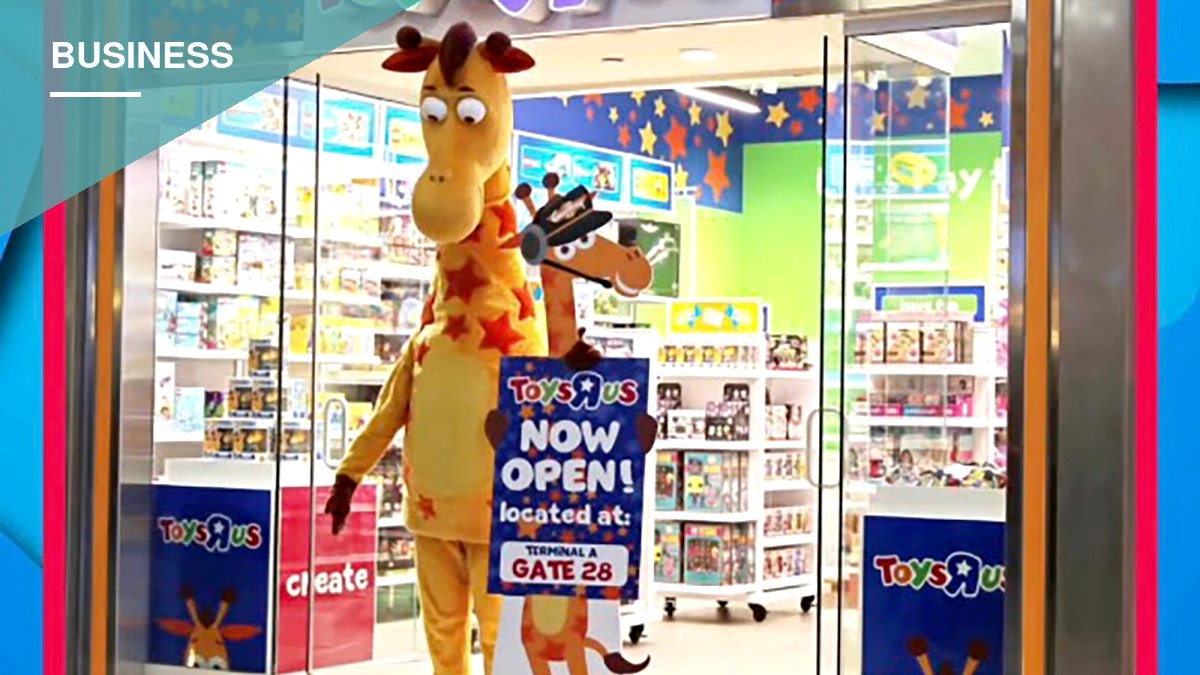
Toys “R” Us is racing to open 120 new stores across the country by Thanksgiving, but toy manufacturers still scarred by the brand’s 2017 bankruptcy are hesitant to sign new supply deals with the retailer’s current operators.
The expansion is being led by Go Retail Group, a Texas-based pop-up store specialist that has operated 40 year-round Toys “R” Us locations since 2024 under license from WHP Global, a New York firm that owns 16 brands including Vera Wang, Marc Jacobs, Anne Klein and Land’s End. Go Retail now wants to roughly quadruple its store count ahead of the holiday season, mostly through mall locations open for about a year.
To pull that off, the company has been asking toy makers for extended credit terms of up to 180 days after delivery — well beyond the industry norm of 30 to 90 days, according to multiple sources.
Several vendors say they are declining to take that risk.
“They should be the ones financing the business, not their vendors,” said Jay Foreman, chief executive of Basic Fun, maker of Tonka Trucks and Care Bears. “We went down that road once before and got badly burned and won’t put ourselves in that position again.”
Alan Dorfman of Super Impulse, which makes miniature versions of games like Battleship, Connect 4 and Hungry Hungry Hippos, said his company is not currently shipping to Toys “R” Us. “We hope to be part of it, but we are not yet shipping to them,” Dorfman said. “We have worked with Go Retail in the past but there were some bumps in the road and we are trying to get things back on track.”
A Brand Still Living Down Its Collapse
Toys “R” Us, founded 70 years ago by Charles Lazarus, once ran more than 800 stores in the U.S. before collapsing under $5 billion in debt following a 2005 buyout by Bain Capital, KKR and Vornado Realty Trust. The 2018 liquidation cost suppliers millions and left lasting distrust across the toy industry.
WHP Global, which acquired the brand in 2021, has brought back two pre-bankruptcy executives to run it: Jamie Uitdenhowen, a former vice president of merchandising, now serves as executive vice president, and Matthew Finigan, the company’s former treasurer, is now chief financial officer.
Michael Drake, who once led boys’ toys at Toys “R” Us headquarters in Paramus, New Jersey, said he has spoken with about a dozen toymakers about the new terms. “There’s hesitation to do business with them because of the terms they are asking for,” Drake said.
Go Retail CEO Gideon Schlessinger defended the company’s approach. “Like any retailer, we work to secure the best possible terms with our suppliers,” he said in a statement. “We’ve been in the toy business for 26 years, managing significant seasonal inventory commitments and building longstanding vendor relationships. Our approach to purchasing and payment arrangements has been consistent throughout our history and remains unchanged today.”
He added later: “We have not experienced any hesitation from suppliers about working with us under the Toys ‘R’ Us brand. In fact, the strength and growth of Toys ‘R’ Us have only enhanced those relationships.”
From New Jersey to Nationwide
WHP’s U.S. footprint includes a Macy’s partnership and roughly 40 Go Retail-run Toys “R” Us stores opened over the past several years, plus a 20,000-square-foot flagship at the American Dream mall in East Rutherford, New Jersey, run by a separate licensing partner, Parade Stores Inc. Internationally, WHP’s licensing partners operate about 1,680 stores across 37 countries.
The new 120 stores, mostly in malls, will be run by Go Retail. Pre-bankruptcy Toys “R” Us stores typically ran around 30,000 square feet; the current Go Retail locations measure just 3,500 to 7,000 square feet.
“The 120 mall pop ups won’t do the volume of even 20 Walmart stores,” Foreman predicted.
A Changed Market
The push comes as the $46 billion U.S. toy industry sees its strongest growth in six years — sales rose 17% in the first half of the year, according to Circana. But rivals including Walmart, Target, Amazon and Five Below have filled much of the space Toys “R” Us left behind.
“It’s a tougher landscape for them to come back to,” said toy analyst Gerrick Johnson of Seaport Research. “Because others have stepped into the void they left.”
Tom Neville, vice president of sales for Australian magnetic-tile maker Connetix, said he was surprised to learn that Toys “R” Us was already selling his company’s products online, since Connetix does not sell directly to the retailer. He said he has kept his distance from the more than 350 Toys “R” Us-branded toy departments inside Macy’s stores. “Most of the time you go into a Macy’s [toy department] and it’s sad,” Neville said. “It’s not merchandised well. The shelves are empty off season.” Macy’s, which has closed dozens of stores since the 2022 partnership began, declined to comment.
Brian McDonald, vice president of sales and marketing for Ohio-based Simplay3, said his company lost nearly $1 million in the bankruptcy and remains cautious, though it hasn’t ruled out working with the revived brand. “I’ve been wondering whether the [new operators] are going to make this unique and bring in something new and different from what you can find on Amazon,” McDonald said.
Drake summed up the industry’s mixed feelings: “there’s also fear about missing out on an opportunity.”

