

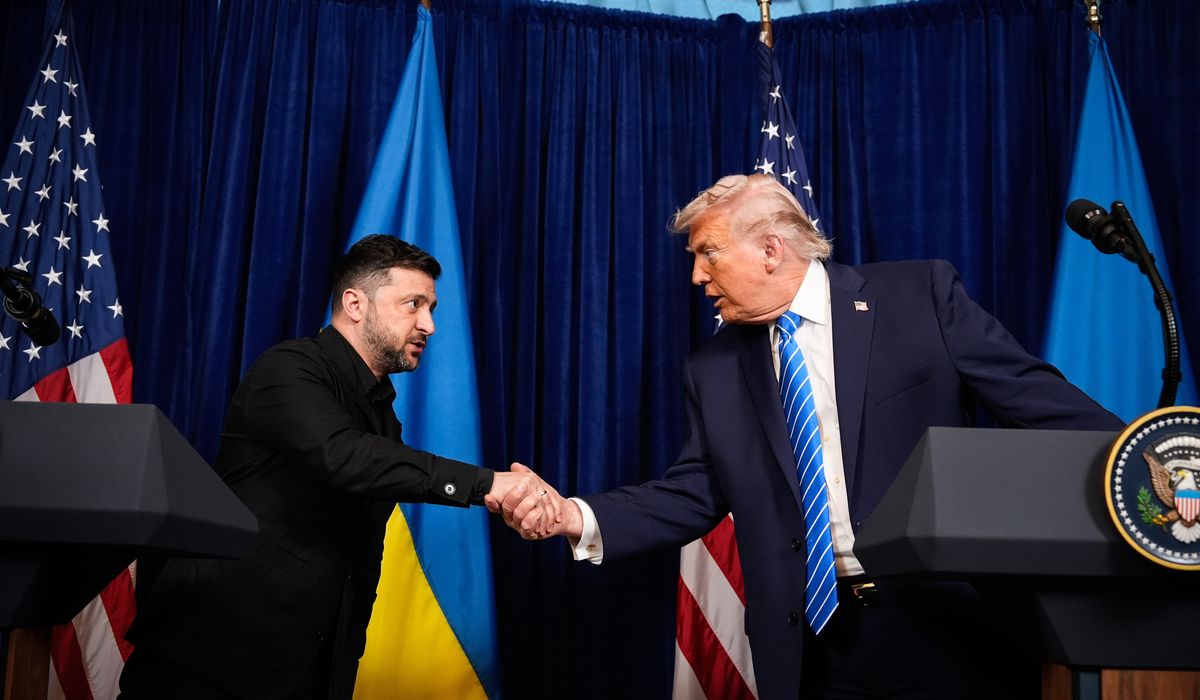
President Trump and Ukrainian President Volodymyr Zelenskyy said Sunday they believe a peace agreement to end the brutal war between Russia and Ukraine is “close,” but both leaders warned that several difficult issues still need to be resolved and that any deal must protect Ukraine’s sovereignty and ensure lasting security.
Both presidents signaling that a deal is near changes the conversation from defeatism to negotiation, and that matters. From a Republican standpoint, this moment calls for firm terms, not appeasement, because peace bought on shaky promises only invites future conflict. American strength at the table should reinforce Ukraine’s hand while keeping clear lines for enforcement.
President Trump’s involvement shifts attention to practical deal-making instead of abstract moralizing. He has a reputation for bargaining hard and for prioritizing outcomes that can be enforced rather than framed as symbolic victories. Republicans see that approach as the best way to secure a deal that holds.
Mr. Zelenskyy faces domestic pressure to recover territory, deter future aggression, and keep Ukrainians safe. Any agreement must offer credible security guarantees and mechanisms that prevent a quick return to hostilities. Republicans will insist on concrete verification and consequences for violations.
That means sane, enforceable measures, not vague diplomatic language that leaves room for exploitation. A sustainable settlement needs monitoring, clear penalties, and a role for neutral guarantors acceptable to Kyiv and Washington. Republicans are right to push for those details early, not as an afterthought.
Economic and reconstruction aid will be on the table, and the U.S. must make support conditional on verifiable progress. Free money without accountability risks empowering corruption or rewarding poor governance. Conservative voters want taxpayer protections and visible results tied to milestones in security and reform.
One reality Republicans emphasize is that peace should not come at the price of strategic weakness. Concessions that undermine NATO deterrence or signal tolerance for revisionist aggression would be dangerous. The U.S. must balance immediate de-escalation with long-term stability across Europe.
Any deal also has political consequences at home, and leaders on both sides know that public opinion will matter. Republicans will hold the line against soft bargains that could be portrayed as selling out allies. But they also see value in closing conflicts when terms preserve freedom and deter future attacks.
Enforcement mechanisms could include multinational peacekeeping, periodic inspections, and automatic sanctions triggers tied to specific violations. Those steps create predictable consequences and reduce the need for rapid re-escalation. Pragmatic Republicans prefer tough, simple triggers over elaborate, unenforceable promises.
Diplomacy is messy, and real-world settlements require trade-offs, not slogans. Still, a deal that locks in protections for Ukraine, ensures accountability for Russia, and provides clear American leadership would meet conservative tests of prudence and strength. Republicans will judge any agreement by whether it leaves the West safer and Russia less able to repeat aggression.
The final path to peace depends on detail and discipline, not hope alone. If leaders can translate “close,” into a durable framework with enforcement, reconstruction plans, and shared responsibilities, the result could stabilize a dangerous region. Until those details are on paper and verified, cautious skepticism and muscular diplomacy remain the sensible approach.

