

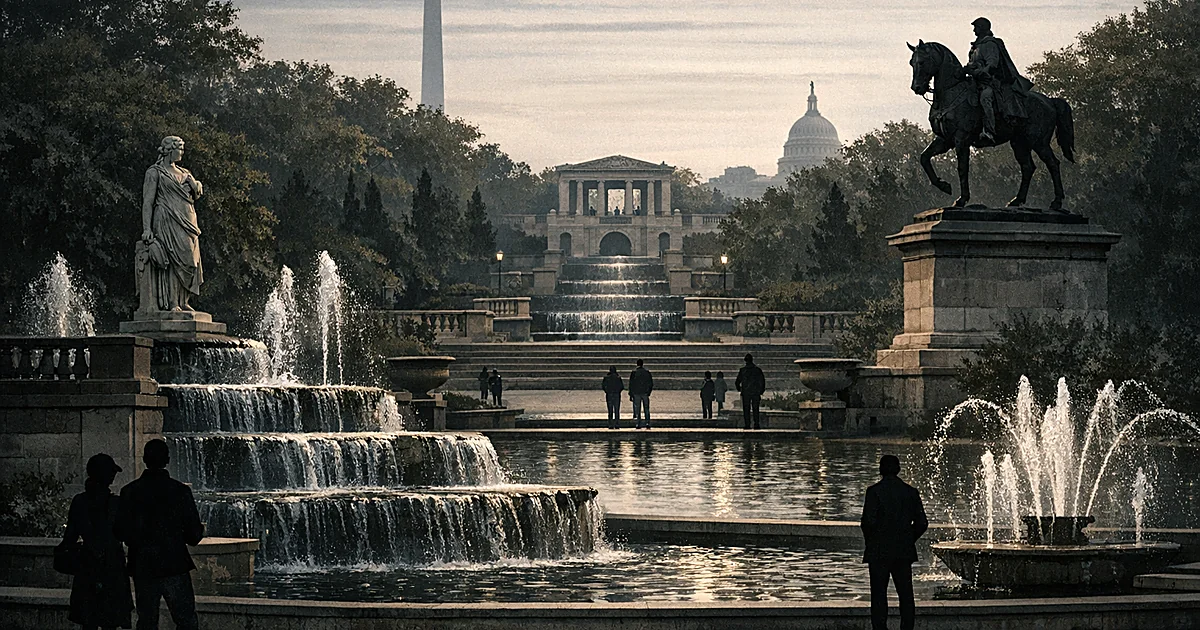
President Trump says a recent round of renovations at Meridian Park is complete, tying polished statues and repaired water features to a wider effort to clean up and beautify the nation’s capital ahead of America’s 250th anniversary.
The announcement frames the work as visible, practical fixes to high-traffic memorials rather than more political promises. Officials point to statue polishing and water-feature repairs as the primary visible signs of the project. The effort is presented as part of a push to make public spaces more presentable for residents and visitors.
The renovations followed an executive order called “Making the District of Columbia Safe and Beautiful.” That order is cited as the policy basis for the clean-up and repair work, linking maintenance to a broader message about civic pride. The administration emphasizes tangible improvements over rhetoric, pitching upkeep as a straightforward government duty.
Four specific sites were singled out on social posts: the Franklin Delano Roosevelt Memorial, the George Mason Memorial fountain, the Joan of Arc statue and the Dante Memorial Statue. The first two reportedly received infrastructure repairs and polishing, while the latter pair were listed among highlighted locations. Those names anchor the program to recognizable landmarks in the public mind.
Social posts from the president kept attention on what people can actually see when they visit the capital. The platform choice underscored a communications strategy that prioritizes before-and-after visibility. That approach fits a governing style focused on delivering results that voters can point to on the ground.
What’s missing from the rollout is detail about who did the work and how much it cost. The agency or contractor responsible hasn’t been publicly identified, and no comprehensive cost breakdown has been released. Those blanks matter because taxpayers deserve clear accounting when public property is repaired using public funds.
Questions about scope and accountability are reasonable without being obstructive; maintenance should be routine and transparent. A good-faith program would include schedules, contracts and price tags so citizens can see value for money. Conservatives who favor efficient government still insist on open books when government spends on public goods.
The stated aim is plain: restore key memorials, fix infrastructure where needed and prepare public spaces for the nation’s 250th anniversary events. That practical focus gives the effort a clear benchmark and deadline tied to a national milestone. It’s the sort of basic governance work that voters expect to be done well and visibly.
At the same time, an emphasis on visible results can cut through partisan theater and offer something useful to everyone who visits Washington. Clean, safe, and well-maintained parks and memorials are a nonpartisan benefit that reflects on local stewardship and federal priorities. If the administration follows through with transparent reporting, the project can serve as a model for routine, accountable upkeep.
Moving forward, the administration can keep the political advantage by making the remaining details public: contractor names, line-item costs, and a clear timeline for any further work. Delivering those documents would reinforce the message that government can be both effective and accountable. Until then, the polished statues and repaired fountains are a good start, but taxpayers will want the rest of the story.

