

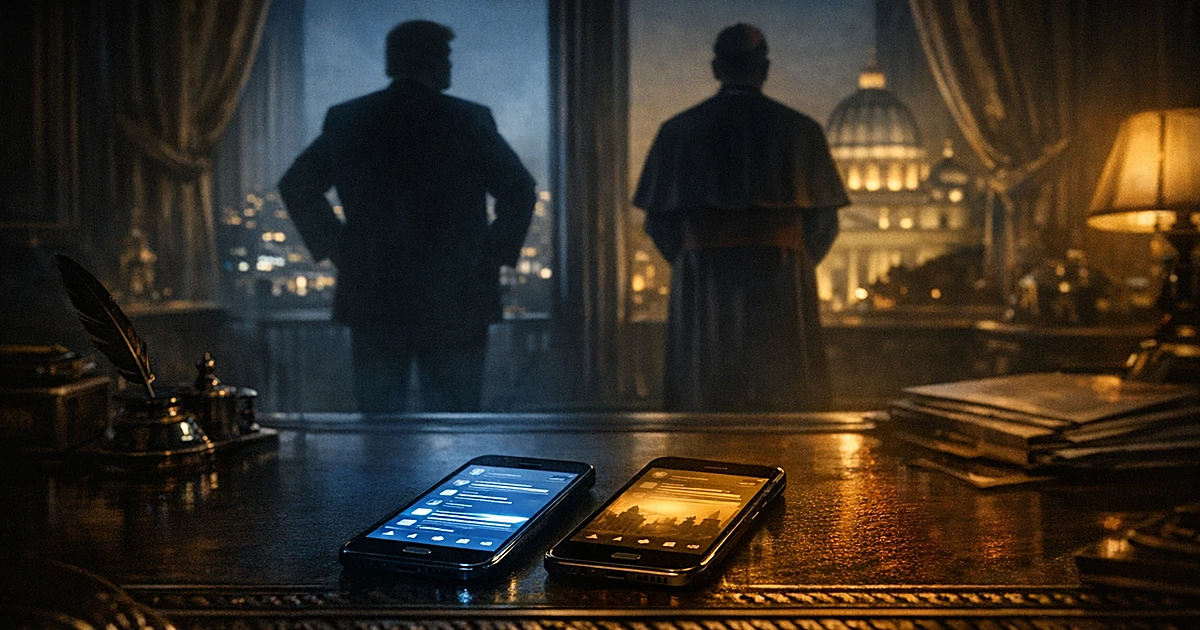
President Donald Trump used Truth Social late Sunday night to single out Pope Leo XIV and praise the pope’s older brother, stirring another flashpoint in an ongoing dispute between the White House and the Vatican.
President Donald Trump took to Truth Social late Sunday night to declare that he preferred Pope Leo XIV’s older brother over the pope himself, the latest salvo in a public clash between the White House and the Vatican that shows no sign of cooling. The post landed bluntly and plainly, the kind of direct, no-frills messaging his supporters expect. That short message did more than nudge at Vatican relations; it underlined a broader cultural divide now playing out on the world stage. The choice of words and the platform both mattered for how the audience reacted.
Trump’s post included a clear, quoted endorsement of the pope’s brother and a pointed condemnation of the pontiff. “I like his brother Louis much better than I like him, because Louis is all MAGA,” Trump wrote. “He gets it, and Leo doesn’t!” Those lines were posted unvarnished and were meant to be read by a base that prizes plain talk and loyalty. The quote, exact and succinct, landed as a political signal as much as a personal preference.
This episode fits into a string of public back-and-forths between conservative American leadership and some elements of the Vatican. For many Republicans, the dispute is about values and who represents them on the international stage. The tone of the clash is sharp; it moves quickly from diplomatic critique to social media commentary, and vice versa. The result is a magnetic, sometimes chaotic public conversation that keeps both sides on edge.
Supporters of Trump saw the Truth Social post as a refreshingly honest take that cuts through diplomatic niceties. In their view, praising someone aligned with the MAGA movement is consistent with a broader push for leaders who defend national interest and cultural conservatism. That emphasis on alignment and loyalty is central to how Trump communicates and how his coalition measures leaders. It is also why a single social post can become a focal point for wider political debate.
The Vatican, meanwhile, has its own priorities and traditions, and it has occasionally clashed with American conservatives over theology, policy, or public statements. Those differences are real and matter to both institutions, but they also play out under intense media scrutiny. Each side’s public remarks feed the other’s narrative, and that cycle amplifies tensions. Observers who favor a more restrained diplomatic approach argue for discretion, while Trump’s backers prefer clarity and bluntness.
What this incident shows is how modern politics mixes personality, media, and international relations. A one-line post on a platform favored by the president can echo in religious halls, foreign ministries, and living rooms across the country. It’s a new kind of diplomacy where the appearance of authenticity can matter as much as formal statements. For a movement built on directness, this is an effective, if aggressive, communication style.
Whether the Vatican responds or chooses to ignore the jab, the line of attack has already served its purpose for Trump: to rally his base, draw attention to perceived allies, and mark distinctions with those he sees as out of step. The clash is likely to persist, fueled by quick posts, quick takes, and a public eager for clear lines. In the meantime, the exchange keeps the question of who speaks for shared values front and center in conservative conversations.

