

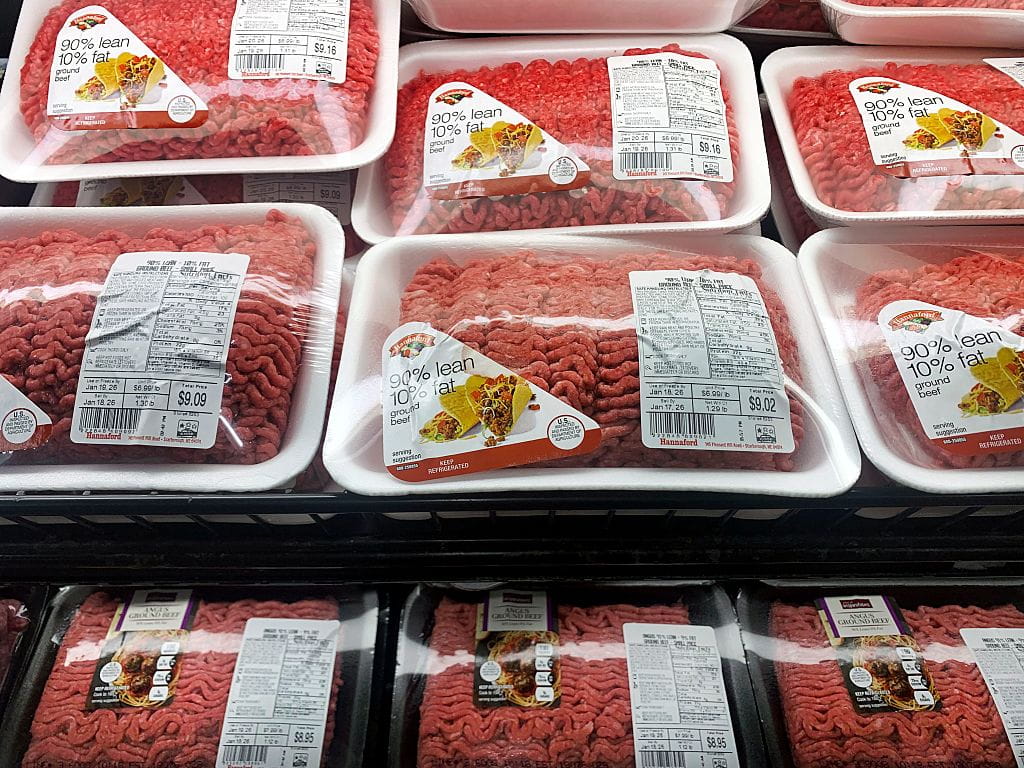
President Trump signed an executive order targeting record-high beef prices, responding to a surge in ground beef costs and setting up a debate over consumer relief versus consequences for producers.
President Donald Trump has issued an executive order intended to address soaring beef costs after ground beef reached an average of $6.69 per pound in December 2025, according to Bureau of Labor Statistics (BLS) data. The move is pitched as relief for families squeezed by grocery bills, but it also raises questions about who will bear the cost of any price corrections. Supporters say decisive action is needed now; critics warn about unintended fallout across the industry.
Consumers who saw ground beef jump to that $6.69 average are understandably angry, and the administration is framing the order as a direct response to their frustration. From a Republican perspective, leadership means stepping in when markets fail ordinary Americans, especially on staples that feed families. The order is presented as a pragmatic tool to bring prices down while protecting consumer budgets ahead of busy shopping seasons.
At the same time, measures that push prices lower can ripple backward through the supply chain and squeeze already tight farm margins. Many ranchers and small processors operate on thin profits, and sudden policy-induced price shifts can make their businesses vulnerable. The concern is not theoretical: smaller operations are often the first to feel pressure from changes that favor short-term consumer price drops over long-term producer stability.
Market concentration in meatpacking and distribution has been a common talking point in discussions about price behavior, and this action puts that conversation in the spotlight. Where a few large firms control processing and distribution, policy changes aimed at lower retail prices can interact with existing market dynamics in unexpected ways. A clean, competitive market benefits both consumers and producers, but policy must be crafted so it does not accelerate consolidation or push independent operators out of business.
The executive order asks federal agencies to look for ways to reduce costs for shoppers while maintaining supply resilience, though it stops short of prescribing a single solution. Agencies will likely examine regulatory barriers, contract terms, and logistical bottlenecks that can influence retail prices. Whatever tools are used, the trade-off between short-term consumer relief and long-term farm viability will be a central tension for policymakers to manage.
Republicans generally favor policies that encourage competition and lessen heavy-handed regulation, and that perspective shapes how many will view this order. The preferred approach is to remove unnecessary red tape and promote market entry, so more small and mid-size players can compete. That way, price relief comes from real competition rather than temporary administrative fixes that might create other problems down the road.
At the same time, there is a case for targeted, sensible measures that protect consumers without wrecking producer finances. Smart policy can trim waste, speed up distribution, and increase transparency in pricing so shoppers see fair value. The challenge is to design actions that reduce costs at the register while leaving producers with predictable, sustainable revenue streams.
Industry watchers will be watching how the federal government balances enforcement and incentives, and how quickly any effects show up at the grocery store. If the order yields real, lasting reductions in retail prices without collapsing supply chains, it will be touted as a win for the administration and for households. If it simply shifts burdens onto ranchers or accelerates consolidation, the political and economic ramifications could be more complicated.
The broader lesson is that policy on essentials like food requires both urgency and care. Quick fixes that sound good politically can produce real harm if they ignore the production side of the equation. A steady, market-friendly approach that enhances competition and cuts needless barriers is the Republican prescription for delivering affordable beef now and stability for producers later.

