

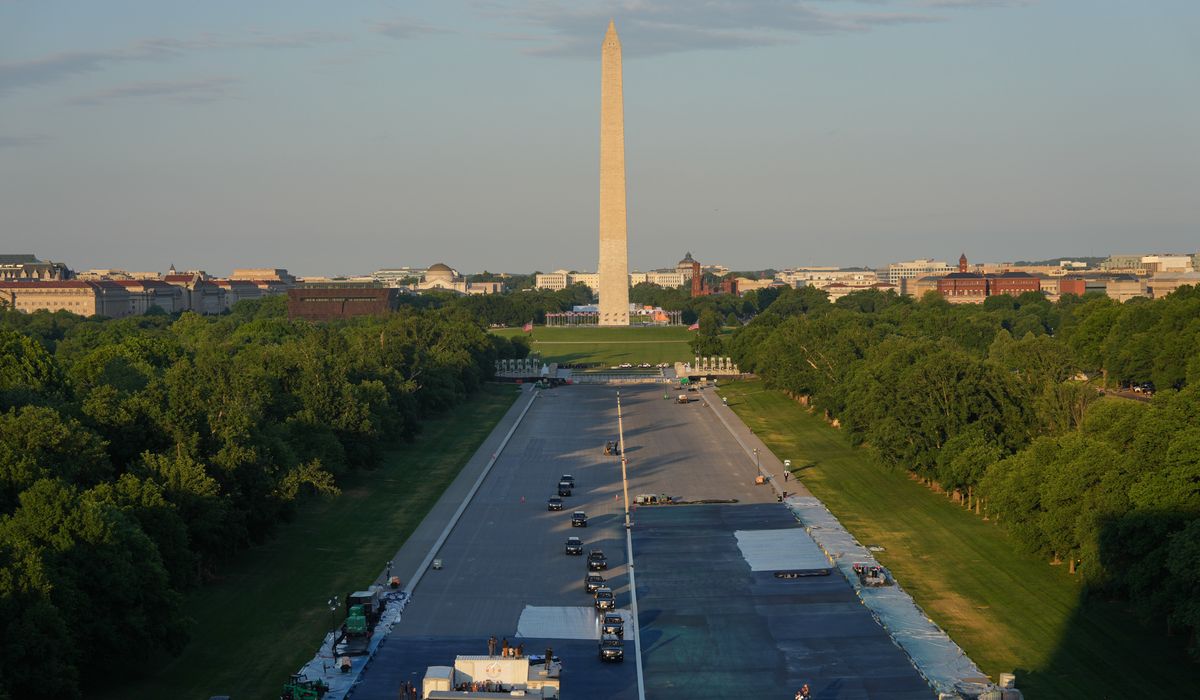
President Trump made an unannounced visit to the Lincoln Memorial to inspect the Reflecting Pool after it received a new coating he called “American flag blue,” a move that drew attention for its symbolism and timing.
On Thursday, President Trump quietly went to the Lincoln Memorial to see the Reflecting Pool after crews applied a striking new color treatment. Supporters see the change as a bold visual statement that aligns with his straightforward approach to public spaces. The appearance was short and focused, with Trump taking the moment seriously and without fanfare.
The choice to describe the color as “American flag blue” was intentional and clear, signaling a patriotic theme that resonates with his base. That phrase captures the optics he wanted: a strong, unmistakable national motif placed at one of the country’s most recognized sites. For many conservatives, it was the kind of unapologetic symbolism they expect from their leaders.
Washington reactions were predictably split, with allies praising the directness and critics questioning the taste and permanence of the treatment. Those doubting the change framed it as a publicity move, while supporters argued it returns a familiar sense of pride to the memorial. Either way, the visit underscored how visual decisions on public grounds can become political statements almost instantly.
The logistics behind covering such a large stretch of public space are complex, but the White House presented it as an efficient, no-nonsense update. Crew work, approvals, and timing all had to come together for the pool to be ready before the president’s unannounced stop. The result was a deliberate scene meant to be seen and interpreted by the public and the press alike.
Beyond style, the episode reflects a broader governing instinct to make visible, decisive changes rather than leaving things to slow bureaucratic processes. That approach appeals to voters who want results and clear identity in national landmarks. It also fits a pattern of using public spaces to reinforce core messages about patriotism and national unity.
Critics will worry about precedent and conservation, and those concerns deserve attention in a healthy debate about public stewardship. But supporters counter that patriotic presentation and site maintenance can coexist, and that this was a way to refresh a central place without erasing its history. The administration framed the move as maintenance with a proud color choice rather than an attempt to rewrite memory.
Photos and short videos shared after the visit amplified the intended effect, giving people a sharp visual to react to and discuss. For Trump and his allies, those images function as a reminder that symbolism matters in politics and that leadership sometimes speaks louder through visuals than through long statements. The quick stop at the Lincoln Memorial offered exactly that kind of shorthand messaging.
As the story settles into the news cycle, the practical questions about longevity and conservation will be hashed out by experts and officials. Meanwhile, the political message is already clear to many voters: the administration is willing to make bold, visible moves that emphasize national pride. The trip to the memorial was short, but its imagery will likely keep the conversation going for days.

