

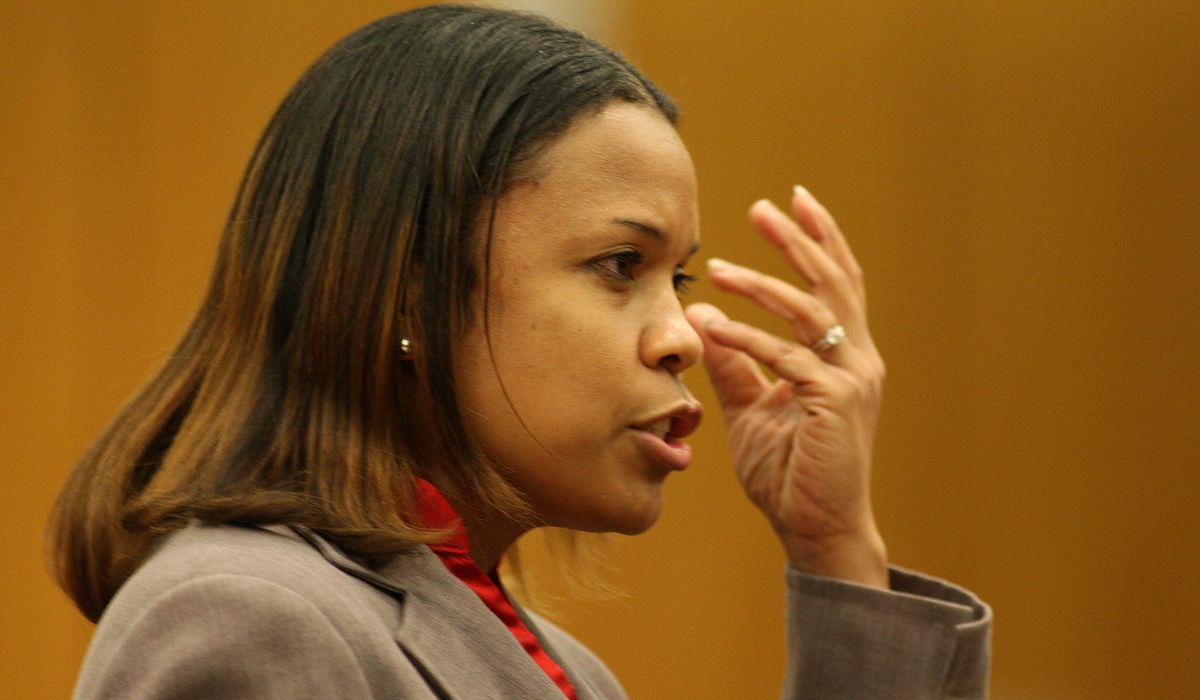
Two congressional Republicans from Georgia have filed impeachment resolutions against a federal judge in Atlanta who was disciplined after an investigation found she had sex with a police officer, setting up a clash over judicial accountability and political boundaries.
Republican lawmakers are moving quickly to force accountability where they see a failure of judicial ethics, and they argue that discipline short of impeachment does not answer the larger questions about impartiality and public trust in the courts. The actions in Congress reflect a broader Republican concern that federal judges must be held to clear standards when personal conduct crosses into potential conflicts with law enforcement. For voters and party activists, this is about protecting the bench from behaviors that could undermine fair adjudication.
The disciplinary action that prompted the resolutions focused on an Atlanta judge who was investigated and found to have engaged in a sexual relationship with a police officer, a fact that raised red flags for impartiality. Republicans in Georgia contend that such conduct creates at least the appearance of bias when cases involve law enforcement, and they say that is a threshold for impeachment consideration. The argument is not about private morality alone but about whether a judge can fairly preside over cases involving a partner in law enforcement.
Impeachment is a serious constitutional remedy reserved for misconduct that betrays public trust, and Republican sponsors emphasize that they are using the constitutional process intentionally and transparently. They frame the effort as restoring confidence in the judicial branch by insisting on investigations and public accountability when evidence surfaces. That approach aims to reassure citizens that federal judges are not above scrutiny when their actions touch on the institutions they are supposed to evaluate impartially.
Critics warn that impeachment can be weaponized for political gain, and some argue that internal disciplinary measures were sufficient in this instance. Republicans respond that internal discipline, while necessary, can leave unanswered questions about a judge’s continued fitness for office, especially on sensitive cases tied to law enforcement. The debate highlights a broader tension between professional oversight and congressional responsibility to act when public trust is at stake.
Procedurally, the House drafts and votes on articles of impeachment before the Senate holds a trial; Republicans in Georgia are pushing to start that process rather than let the matter rest solely with judicial conduct panels. They say formal congressional action is warranted because the alleged behavior intersects with criminal justice and could influence outcomes in courtrooms across the district. The sponsors also argue that a public, adversarial process will bring clarity and documented findings into the open.
For conservative voters, the case is a test of whether elected officials will enforce boundaries on unelected officials who exercise immense power over people’s lives. The narrative being advanced is straightforward: if a judge has a compromising relationship with a police officer, litigants deserve to know how that relationship affects rulings and sentencing. That line of reasoning resonates with Republicans who prioritize law and order while insisting on strict ethical lines for those who preside over the system.
The political fallouts could be significant, with the dispute potentially shaping perceptions of judicial independence and congressional willingness to intervene. A successful impeachment would be rare and dramatic; an unsuccessful one could still influence future oversight and nominations. Either way, GOP sponsors of the resolutions intend to keep the issue in the public eye to press for clearer standards and stronger enforcement mechanisms within the judiciary.
Beyond the immediate case, Republicans say this moment should prompt a review of how judges are vetted and monitored when relationships with law enforcement arise. They argue that clearer rules and more transparent reporting can prevent similar controversies from eroding confidence in the courts. The push for impeachment, in their view, is part of a larger effort to reinforce the integrity of the judiciary and make sure that justice remains blind, not compromised by personal entanglements.

