

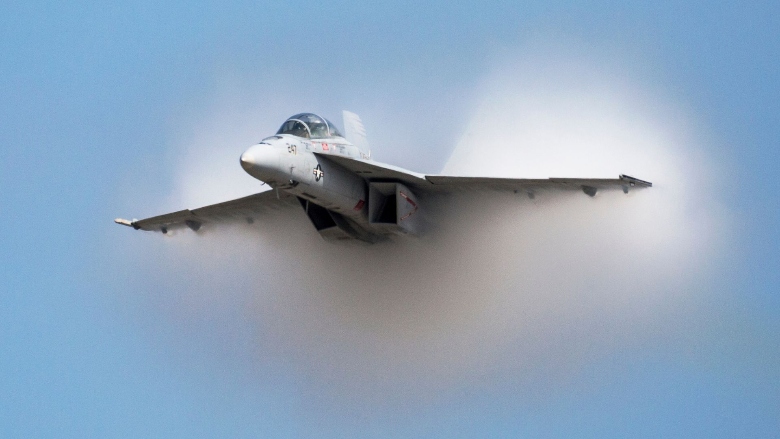
Two U.S. Navy pilots are counting their blessings after surviving a shocking friendly fire incident over the Red Sea. On Sunday, their F/A-18 Super Hornet was mistakenly shot down by the USS Gettysburg, a guided-missile cruiser operating as part of the Truman Carrier Strike Group.
Both pilots, flying a two-seat Super Hornet assigned to Strike Fighter Squadron 11, ejected safely and were later recovered. One sustained minor injuries. The dramatic error, which could have had far worse consequences, highlights the immense risks faced by military personnel operating in the volatile Red Sea corridor.
The incident unfolded during a high-stakes response to Houthi rebel threats in the region. The USS Harry S. Truman, an aircraft carrier recently deployed to the Middle East, had been conducting airstrikes targeting Iranian-backed Houthi forces in Yemen. Simultaneously, U.S. warships, including the Gettysburg, were intercepting Houthi-launched drones and an anti-ship cruise missile.
Amid this chaotic environment, the Gettysburg mistakenly identified the F/A-18 as a hostile threat and engaged it. Despite the advanced radar and communication systems integrated across the battle group, the error was not averted.
U.S. Central Command has not disclosed how the misidentification occurred but acknowledged the incident as a serious operational failure.
“Rapid decision-making in high-pressure scenarios likely contributed to this tragic mistake,” a military official said.
The friendly fire incident underscores the mounting risks in the Red Sea, a region increasingly dominated by conflict and tension. Iranian-backed Houthi rebels have been a persistent threat, targeting shipping vessels and launching attacks on military forces.
Since the outbreak of the Israel-Hamas conflict in October 2023, the Houthis have ramped up their aggression, launching nearly 100 drones and missiles at merchant ships and even Israel. While the group claims these actions are meant to pressure Israel and its allies, many vessels targeted appear unrelated to the conflict.
U.S. forces, including the Truman Carrier Strike Group, have intensified their presence in the region, conducting airstrikes against Houthi-controlled sites. Over the weekend, U.S. warplanes targeted a missile storage facility and a command-and-control center in Sanaa, Yemen’s capital.
Houthi media confirmed the strikes and claimed additional attacks around Hodeida, though details on casualties remain scarce.
The incident has drawn sharp criticism of U.S. military leadership. Critics, including prominent commentators on social media, have demanded accountability for the blunder.
“The Chief of Naval Operations must resign immediately,” tweeted one commentator.
Military analysts point to the dangers of operating in such a volatile theater, where quick decisions are often made with incomplete information. Still, many argue that the mistake reflects systemic issues within the U.S. military’s operational protocols.
Despite the ordeal, the pilots of the downed Super Hornet are expected to recover fully. Their survival is attributed to the advanced ejection systems aboard the aircraft and the rapid response of rescue teams.
The jet, part of the “Red Rippers” squadron based at Naval Air Station Oceana in Virginia, had been conducting routine operations when it was struck. The incident marks a significant loss of resources, with the estimated cost of an F/A-18 Super Hornet exceeding $70 million.
The U.S. military has launched a comprehensive investigation into the friendly fire incident, focusing on how communication and identification protocols failed. Meanwhile, the Federal Aviation Administration (FAA) and other authorities are closely monitoring the region.
The Red Sea remains a focal point of international concern. With the Houthis continuing their attacks and military coalitions on high alert, the risks for both military and civilian operations are escalating.
This friendly fire episode serves as a grim reminder of the complexities and dangers of modern warfare, especially in a region fraught with overlapping conflicts and shifting alliances. While the Biden administration faces criticism for the incident, the broader challenge lies in maintaining stability and security in one of the world’s most critical waterways.
As tensions rise and military operations intensify, the U.S. and its allies must tread carefully to avoid further costly mistakes.


2 Comments
Seems the piolets must have been rookies. They should have been able to make the missiles miss.
That’s sarcasm I hope. Our missiles are extremely difficult to evade, even by an experienced pilot.