

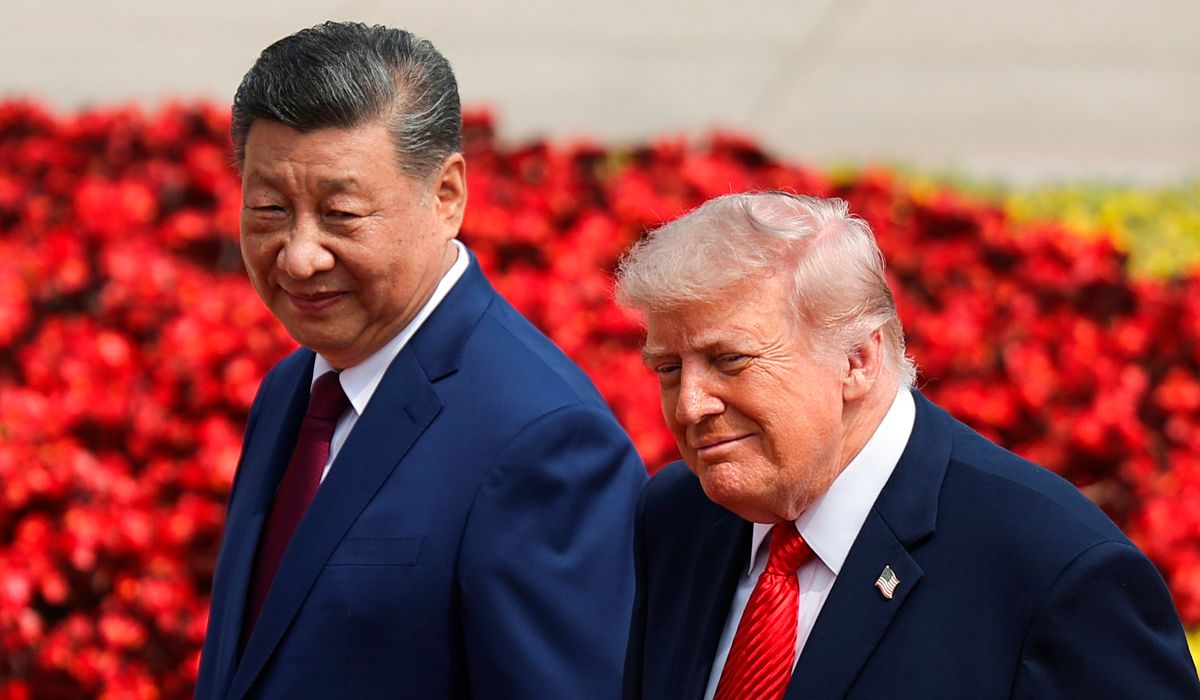
Xi Jinping warned President Trump that “clashes and even conflicts” over Taiwan could imperil economic ties between the world’s two largest economies, a reminder that geopolitics and trade are tightly linked and that Washington faces difficult choices on deterrence and economic policy.
Chinese leader Xi Jinping delivered a stark message to President Trump about Taiwan, framing the issue as one that could spill over into the economic realm and threaten business ties. That warning is both a threat and a negotiating tool, and it landed at a time when American policymakers are sizing up leverage and risk. For Republicans, the moment demands clarity about national security without surrendering economic independence.
Beijing’s insistence on reunification has become a lever it uses to shape global behavior, and language like “clashes and even conflicts” is meant to get attention and to influence markets. Washington should read that as bluster aimed at coercion rather than as a line that must be accepted as a given. A strong Republican stance is simple: protect our friends, defend our interests, and make sure economic ties do not become a chain that limits America’s freedom to act.
Taiwan matters for more than sentiment; it is a functioning democracy with strategic value in the Indo-Pacific and a critical node in the global technology supply chain. The island’s semiconductor industry supplies essential chips for everything from cars to weapons systems, and letting threats to Taiwan go unanswered would be a gift to adversaries who would exploit the vacuum. Republican thinking focuses on aligning economic policy with defense priorities so vital supply chains remain secure at home.
The U.S. and China are the world’s two largest economies, and that interdependence complicates any straightforward response to coercive diplomacy. Trade and investment are important, but they cannot be the sole lens through which national security decisions are made. When economic ties are used as a weapon, the United States must have policies in place to blunt that pressure, maintain market access for allies, and pry loose critical technologies from adversarial control.
Deterrence requires credibility, and credibility comes from capability plus political will. Maintaining a robust naval presence, strengthening alliances in the Indo-Pacific, and continuing military aid and training for partners are practical measures that back up American commitments. Republicans argue that clear capability and readiness reduce the chance of miscalculation and make threats less effective as tools of coercion.
At the same time, economic resilience is policy, not rhetoric, and it means reshoring strategic industries, investing in semiconductor manufacturing, and diversifying suppliers away from hostile actors. Building domestic capacity and reliable alliances cuts the leverage adversaries hold over U.S. choices and protects consumers and defense procurement alike. This approach is about creating freedom of action, not Cold War isolation, and it fits a conservative view that government should secure strategic markets while letting private firms compete vigorously.
Diplomacy will matter, and so will firmness; the balance is a judgment call that cannot be made by fearing market reactions alone. Leaders in Washington must weigh the risk of escalation against the long-term cost of appearing to bow to threats, and a Republican perspective favors posture and policy that protect liberty and commerce. Xi’s warning is a clear signal that the status quo is contested, and it is a reminder that the United States needs a strategy that combines deterrence, economic independence, and alliance cohesion to keep peace on terms that favor freedom.

