

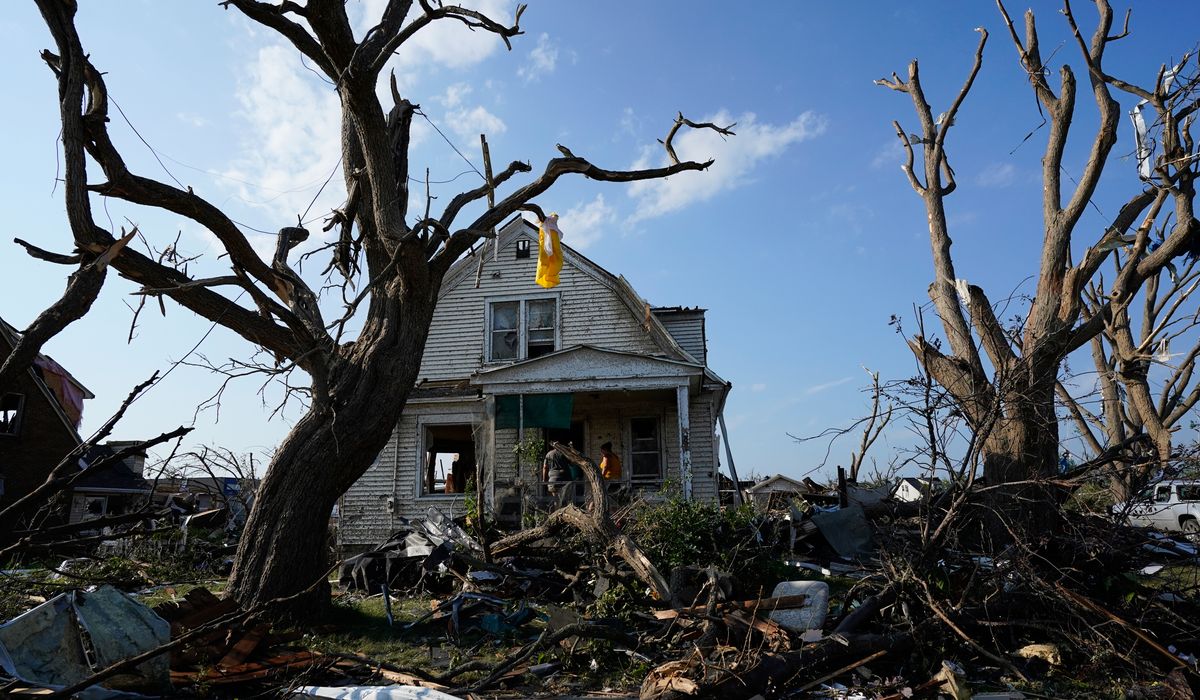
A violent tornado with peak winds near 140 mph carved roughly a 12-mile track across Wisconsin’s Fox Valley on Monday, ripping through neighborhoods and commercial areas in Menasha and Appleton and leaving widespread structural damage.
The tornado moved through the Fox Valley on Monday, producing peak winds near 140 mph and cutting an estimated 12-mile path across residential and commercial areas. It hit Menasha and Appleton especially hard, with homes and businesses described as severely damaged or destroyed. Emergency crews were immediately mobilized to assess damage and secure dangerous structures.
Power lines and utility poles were toppled along portions of the track, creating extended outages and complicating early response work. Road closures and debris fields slowed crews trying to reach neighborhoods that were hit hardest, and local authorities urged residents to stay clear of downed wires and unstable buildings. Utility companies prioritized restoring service to critical facilities while coordinating with incident commanders on the ground.
Damage to roofs, walls, and windows was widespread, and many structures sustained impacts that made them uninhabitable. Commercial properties along main corridors showed broken glass, collapsed sections, and scattered inventory, while whole blocks of homes carried the kind of destruction typical of very powerful tornadoes. Assessments by building officials focused first on safety hazards and the potential for secondary collapses.
Search teams and first responders concentrated on checking structures for trapped or injured people and on helping residents who had been displaced. Temporary shelters were opened to provide a warm, dry place for families forced from their homes, and social service agencies began coordinating basic needs like food, clothing, and medical care. Officials emphasized that recovery resources and volunteer efforts would be needed as cleanup shifted from emergency work to longer term rebuilding.
Meteorologists and storm survey teams planned to follow the initial assessments with detailed examinations of the tornado’s path, turning those findings into official reports. Those surveys typically examine the pattern of tree and structural damage to estimate wind intensity and document the tornado’s start and end points. Local officials said they would use those findings to refine warnings, building guidance, and emergency plans for future severe weather.
Residents described the scene as chaotic in the immediate aftermath, with neighborhoods littered with splintered wood, insulation, and household items blown far from their origin. People living in nearby areas reported that the sound of the storm was loud and sudden and that the transition to daylight made the scale of damage clearer. Community leaders urged patience while rescue and damage assessment operations continued, and they reminded people to avoid congesting roads needed by response teams.
Insurance representatives and building inspectors began coordinating to document losses and guide property owners on next steps for claims and repairs. Photographs and inventories will be important to make sure rebuilding funds reach those with verified losses, and officials encouraged residents to document damage safely without entering unstable structures. Contractors and city permit offices will play a role in ensuring repairs follow current codes and standards as recovery moves forward.
Volunteers and neighboring communities offered aid, and local governments set up public information channels to keep residents informed about shelter locations, road reopenings, and utility restoration priorities. The work ahead will include clearing debris, repairing critical infrastructure, and helping those with the most severe losses find stable housing. Over time, officials expect coordinated efforts between municipal agencies, relief organizations, and the private sector to guide the region through cleanup and rebuilding.

