

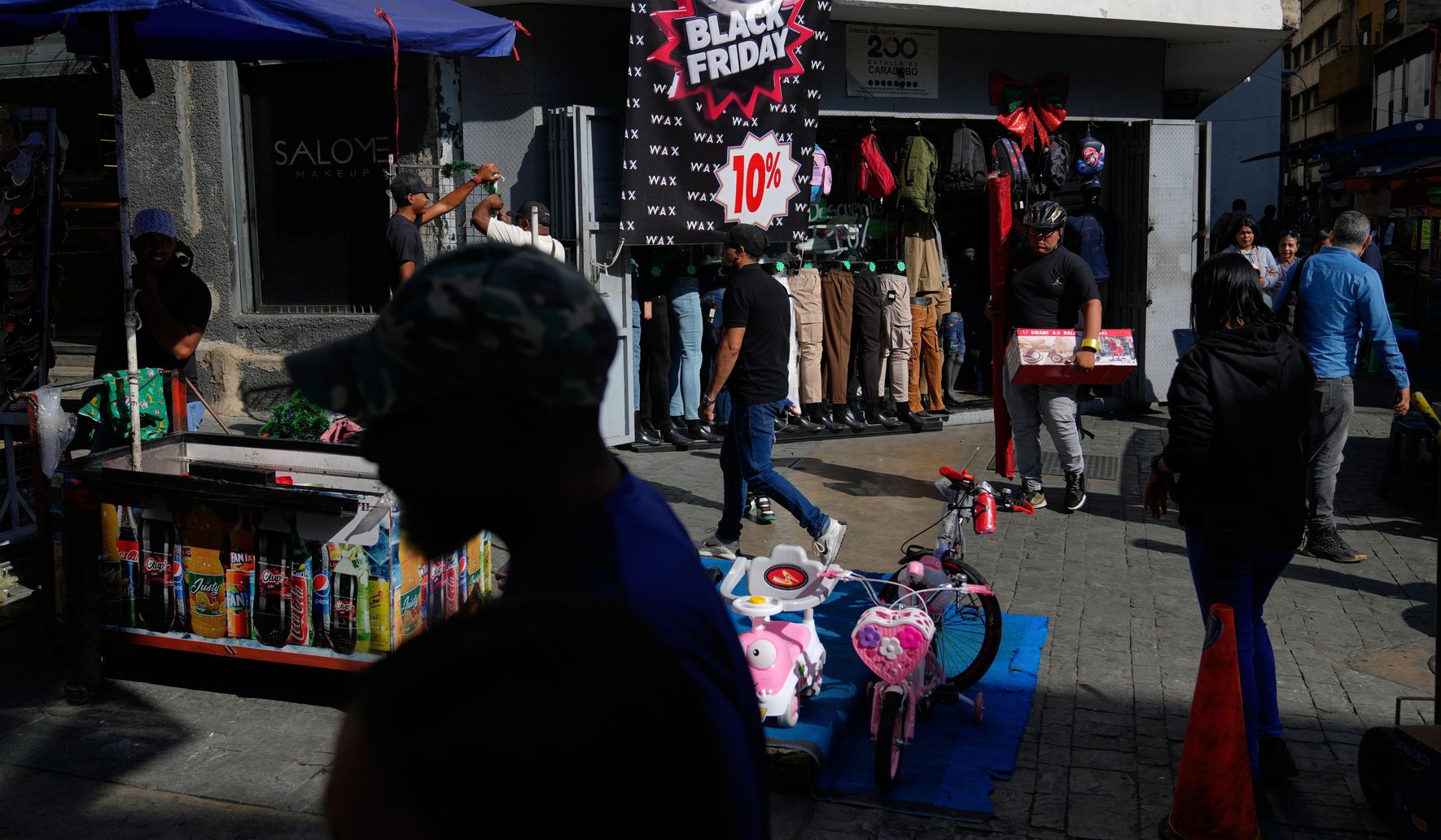
A Caracas mall saw far fewer Black Friday shoppers than expected, despite prominent discount signs and low-priced offers, revealing how economic stress is reshaping consumer behavior in Venezuela.
Window displays advertising 30% discounts and shoes for $20 were not enough to draw throngs of bargain hunters this Black Friday to a popular mall in Venezuela’s capital. Even the newly opened H& sat quietly as people passed by without rushing inside. The contrast between flashy storefronts and thin foot traffic was striking and hard to miss.
Behind that quiet scene is an economy where paychecks do not stretch the way they once did and many families are budgeting carefully. Retail promotions that used to trigger long lines now get a much smaller response because buyers weigh every purchase against rising living costs. Shoppers who do show up tend to move slowly and focus on essentials rather than impulse buys.
The store signs telling consumers they could find shoes for $20 were notable because many transactions today occur with an eye on foreign currency and informal rates. Pricing in dollars or referring to fixed-dollar deals has become a common way for retailers to protect margins when the local currency drops in value. Even so, a low sticker price does not erase the broader uncertainty people feel about future income and services.
Logistics and utilities add to the hesitation. Frequent power interruptions, intermittent internet, and concerns about stock consistency make shopping trips less predictable and less appealing. When basic needs like reliable electricity and transportation are unstable, a leisure trip to chase a sale slides down the priority list for a lot of families. That shift changes what retailers can count on when planning promotions.
For merchants, the math is difficult. Discounts cut into already-thin margins and the cost of importing goods or keeping shelves stocked can be high and volatile. A 30% discount on a rack of clothing might not produce profit if supply costs spike or currency moves sharply. Many stores are trying to balance attracting customers with avoiding sales that leave them exposed when expenses climb.
Shoppers are adapting too. Rather than joining big, crowded events, many prefer smaller, targeted purchases or wait for genuinely essential needs to arise. Some buyers check prices across different outlets before committing, and others delay purchases until they feel certain about the stability of their household budget. That cautious approach dampens the momentum that once made shopping holidays a reliable boost for retail sales.
For the mall itself, empty corridors on what used to be a peak day highlight how consumer confidence has softened. Property managers and store owners are left reconsidering promotional strategies and opening hours, looking for ways to match offers with what local shoppers actually need. Events that once drew large crowds now look more like tests of whether a local market can return to steadier patterns of spending.
The scene in Caracas is a reminder that headline discounts matter less if people lack the financial breathing room to take advantage of them. Malls and brands can put pretty price tags in their windows, but the decision to buy depends on a wider set of economic realities that are still unsettled. Shoppers, merchants, and policymakers will be watching how those realities evolve in the months ahead.

