

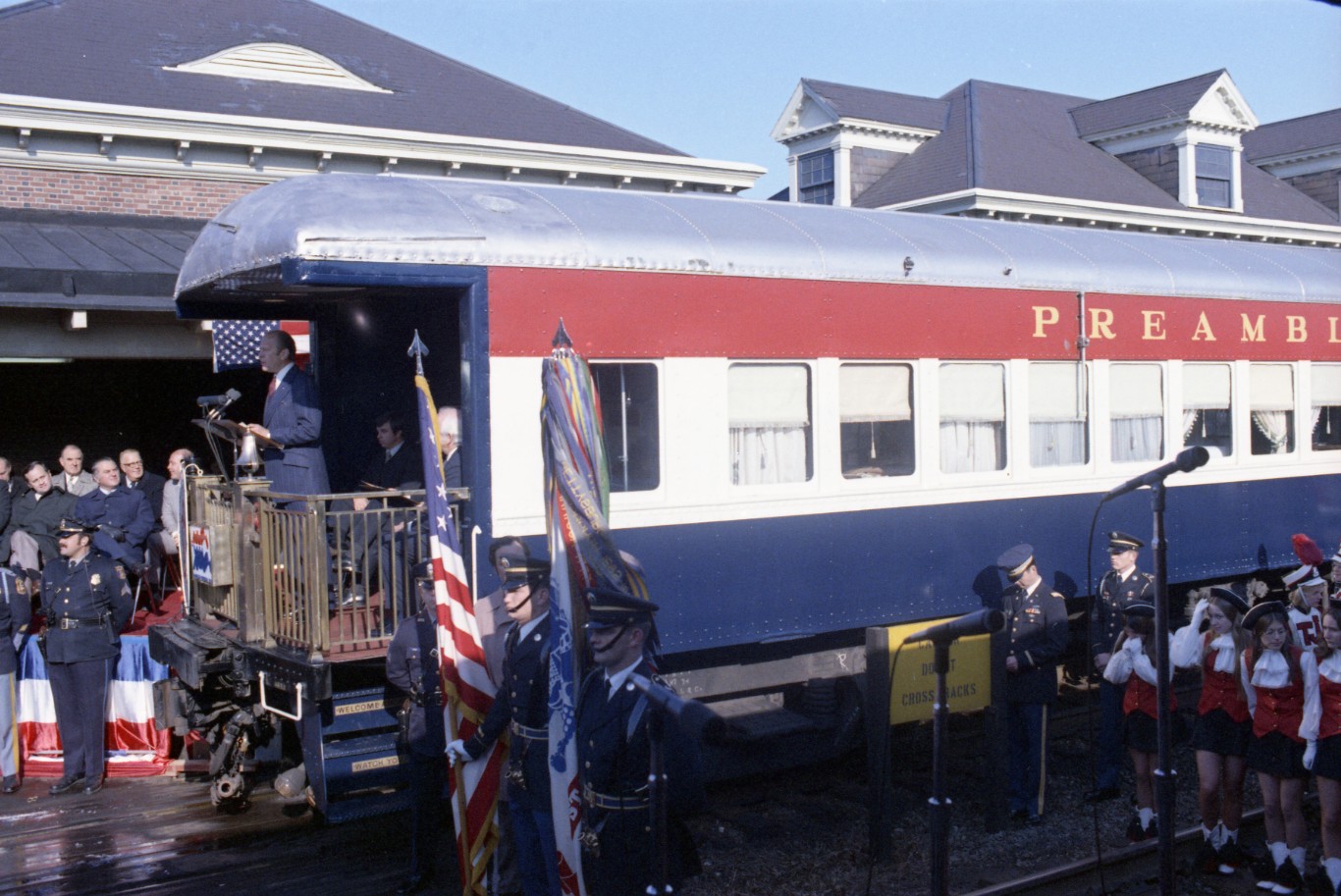
America once packed a train to celebrate its story, and now the same idea faces modern legal roadblocks as planners try to mark the 250th anniversary.
During America’s bicentennial, seven million Americans visited John Wayne’s ‘Freedom Train’ exhibit to celebrate America, but for America’s 250th, legal hurdles threaten to stop the Freedom Train in its tracks. That memory of mass civic enthusiasm shows what a shared national moment can look like when logistics and goodwill line up. Today, organizers say the landscape is far more complicated.
The challenges are bureaucratic, legal, and cultural all at once. Permitting rules, liability concerns, and competing claims over public space have multiplied since the 1970s. When you combine modern regulations with activist lawsuits and local political friction, a traveling exhibit faces more obstacles than a generation ago.
Local officials who worry about crowd control and budgets are asking tough questions before any route is finalized. Insurance costs and security plans get scrutinized down to the inch, and that drives up the price tag fast. Even private donors and sponsors hesitate when a project looks like it will draw court fights instead of crowds.
Litigation can slow plans to a crawl, and the plaintiffs are often well-funded interest groups. They raise genuine legal points, but their timing and goals sometimes shift a celebratory event into a courtroom battle. The consequence is that the nation’s anniversary risks being managed by judges rather than by communities.
Organizers face zoning hearings, environmental reviews, and a patchwork of municipal rules that vary wildly across counties and states. What passes muster in a small town might be blocked in a big city, and vice versa. That unpredictability makes multi-state planning a gamble on dozens of local interpretations.
Meanwhile, Americans who remember the original Freedom Train talk about a different spirit of cooperation. Back then, federal and local authorities found ways to clear the path for a public celebration. The contrast is stark: a simpler regulatory era gave way to a more litigious and risk-averse culture.
There are also practical questions about the exhibit itself, from vehicle size and route clearance to staffing and medical support. Each logistical item triggers another layer of approval, and each approval often has conditions attached. Those conditions can change the way the exhibit operates or even where it can go.
The media conversation tends to focus on the drama rather than the nuts and bolts, and that fuels public confusion. Coverage that highlights lawsuits and delays makes it seem like organizers are clashing with civic norms instead of navigating rules. That perception can chill volunteer turnout and donor enthusiasm before wheels even leave the depot.
From a Republican perspective, this saga highlights a broader problem: cultural priorities shifting from celebration to litigation. When legalism takes the lead, patriotic initiatives become harder to pull off. The question becomes whether communities still have the confidence to manage large public events without seeing every obstacle as a legal crisis.
There are sensible alternatives organizers can explore without congressional intervention. Working closely with counties, letting local leaders sign off on safety plans, and setting clear liability frameworks can reduce friction. Practical, common-sense arrangements can create enough certainty for donors and local governments to commit resources.
Still, the clock is ticking toward the 250th, and timing matters for everything from permits to publicity. Delays in approvals mean fewer dates available, higher costs for contracted services, and a thinner window to build public excitement. Momentum is fragile, and organizers know that uncertainty breeds cancellations.
Regardless of political leanings, the idea behind the Freedom Train is simple: Americans like public moments that honor their history. What’s complex is the modern machinery that turns an idea into a moving national event. For the 250th, success will depend on cutting through red tape while protecting public safety and property.

