

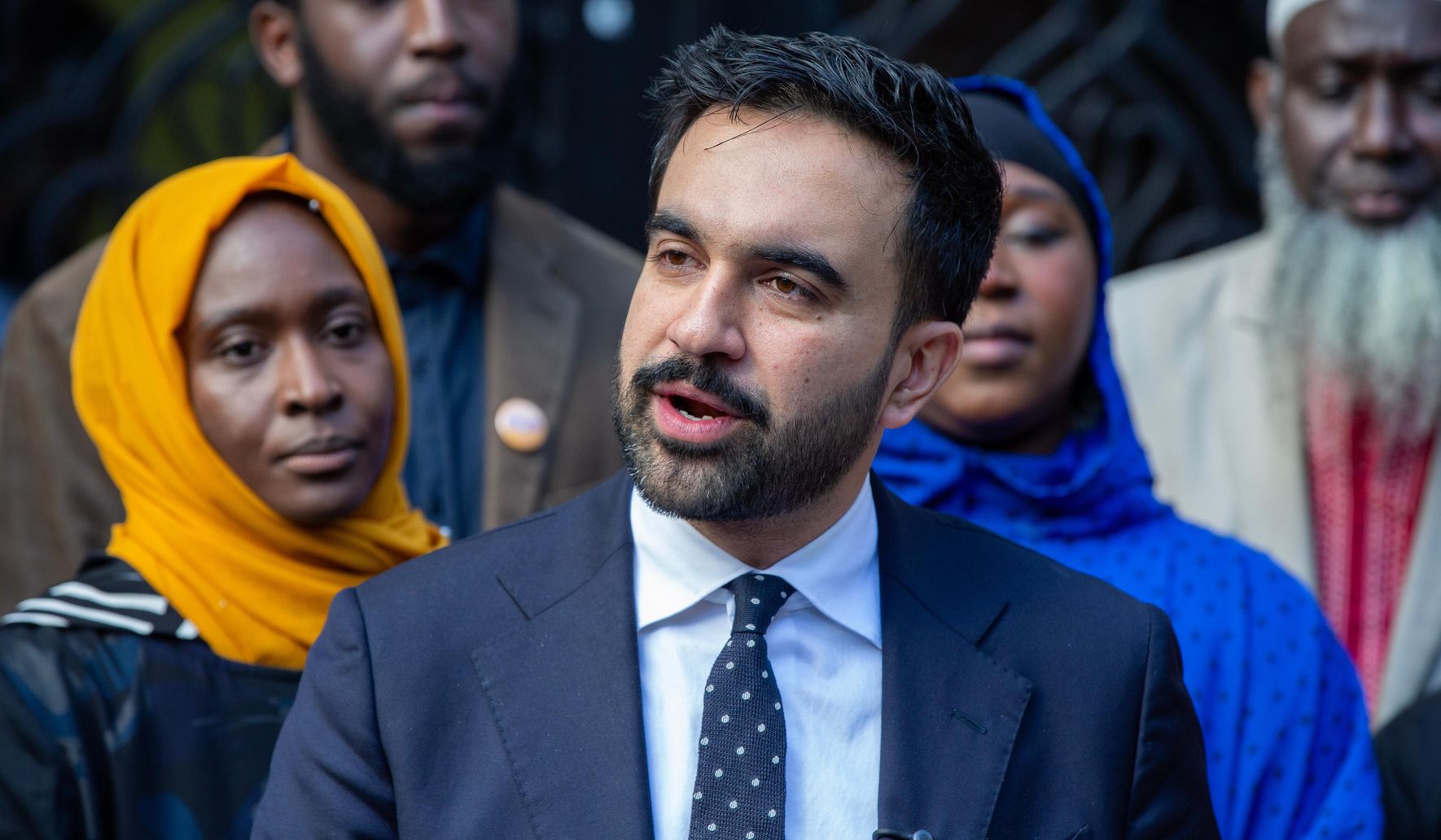
New York City’s front-runner for mayor, Democrat nominee Zohran Mamdani, acknowledged Monday that the woman he referenced in a tearful campaign speech about Islamophobia was not actually his aunt, as he had said. That admission has shifted attention from the substance of his message to questions about accuracy and trust in his campaign narrative. This article looks at the immediate facts, the political fallout, and what voters and rivals are likely to press next.
Mamdani rose quickly into the spotlight as a progressive candidate and has been widely discussed as a front-runner in the race. Last week he gave an emotional speech about Islamophobia and invoked a personal story that clearly resonated with many listeners. On Monday he told reporters the person he had described was not his aunt, correcting the earlier claim.
The correction reopened a debate about how candidates use personal anecdotes to make broader points about discrimination and public policy. For supporters the speech underscored the reality of anti-Muslim bias in the city, while for critics the misidentification has become a blunt example of sloppy messaging. Outside observers are left sorting the weight of the underlying issue from the problem of inaccurate detail.
From a Republican viewpoint the situation is straightforward: integrity and truthfulness matter to voters regardless of political stripe. Opponents have pointed to the discrepancy as reason to question the candidate’s reliability when he frames policy around personal experience. The political attack is predictable and will likely form part of a broader strategy to undercut his appeal to moderate and independent voters.
The timing is awkward for a campaign that trades heavily on authenticity and grassroots energy. Progressive candidates often rely on personal narrative to connect with urban constituencies, and any appearance of embellishment can reduce that connection quickly. For a front-runner, repairing trust requires more than an apology; it calls for transparent answers about how the error occurred and what other facts the campaign stands behind.
At the same time, the larger issue Mamdani raised—Islamophobia in New York—remains a real concern for many neighborhoods. Incidents of bias and harassment have fueled legitimate fears and policy debates about safety, enforcement, and civil rights. Candidates on all sides can and should address those concerns without letting a single misstatement derail efforts to propose concrete fixes.
Mamdani’s team now faces a practical political question: how to move the conversation back to policy while showing accountability. That means clarifying timelines, providing documentation where appropriate, and focusing on measurable proposals to address discrimination and public safety. If the campaign offers clear steps and follows through, it can blunt some of the immediate damage from the error.
Meanwhile rival campaigns will use the episode to sharpen contrasts and press for follow-up. Expect more scrutiny of his public statements, calls for specifics from media and opponents, and a renewed emphasis on vetting the stories candidates share. Voters will be watching how quickly the candidate reconciles the mistake and demonstrates consistent factual grounding across policy claims.
The episode is a reminder that in a high-stakes mayoral contest, narrative matters as much as platform. Candidates who want to lead a diverse and skeptical city must build credibility through consistent facts and clear policies. For Mamdani, Monday’s admission marks a moment where messaging, accountability, and political strategy intersect and will shape the next phase of the race.


1 Comment
Vote for Curtis Sliwa. As Mr. Sliwa said in the debate: “Zohran, your resume could fit on a cocktail napkin, and Andrew [Cuomo], your failures could fill a public school library in New York City,” he quipped. Also, he said of Cuomo: he slaps fannies and killed grannies (in Covid nursing home fiasco).