

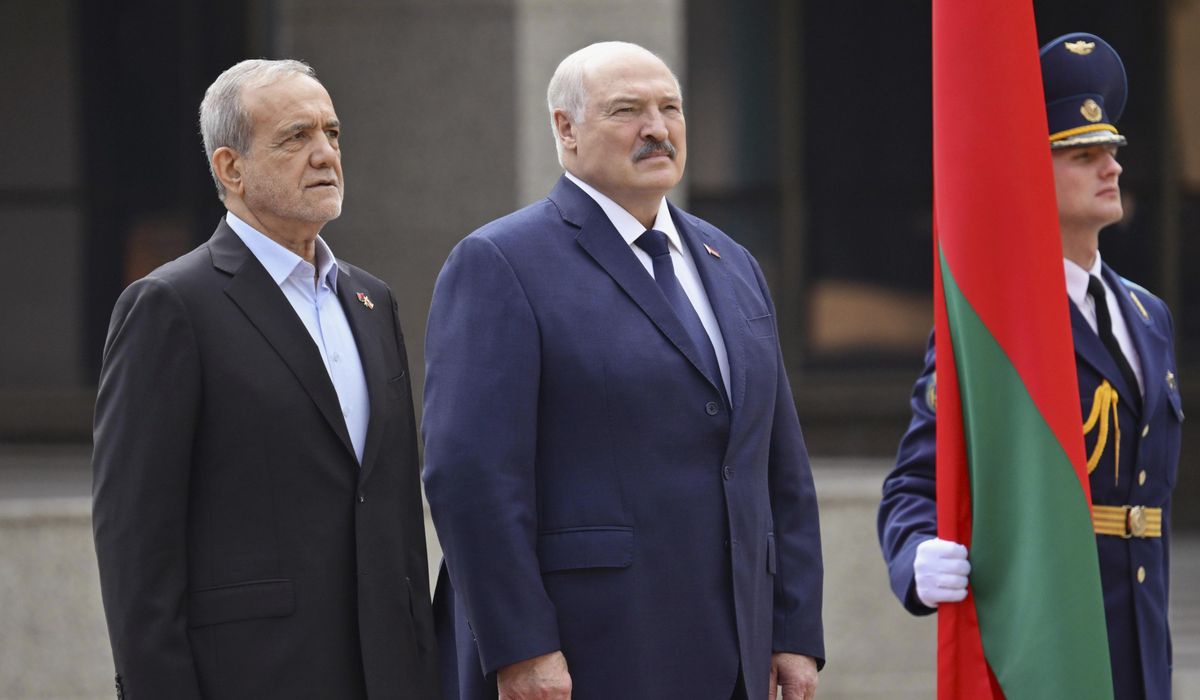
Iranian officials met with representatives from Belarus and Turkey this week as Tehran seeks new partners to blunt the impact of Western sanctions, a move that raises economic, security, and policy questions for the United States and its allies.
This outreach is clearly aimed at building workarounds for sanctions pressure, and Republican policymakers should treat it as a warning sign rather than a diplomatic curiosity. When authoritarian governments coordinate to evade restrictions, the consequences reach past trade into technology transfer, financial networks, and regional stability. The pattern deserves sharper scrutiny and firmer responses from Washington.
Belarus offers a natural partner for Iran because of its willingness to flout Western norms and provide logistical support where formal markets are closed. Those ties can include procurement channels, transport routes, and financial intermediaries that make it easier for sanctioned regimes to keep key programs moving. From a policy angle, letting these backchannels fester undermines the leverage sanctions are supposed to provide.
Turkey presents a more complex picture because it sits inside NATO and maintains deep trade links with Europe and the United States. Yet Ankara has shown a habit of pursuing independent policies that sometimes clash with Western interests, especially when economic or regional influence is at stake. The choice by Iran to court Turkish contacts is pragmatic; the U.S. must respond prudently to prevent split loyalties from weakening allied cohesion.
Economically, the core risk is that sanctions evasion becomes routinized, driving up the cost of enforcement and lowering political will. Smuggling networks, shell companies, and informal banking can turn sanctions into a paperwork nuisance rather than a strategic tool. The Republican view holds that enforcement must match pressure, or the policy loses its bite and adversaries gain breathing room for dangerous programs.
There is also a security dimension that cannot be ignored: cooperation between Tehran and pariah states can accelerate access to dual-use goods and know-how. Whether in drone manufacturing, missile components, or cyber capabilities, these partnerships can speed up projects that threaten U.S. forces and allies. Conservatives should press for targeted measures that choke off specific supply chains rather than broad moves that invite political pushback at home.
Intelligence and enforcement need to work faster and smarter, and that task falls to both government and private sectors. Banks, insurers, and shipping companies must be held accountable when they facilitate illicit transfers, and sanctions design should anticipate the evasive tactics authoritarian regimes adopt. That means saavy use of secondary sanctions and travel or asset restrictions on facilitators, not just headline-grabbing announcements.
Diplomatic pressure remains useful, but it must be paired with clear consequences. If Turkey or Belarus allow their territories or services to be used intentionally to undermine sanctions, the United States should have calibrated responses ready. Diplomacy that lacks teeth invites repetition; that is a lesson Republicans often stress when it comes to national security and deterrence.
Congress plays a role here too, by ensuring oversight of enforcement agencies and funding the tools needed to track complex evasion schemes. Committees should demand transparency on how sanctions are monitored and insist on accountability when gaps appear. A robust legislative posture forces the executive branch to prioritize meaningful action over symbolic measures.
Finally, allies in the region deserve reassurance and practical cooperation to reduce vulnerability to Tehran’s maneuvers. Strengthening regional intelligence sharing and maritime interdiction capabilities can disrupt the supply lines that make sanctions circumvention possible. Conservative policy makers favor clear support for partners facing destabilizing effects from Iran’s expanding network.
This development with Belarus and Turkey should remind policymakers that sanctions are not self-executing; they require constant pressure, creative enforcement, and political will. Iran’s outreach is a test of that will, and how Washington responds will shape whether sanctions remain a credible tool or become a paper fence easily jumped by determined regimes.

