

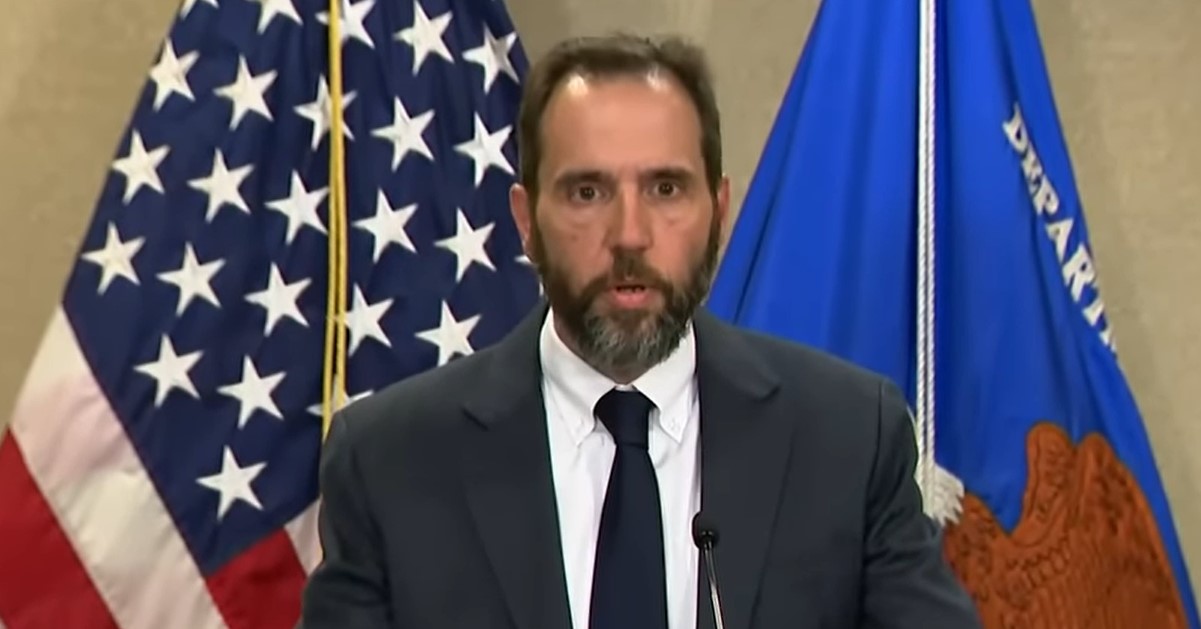
Senators led by Chuck Grassley laid out explosive details about a wide-ranging special counsel probe that Republicans say targeted their party wholesale, naming the operation “Arctic Frost” and pointing to nearly 200 subpoenas, hundreds of individuals and businesses, and a federal judge whose order set off calls for impeachment.
Sen. Chuck Grassley spoke for the group, saying he obtained documents through whistleblower disclosures that reveal the scope of the inquiry. “I’ve obtained through legally protected whistleblower disclosures,” Grassley said. He described “197 subpoenas” issued by Jack Smith’s team and emphasized those subpoenas reached across the private sector.
Grassley spelled out the scale in concrete terms to underline the political stakes. “197 subpoenas were issued by Jack Smith and his team. These subpoenas were issued to 34 individuals and 163 businesses, including financial institutions. The subpoena requested records and communications related to over 430 individuals and organizations — all of them appear to be aimed at Republicans,” he continued.
Sen. Ted Cruz, one of the senators whose phone data was swept up, called the probe a partisan weapon and used sharp language to frame the moment. “Arctic Frost is Joe Biden’s Watergate.” He held the court order that demanded AT&T turn over his records and argued the process was designed to intimidate political opponents.
Cruz repeated a blistering assessment of the Justice Department leadership and the special counsel with a line that landed hard with his audience. “Merrick Garland was a fundamentally corrupt attorney general. Jack Smith was a fundamentally corrupt prosecutor. This was a political enemies list from the beginning,” he said while holding the court order that demanded AT&T hand over his cell records. He also said the carrier resisted but was gagged from notifying him for a year.
The judge who signed the order, US District Court Chief Judge James Boasberg, became a central target of GOP fury. Cruz argued the order asserted there were “reasonable grounds to believe that such disclosure will result in destruction of or tampering with evidence, intimidation of potential witnesses and serious jeopardy to the investigation,” and called that conclusion unsupported by evidence. He warned that a judge who reaches such a factual conclusion without proof is abusing power.
That rebuke led Cruz to demand formal consequences. “If a judge signs an order reaching a factual conclusion for which there is zero evidence whatsoever, that judge is abusing his power. I am right now calling on the House of Representatives to impeach Judge Boasberg,” he concluded. GOP senators framed impeachment as the only institutional remedy left when a judge’s actions appear to them politically motivated.
Boasberg’s critics note his record on high-profile Trump cases, saying his assignments raise questions about fairness. He presided over the D.C. version of the 2020 election case, handled many January 6 prosecutions, and was later assigned cases touching on the Signal messaging app. Republicans have long asked why he keeps getting those assignments and say the accumulation of rulings looks prejudicial.
Republicans also flagged other controversial orders from Boasberg as evidence of overreach, pointing to a post-election order about deportation flights that drew national attention. They say the pattern of decisions and high-stakes assignments has put Boasberg squarely in the GOP crosshairs and sharpened calls for oversight. While those calls are growing louder, senators acknowledged political reality makes removal unlikely without bipartisan support.
The broader GOP message was strategic as well as accusatory: they framed Arctic Frost not as a narrow criminal probe but as a wide dragnet that swept up elected officials, staffers, activists and private companies. By releasing the subpoena counts and naming the institutions involved, Republican lawmakers aimed to shift public attention from isolated charges to what they describe as systemic targeting. The rollout of these disclosures is likely to fuel congressional hearings and political fights as the party seeks remedies through oversight rather than courts.

