

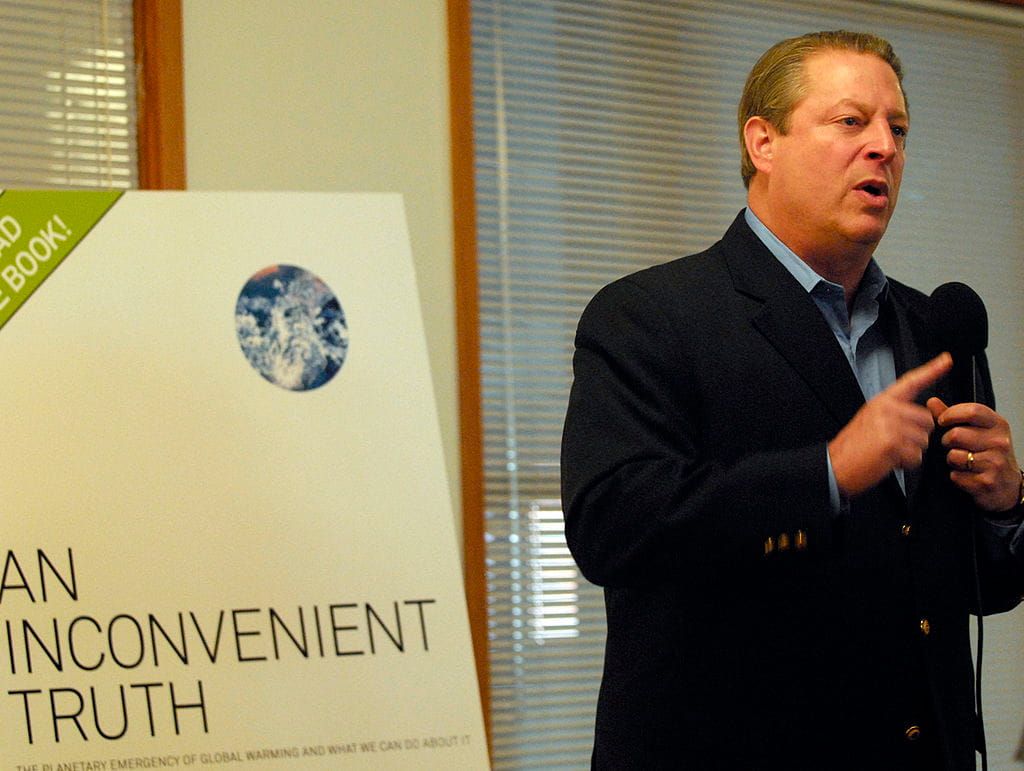
Two decades after Al Gore’s alarmist film, the conversation around climate policy, scientific claims, and political consequences is loud and messy. The debate mixes clear facts with rhetoric, and Americans remain divided on which parts deserve urgent action and which deserve tough scrutiny.
“It has already been 20 years since Al Gore released his documentary.” That line still rings true and frames how many view the trajectory of climate politics. The film helped push climate from a niche scientific topic into mainstream policy debates and set expectations that governments then tried to meet.
The predictions in the film and the years that followed deserve a cold-eyed review. Some forecasts did not land as presented, and that mismatch matters because policy followed those predictions. Voters and lawmakers should demand accountability when sweeping claims lead to big economic costs.
Policy responses have often prioritized symbolic gestures over practical results, producing expensive mandates and regulatory burdens. Those costs hit households through higher energy prices and squeezed manufacturing. A Republican view stresses that any climate effort must avoid harming jobs and must respect individual liberty.
At the same time, observations show the climate has changed in measurable ways, and real impacts have occurred in some regions. Scientific data are complex and evolving, and models carry uncertainty that should be openly discussed. Honest debate would separate what is well-established from what remains speculative.
Media and activist messaging frequently simplified complex science into apocalyptic narratives that amplified fear and polarized listeners. When dire predictions fail on schedule, credibility suffers and public trust erodes. That pattern explains part of the backlash against top-down climate prescriptions.
A more conservative, practical approach favors innovation, resilience, and market-driven solutions that reduce emissions without wrecking the economy. Investment in technology, nuclear power, and carbon capture deserves attention because it can deliver results without heavy-handed mandates. Americans want reliable and affordable energy alongside environmental stewardship.
Transparency and open scientific debate are essential; models and forecasts should be stress-tested and peer-reviewed without political interference. Policymakers must weigh uncertainty and prioritize interventions that are cost-effective and reversible. Long-term planning should be anchored in both data and respect for individual freedom.
Two decades after the film’s release and with the conversation still active as of Jun 21, 2026, Americans face choices about how to move forward. The public should be allowed to see the full record of past claims and the real costs of proposed measures. Clear-eyed policy, not theatrical forecasts, will build lasting support for sensible climate action.

