

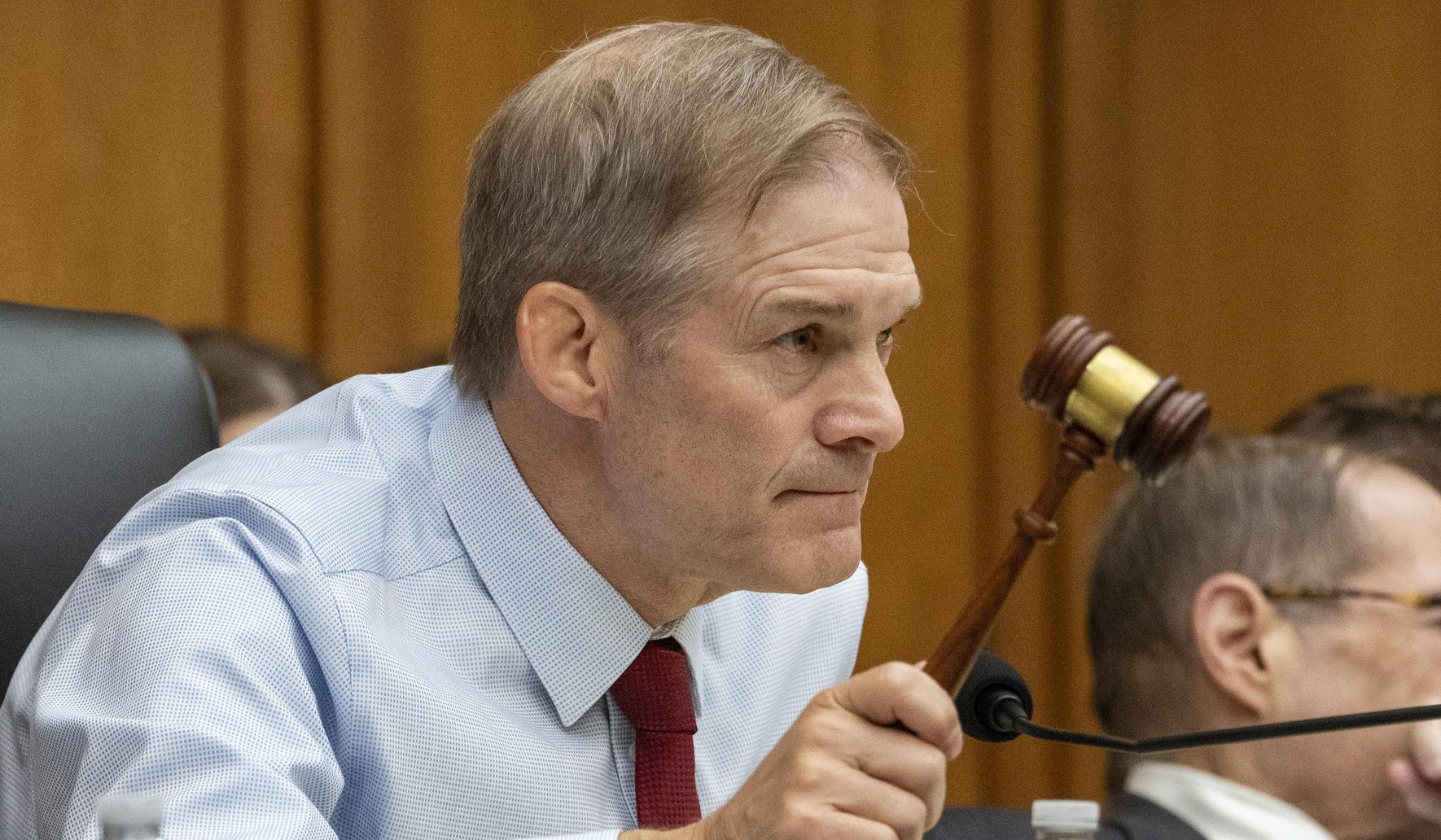
House Judiciary Chairman Jim Jordan has asked the Justice Department to investigate and possibly prosecute Thomas Windom, an aide to former special counsel Jack Smith, signaling a focused push for accountability.
Chairman Jim Jordan formally asked the Justice Department on Wednesday to open an inquiry into Thomas Windom, who worked as an aide to former special counsel Jack Smith. The request frames the issue as a matter of law enforcement discretion and congressional oversight. Republicans view this as necessary to ensure legal standards are applied equally.
The letter to the DOJ emphasizes that no one should be above scrutiny when allegations of misconduct arise. Jordan’s request aims to prompt the Justice Department to examine whether Windom’s conduct crossed any legal lines. From a Republican perspective, oversight is about enforcing the rule of law, not politics.
Lawmakers on the Judiciary Committee say they have gathered materials and factual leads that warrant a formal probe. That evidence, they argue, points to potential actions that may fall within federal criminal statutes. The committee is focusing on transparency and whether existing processes were followed.
The DOJ now faces a standard prosecutorial decision: whether the facts support charges and whether prosecution is in the public interest. Republicans expect the department to act on the evidence rather than delay or deflect. This moment tests the department’s commitment to impartial justice.
Public confidence in federal law enforcement relies on consistent application of rules, regardless of affiliation or office held. Jordan’s move underscores a broader message that accountability should not be selective. For many conservatives, this is about restoring faith in institutions that have seemed politicized.
The request also serves as a signal to other offices and officials: conduct has consequences and congressional oversight will not shy away from tough questions. Republican leaders stress that their goal is to follow the facts and let the law guide outcomes. That posture frames the committee’s work as pragmatic and principled.
Critics will likely accuse Republicans of weaponizing oversight, but proponents counter that the opposite is true when enforcement is uneven. The push to involve the DOJ places the burden on prosecutors to do their job transparently. It’s a test of whether investigations will be handled evenhandedly.
How the Justice Department responds will matter for political trust and future oversight efforts. A prompt, clear decision either to pursue charges or to decline with explanation would satisfy demands for accountability. Republicans say a thorough, well-documented answer from DOJ is the only acceptable outcome.
Beyond the immediate legal question, the episode highlights tension between special counsel operations and congressional oversight. Republicans argue that when a special counsel’s team is involved in conduct that raises questions, Congress must have the latitude to investigate. That stance reflects a view that oversight keeps executive power in check.
Jordan’s action is also a message to voters that Republican leaders will challenge perceived double standards. By asking the DOJ to investigate Thomas Windom, the chairman is framing the matter as a straightforward request for application of the law. Supporters see it as a firm, necessary step to protect institutional integrity.
The coming weeks will reveal whether prosecutors decide there is enough evidence for charges or whether they decline to act. Either outcome will shape how oversight battles unfold and influence public perceptions of fairness in federal enforcement. For now, Republicans are emphasizing the need for clarity and accountability from the Justice Department.

