

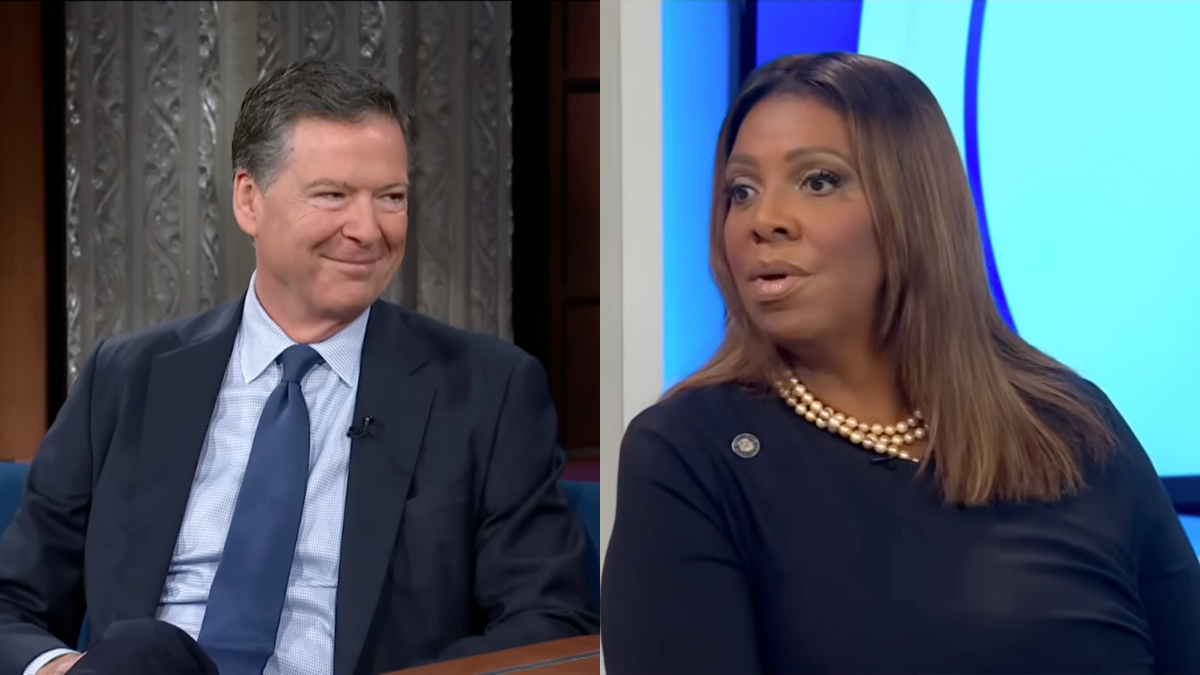
The federal judge threw out the grand jury indictment against former FBI Director James Comey and New York Attorney General Letitia James, finding that federal prosecutor Lindsay Halligan was not lawfully appointed; the decision came from Judge Cameron Currie, a Clinton appointee, and it centers on the question of who had the legal authority to bring the charges.
The ruling landed like a shockwave through legal and political circles because it did not decide guilt or innocence, it focused squarely on a procedural and constitutional point: whether the prosecutor who presented the case was properly installed. That legal finding wiped the indictments off the table, at least for now, and left conservatives and watchdogs insisting the system must be fixed. There’s clear frustration among those who see the appointment process as another example of Washington elites bending rules to protect allies.
Judge Cameron Currie, appointed by President Clinton, concluded that Halligan’s appointment violated the governing statutes and constitutional requirements for federal prosecutors. That determination goes to the heart of how accountability is supposed to work in federal prosecutions, raising questions about oversight and who gets to decide when a case moves forward. The practical result is the dismissal of the grand jury charges that had been brought against two high-profile figures.
For many on the right, the ruling reads like validation of long-standing concerns about politicized prosecutions and opaque appointment chains inside the Department of Justice. Conservatives argue this shows how easily a politically aligned network can manufacture authority for a prosecutor and then claim legitimacy for the resulting charges. That narrative feeds wider doubts about whether equal justice is applied when powerful political actors are involved.
Supporters of the original prosecutions frame this as a technical setback rather than an exoneration, but technicalities are precisely where trust in institutions is built or eroded. If procedures for appointing prosecutors can be sidestepped, then even carefully gathered evidence risks being dismissed on procedural grounds. That makes the integrity of appointment protocols itself a matter of public interest and national security for the rule of law.
Political observers are also watching how this will play out procedurally: whether prosecutors will correct the appointment defect and refile, or whether the decision will prompt new legislative or administrative fixes. Republicans are likely to push for clearer statutory limits and tougher transparency requirements so future appointments can’t be contested in the same way. This is an opportunity for lawmakers who want to restore confidence to set enforceable standards that stop partisan personnel moves.
The optics are especially bad for a system that is supposed to be impartial when it comes to investigating public officials. When prominent figures feel they can be targeted or shielded depending on personnel quirks, public confidence plummets. Conservatives argue the remedy is not only legal correction but institutional reform: stricter rules, better accountability, and a return to predictable, non-politicized processes for appointing prosecutors.
Critics of the judge’s ruling will claim it lets elites off the hook, but critics of the prosecution process have a different complaint: that unelected or improperly appointed actors should not be able to decide major cases against public officials. That tension — between safeguarding fair processes and ensuring accountability for misconduct — will drive debate in courtrooms and statehouses in the weeks ahead. Expect lawmakers and watchdog groups to use this decision as a springboard for proposed changes to how federal prosecutions are staffed and reviewed.
Whatever comes next, the episode has highlighted how fragile legal outcomes can be when procedural rules are ignored or stretched. The immediate fallout centers on the dismissed indictments, but the broader consequence is renewed scrutiny of who gets to prosecute politically sensitive cases. For Republicans pressing for reforms, the message is simple: tighten the rules, restore clarity, and prevent politically charged appointments from determining the fate of high-profile investigations.

