

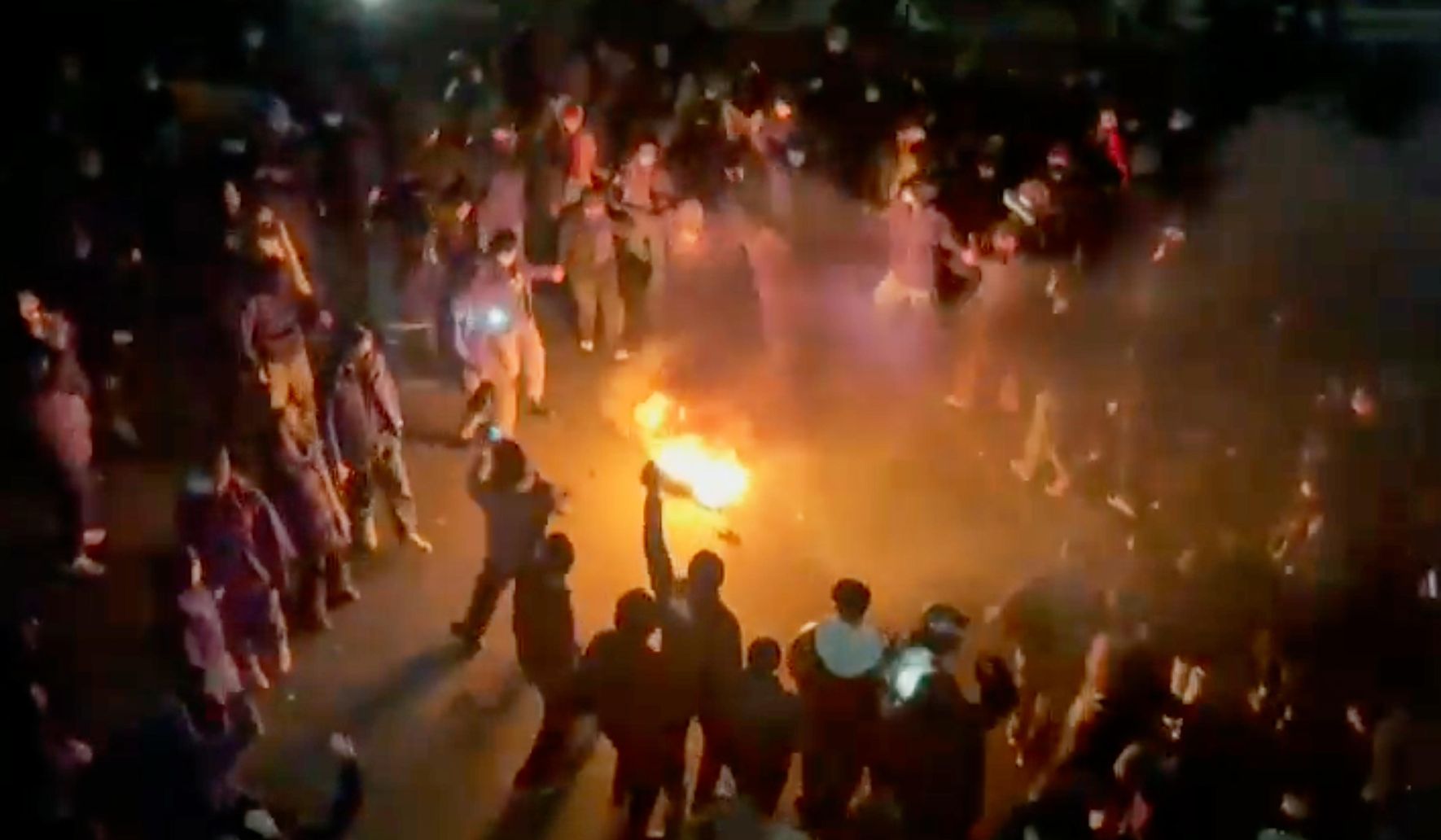
Iran’s parliament speaker has warned that the U.S. military and Israel would become “legitimate targets” if Washington carries out strikes in response to the nationwide protests, a sharp escalation in rhetoric as unrest continues to spread across the country.
The speaker’s statement landed on a tense backdrop of protests that have shaken Iran and drawn international attention, and it signals Tehran’s willingness to cast any foreign military action as justification for retaliation. That language raises the stakes for U.S. policymakers weighing how to respond without triggering a wider conflict. From a conservative perspective, this kind of saber-rattling is predictable but still dangerous.
Republicans will say American strength is the best deterrent, not hesitation that invites miscalculation. Showing firm resolve means clear, credible consequences for attacks on U.S. forces or allies while avoiding unnecessary boots-on-the-ground escalation. At the same time, we must keep supporting Iranian citizens who are risking everything to demand basic freedoms.
Iran’s government is desperate to frame protests as foreign provocation, but the unrest reflects deep domestic grievances that have boiled over. The regime’s leaders often try to externalize blame to justify crackdowns and rally hardliners. When Tehran uses phrases like “legitimate targets,” it is counting on fear and ambiguity to intimidate outside powers and quiet dissent at home.
Any response by Washington must balance deterrence with prudence, holding Iran accountable for hostile acts without playing into the regime’s narrative that outside enemies are to blame. Republican policymakers tend to favor a posture that backs allies, protects U.S. personnel, and imposes costs on the regime through sanctions and targeted options. That combination aims to squeeze Tehran economically and diplomatically while avoiding a kinetic spiral.
At the same time, the U.S. should keep pressure on proxy networks that allow Iran to lash out indirectly. Striking the infrastructure of groups that export violence can be effective and precise when done with good intelligence. A clear line must exist: attacks on Americans or partners will prompt proportionate responses, but those responses should be calibrated to avoid giving Tehran any pretext for a larger war.
Political leaders must also be honest about the limits of American power and the risks of open conflict with a large and unpredictable adversary. Republicans argue that projected strength and economic penalties can change Tehran’s calculus more reliably than appeasement. That means keeping alliances tight, signaling resolve publicly and privately, and ensuring military readiness without reflexively charging into combat.
Support for Iranian protesters should remain a central element of any strategy that favors liberty over tyranny. Public diplomacy, humanitarian channels, and targeted sanctions against the regime’s enforcers are tools that do not rely on firing a shot. Standing with the Iranian people undermines the regime’s legitimacy and reinforces the message that the United States sides with freedom, not theocratic repression.
Ultimately, Tehran’s rhetoric about “legitimate targets” is a challenge to the international order and to those who value stability. Republicans will press for a firm, coherent policy that defends American interests, protects allies, and keeps pressure on Iran without surrendering strategic control. The path forward requires resolve, clarity, and a steady commitment to both deterrence and the cause of human rights.

